Banding tools secure materials together across countless industries. From packaging warehouses to telecommunications installations, these specialized devices apply straps, bands, and ties efficiently. Understanding different banding tool types helps professionals select the right equipment for specific applications.
This comprehensive guide explores various banding tools and their intended uses. Workers can improve productivity and safety by matching tools to tasks appropriately.
Understanding Banding Tool Basics
Banding tools tension and seal strapping materials around objects. These devices replace manual tying methods with faster, more secure results. Additionally, proper banding tools reduce worker fatigue during repetitive strapping tasks.
Different materials require specific tensioning pressures and sealing methods. Steel strapping needs crimping or welding, while plastic strapping uses heat sealing or friction welding. Therefore, tool selection depends on both strap material and application requirements.
Quality banding tools provide consistent tension without damaging products. Over-tensioning can crush packages or snap straps, while under-tensioning allows loads to shift. Moreover, ergonomic designs reduce repetitive strain injuries during extended use.
Manual Banding Tools for Light Applications
Manual tools serve well for occasional banding needs and light-duty applications. These hand-operated devices require no power source, making them portable and economical. However, manual tools demand more physical effort than powered alternatives.
Combination tensioner-sealers handle both steps in one tool. Users wrap strapping around items, insert ends into the tool, and operate levers to tension and seal. These versatile tools work with polypropylene and polyester strapping up to three-quarters inch wide.
Manual windlass tools provide higher tension than combination tools. The ratcheting mechanism gradually increases strap pressure to desired levels. Additionally, separate sealing tools complete the process after tensioning.
Buckle tools specifically apply metal buckles to secure strapping. These simple devices fold buckle edges over strapping without requiring separate seals. Therefore, buckle systems offer quick applications for lighter loads.
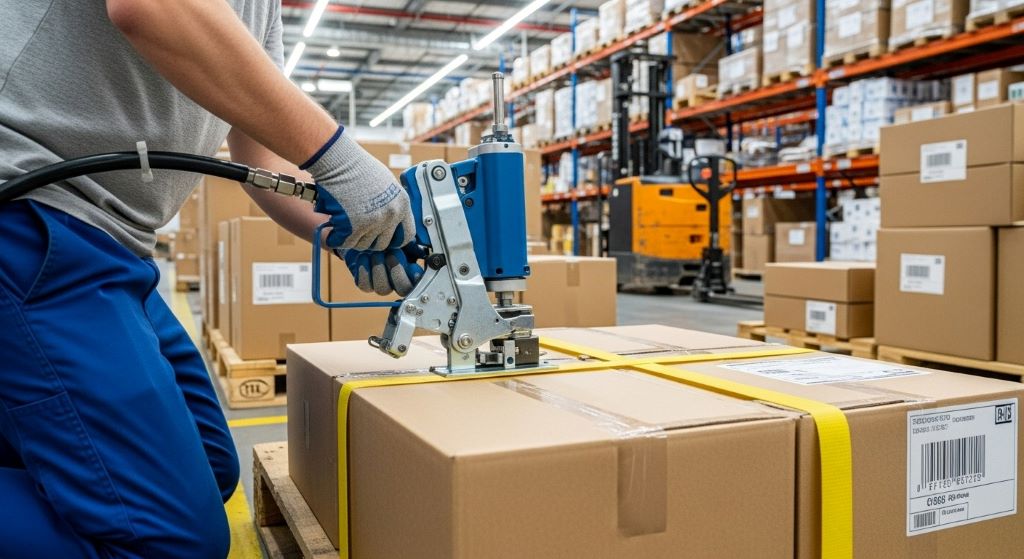
Pneumatic Banding Tools for Medium Production
Pneumatic tools use compressed air to automate tensioning and sealing operations. These devices dramatically increase banding speed compared to manual alternatives. However, pneumatic tools require air compressor access, limiting portability.
Pneumatic strapping tools tension and seal in one quick motion. Users position strapping and trigger the tool, which automatically applies preset tension and creates friction welds. Cycle times typically range from two to four seconds per application.
Adjustable tension settings accommodate various load requirements. Delicate products need gentler pressure, while heavy pallets require maximum tension. Moreover, consistent tension levels ensure uniform load security across multiple packages.
Pneumatic tools excel in medium-volume operations strapping 50 to 200 packages daily. Warehouse shipping departments, manufacturing facilities, and distribution centers commonly use these efficient devices. Additionally, reduced operator fatigue supports sustained productivity throughout shifts.
Battery-Powered Tools for Portable Applications
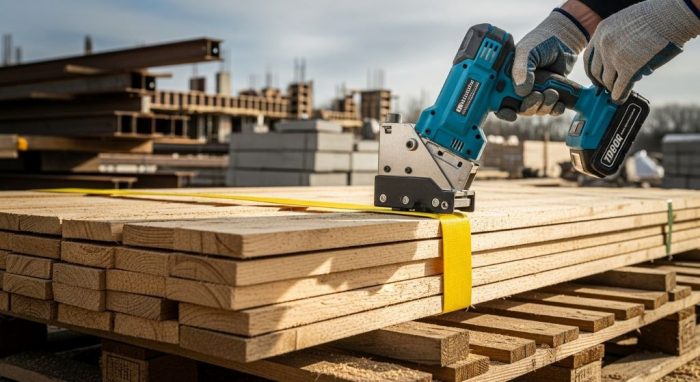
Battery-powered banding tools combine automation with portability. Rechargeable lithium-ion batteries power tensioning and sealing mechanisms without cords or air hoses. Therefore, these tools suit field applications and locations lacking compressed air.
Cordless tools handle polyester and polypropylene strapping from half-inch to over one inch wide. Tension capacities reach several hundred pounds, securing substantial loads reliably. Additionally, modern battery technology provides hundreds of cycles per charge.
Construction sites benefit greatly from battery-powered banding tools. Workers secure lumber bundles, roofing materials, and equipment without generator dependence. Moreover, telecommunications installers use cordless tools for cable bundling on utility poles.
Quick-change battery systems minimize downtime during extended use. Spare batteries charge while others power tools, maintaining continuous operation. Furthermore, battery indicators prevent unexpected power loss mid-application.
Steel Strapping Tools for Heavy-Duty Applications
Steel strapping secures the heaviest loads requiring maximum strength. Specialized tools handle steel’s unique properties and sealing requirements. However, steel strapping demands more robust equipment than plastic alternatives.
Tensioners specifically designed for steel strapping incorporate hardened components resisting wear. These tools apply tensions exceeding 1,000 pounds for securing machinery, coiled steel, and other heavy items. Additionally, aggressive gripping mechanisms prevent slippage during tensioning.
Sealing methods for steel strapping include crimping and welding. Crimping tools compress metal seals around overlapped strapping ends, creating mechanical bonds. Notched seals provide superior grip compared to smooth varieties.
Welding tools create permanent bonds by melting strapping ends together. Friction welding generates heat through rapid vibration, while electrical resistance welding uses current flow. Therefore, welded joints often exceed base strap strength.
According to Popular Mechanics, proper strapping tools significantly improve moving efficiency and load security during transportation.
Plastic Strapping Tools for Versatile Applications
Plastic strapping tools accommodate polypropylene and polyester materials across diverse industries. These versatile tools range from simple manual devices to sophisticated automated systems. Moreover, plastic strapping suits most medium-duty applications economically.
Polypropylene strapping tools handle the most common plastic banding material. This economical strapping secures cartons, bundled products, and palletized loads. However, polypropylene offers less strength retention than polyester alternatives.
Polyester strapping tools provide higher tension capabilities for demanding applications. Polyester maintains tension better than polypropylene, especially in temperature fluctuations. Additionally, polyester’s rigidity suits applications requiring strap stiffness.
Heat-seal tools create bonds by melting strapping surfaces together. Electric heating elements quickly reach optimal temperatures for secure fusion. Furthermore, adjustable heat settings accommodate different strapping thicknesses and grades.
Friction-weld tools generate heat through rapid strap vibration. These tools require no external heat source, improving portability. Moreover, friction welds often prove stronger than heat seals with proper technique.
Specialty Banding Tools for Specific Industries
Certain industries require specialized banding tools addressing unique challenges. These purpose-built devices incorporate features supporting particular applications. Therefore, specialty tools often outperform general-purpose alternatives in specific contexts.
Cable tie guns install plastic cable ties rapidly in electrical and telecommunications work. These tools automatically tension ties and trim excess material in one motion. Additionally, tension controls prevent damaging delicate wiring during installation.
Hog ring pliers apply C-shaped metal fasteners in upholstery and fencing applications. Specialized jaws compress rings around materials without manual hammering. Moreover, angled designs reach confined spaces inaccessible to standard tools.
Twist tie machines automate wire tie application for bakery bags and produce packaging. These devices cut, twist, and apply ties continuously at high speeds. Furthermore, adjustable mechanisms accommodate various bag sizes and tie lengths.
Bale press tools compress and band agricultural products, recycling materials, and textile goods. Integrated systems apply multiple bands while maintaining compression pressure. Additionally, automated feeding systems increase productivity in high-volume operations.
Automatic Banding Machines for High-Volume Production
Fully automatic banding machines integrate into production lines handling thousands of units daily. These sophisticated systems require minimal operator intervention once programmed. However, automatic machines represent significant capital investments justified by volume requirements.
Arch machines feed products through automated banding stations. Conveyors position items precisely while mechanical arms apply and seal strapping. Cycle times often reach 30 to 60 applications per minute depending on configuration.
Rotary table machines spin products while applying horizontal bands. These systems suit cylindrical items like coiled materials, bundled pipes, and rolled products. Additionally, multiple banding heads apply several straps simultaneously.
Vertical machines band stacked products from above without product handling. Newspapers, printing materials, and flat-stacked items pass beneath banding heads. Moreover, adjustable height mechanisms accommodate varying stack dimensions.
According to Engineering News-Record, modern packaging automation including banding systems significantly reduces labor costs while improving consistency.
Selecting the Right Banding Tool
Application requirements determine appropriate tool selection. Consider strap material, load weight, production volume, and portability needs. Additionally, budget constraints influence whether manual, pneumatic, or battery tools suit operations best.
Strap width and thickness compatibility must match tool specifications. Using undersized tools with heavy strapping causes premature failure and safety hazards. Therefore, verify maximum strap dimensions before purchasing equipment.
Tension requirements depend on load characteristics and shipping conditions. Fragile products need gentler tension than dense, heavy items. Moreover, long-distance shipments or rough handling environments demand higher security levels.
Ergonomic features reduce operator fatigue and injury risks. Lightweight construction, balanced designs, and cushioned grips improve comfort during extended use. Furthermore, tools with adjustable handles accommodate different user preferences and hand sizes.
Maintaining Banding Tools for Longevity
Regular maintenance extends tool life and ensures consistent performance. Daily cleaning removes debris that interferes with mechanisms and sealing surfaces. Additionally, periodic lubrication keeps moving parts operating smoothly.
Inspect wear components regularly for damage or excessive wear. Gripper teeth, sealing jaws, and cutting blades require replacement when worn. Therefore, maintaining spare parts inventory prevents unexpected downtime.
Pneumatic tools need filtered, dry air preventing internal corrosion and premature wear. Install inline filters and water separators in air supply lines. Moreover, daily moisture drain prevents condensation accumulation.
Battery-powered tools require proper charging practices maximizing battery lifespan. Avoid complete discharge cycles and store batteries partially charged during extended non-use. Furthermore, replace aging batteries showing significantly reduced capacity.
Safety Considerations When Using Banding Tools
Proper training reduces accidents and improves banding quality. Operators must understand tool functions, adjustment procedures, and safety features. Additionally, manufacturers provide operational manuals detailing safe usage practices.
Personal protective equipment includes safety glasses protecting against flying strap ends and seal fragments. Cut-resistant gloves prevent hand injuries from sharp strapping edges. Moreover, hearing protection may prove necessary with pneumatic tools in enclosed spaces.
Never bypass or disable safety mechanisms designed into tools. Guard systems, trigger locks, and automatic shutoffs prevent injuries during operation. Therefore, damaged safety features require immediate repair before continuing use.
Inspect strapping condition before application. Damaged, brittle, or contaminated strapping may fail unpredictably during tensioning. Furthermore, storing strapping properly prevents degradation from sunlight, moisture, and extreme temperatures.
Conclusion
Banding tool selection significantly impacts productivity, safety, and load security across industries. Manual tools serve occasional light-duty needs economically, while pneumatic and battery-powered options increase efficiency in medium-volume applications. Steel strapping tools handle the heaviest loads, whereas plastic strapping tools offer versatility for general purposes. Specialty tools address industry-specific requirements, and automatic machines maximize high-volume production throughput. Therefore, matching tool capabilities to application demands ensures optimal performance and return on investment. Proper maintenance and safety practices further extend tool life while protecting operators from injury.
Frequently Asked Questions
What is the difference between manual and pneumatic banding tools?
Manual tools require physical operator effort to tension and seal strapping, while pneumatic tools use compressed air for automated operation. Pneumatic tools work faster and reduce fatigue but require air compressor access. Manual tools cost less and work anywhere without power sources.
Can one banding tool work with multiple strap materials?
Some tools accommodate multiple plastic strap types like polypropylene and polyester. However, steel strapping requires dedicated tools due to different tensioning forces and sealing methods. Always verify manufacturer specifications before using tools with unfamiliar strap materials.
How often should banding tools be serviced?
Daily cleaning and inspection suit high-volume operations, while weekly maintenance suffices for occasional use. Professional servicing annually or after specific cycle counts maintains optimal performance. Replace worn components immediately rather than waiting for scheduled maintenance.
What tension level should I use for different applications?
Light products need 50-150 pounds tension, medium loads require 150-400 pounds, and heavy applications demand 400-1000+ pounds. Adjust tension based on product fragility, weight, and shipping conditions. Test various settings to find optimal tension preventing damage while securing loads properly.
Are battery-powered banding tools as powerful as pneumatic models?
Modern battery-powered tools match or exceed many pneumatic tools in tension capabilities. Battery tools offer comparable cycle speeds while providing superior portability. However, pneumatic tools may still edge ahead in continuous high-volume applications where battery charging becomes limiting.
Related Topics:
Best Tool for Cutting Peel and Stick Flooring: Top Picks for Precision and Ease
Klein Tools 6-in-1 Multi-Nut Driver: A Comprehensive Review