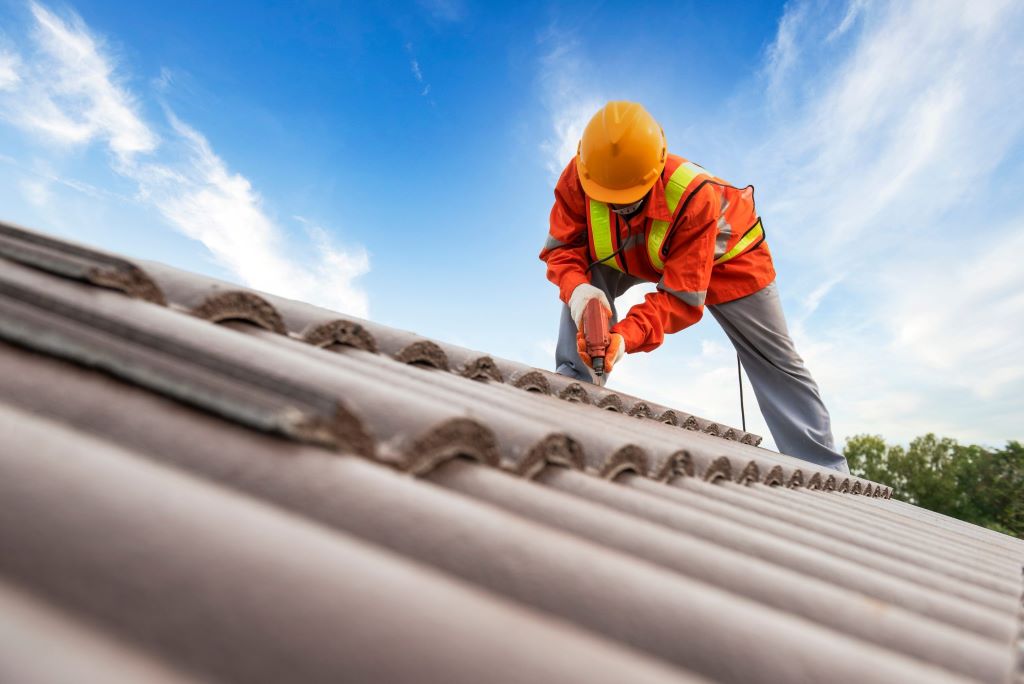
Heavy snow on a roof is not just an inconvenience. It adds real structural load. According to the Federal Emergency Management Agency, accumulated wet snow can weigh more than 20 pounds per cubic foot. The Insurance Institute for Business and Home Safety also notes that roof stress and ice dam formation are among the most common winter related property risks in colder states.
That is why roof snow removal tools matter. The right snow roof rake does more than clear buildup. It reduces long term roof strain, limits water intrusion, and helps prevent ice dams before they form.
In this guide, I break down five of roof snow removal tools available in 2026. Each one serves a slightly different need, and those differences matter more than most buyers realize.
A Quick Overview of The Best Roof Snow Removal Tools of 2026
These roof snow removal tools vary in reach, cutting system, and intended surface use. Some work best for steep residential roofs, while others target vehicles or solar panels.
- SNOWPEELER Premium Roof Rake for Snow Removal
- Avalanche! AVA750 Snow Roof Rake
- Avalanche! Big Rig Rake BRR2000
- CQVNI Adjustable 6.2 to 21 ft Lightweight Aluminum Snow Rake
- MUHM Tarp 30FT Adjustable Aluminum Roof Snow Removal Tool
Best Roof Snow Removal Tools of 2026
Choosing the right roof snow removal tools depend on roof height, snow type, and how often you clear accumulation. Below is a closer look at each product in real world use.
SNOWPEELER Premium Roof Rake for Snow Removal
Long reach residential snow rake
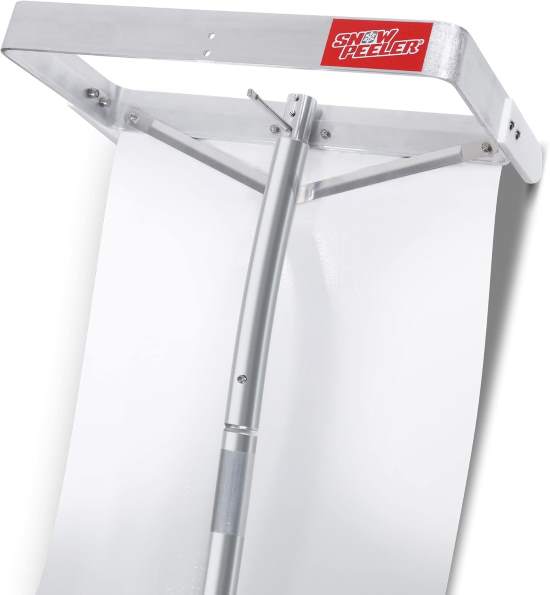
This model feels purpose built for standard pitched home roofs. The 30 foot telescopic aluminum pole gives you reach without climbing, which immediately lowers risk. In use, the rake head grips packed snow effectively, and the slide system helps snow travel downward in controlled sheets rather than breaking unpredictably.
It suits homeowners dealing with repeated winter accumulation, especially in northern climates. The aluminum construction keeps weight manageable even at full extension, though extended use above shoulder height can still cause fatigue.
Maintenance is simple. Rinse after heavy use to prevent corrosion and inspect the telescoping joints for debris buildup. It is less ideal for tight spaces or roofs surrounded by landscaping where large sliding sheets of snow may cause damage below.
User Review – Daniel R.
I bought this after two winters of ice dams. The reach allowed me to stay firmly on the ground, which mattered more than I expected. It works best when snow is a few inches deep. If it is icy or compacted hard, it takes a bit more patience. Overall it feels sturdy and predictable.
Key Features
- 30 foot telescopic pole
Extends to reach two story roofs without ladders, reducing fall risk while covering large surface areas. - Aluminum construction
Keeps weight manageable during overhead use and resists rust in wet snow conditions. - Snow slide system
Guides snow downward in sheets, reducing repetitive lifting motions. - Wide rake head
Covers more roof area per pass, saving time during heavy snowfall. - Segmented pole design
Breaks down for storage, useful for garages with limited wall space.
Pros and Cons
| Pros | Cons |
| Excellent reach length | Can fatigue shoulders |
| Durable aluminum build | Large snow sheets fall |
| Effective slide system | Less precise control |
Avalanche! AVA750 Snow Roof Rake
Controlled snow slide system
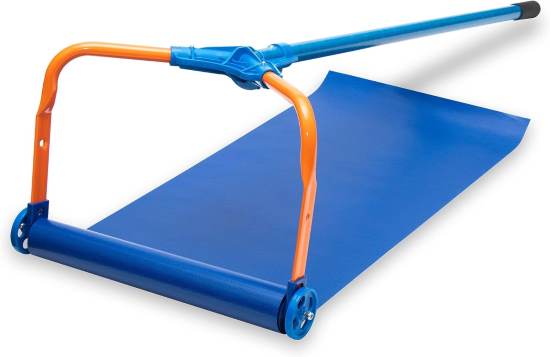
The Avalanche AVA750 uses a different approach. Instead of lifting snow repeatedly, it cuts and channels snow down a heavy duty slide. In practice, this reduces the effort needed compared to traditional push rakes.
The built in wheels protect shingles, which is useful for asphalt roofs. It performs best on moderate snow depth rather than extremely icy buildup. Assembly takes a few minutes, but once set up, it feels stable.
It is a strong option for homeowners who deal with frequent mid season clearing rather than extreme storm recovery.
User Review – Karen L.
What I noticed first was how smoothly the snow moves down the slide. It feels less like lifting and more like guiding. It does require space below because snow comes down quickly.
Key Features
- Cut and slide system
Reduces repetitive lifting, lowering strain on arms and back. - Built in protective wheels
Prevent direct scraping against shingles, protecting roof surfaces. - Heavy duty slide material
Resists tearing during repeated winter use. - Modular pole assembly
Allows adjustable reach for different roof heights. - Lightweight frame
Easier to control during extended clearing sessions.
Pros and Cons
| Pros | Cons |
| Reduces lifting effort | Needs ground clearance |
| Protects shingles | Assembly required |
| Smooth snow flow | Bulky when stored |
Avalanche! Big Rig Rake BRR2000
Vehicle roof snow rake
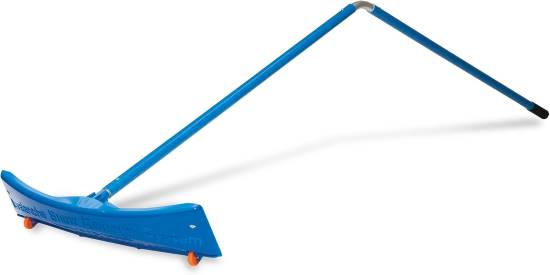
This tool targets flat vehicle roofs such as trucks, vans, and recreational vehicles. The 15.5 foot reach helps clear tall vehicle tops without climbing onto them.
It feels sturdy but manageable. The snap together sections make setup quick. The wheels protect painted surfaces, which matters for preventing scratches.
It is not intended for steep residential roofs, so buyers should not treat it as a general snow roof rake. Instead, it works best for fleet owners, truck drivers, or RV users.
User Review – Marcus T.
I use it on my RV after storms. It clears the top without climbing up there. It saves time before driving. Not something I would use on my house roof.
Key Features
- 15.5 foot reach
Ideal for tall vehicle roofs without ladders. - Snap together assembly
Quick setup and breakdown for transport. - Surface safe wheels
Protect paint and roof coatings. - Wide rake head
Covers flat surfaces efficiently. - Compact storage profile
Fits easily in vehicle compartments.
Pros and Cons
| Pros | Cons |
| Great for vehicles | Not for house roofs |
| Protects painted surfaces | Limited reach height |
| Easy assembly | Narrow use case |
CQVNI Adjustable 6.2 to 21 ft Lightweight Aluminum Snow Rake
Compact and versatile option
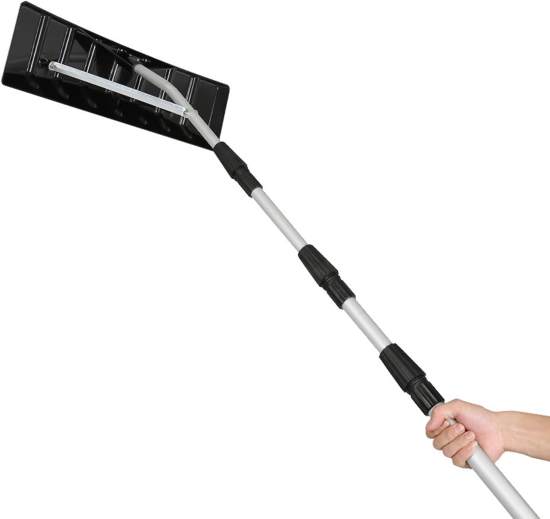
This adjustable rake balances portability with functionality. With a range from 6.2 to 21 feet, it works well for single story homes, porches, and solar panels.
The lightweight aluminum design makes it easy to handle. It suits occasional users who do not want a 30 foot system. The rake head offers good control for smaller clearing jobs.
However, it may not reach steep two story roofs comfortably.
User Review – Elena M.
I use it mainly for my porch roof and solar panels. It is light enough that I can manage it alone. I would not rely on it for heavy deep snow on a tall roof.
Key Features
- Adjustable length range
Adapts to lower roofs and tighter spaces. - Lightweight aluminum frame
Reduces fatigue during use. - Compact storage size
Fits small garages or sheds. - Simple rake head design
Allows precise snow control. - Solar panel compatibility
Useful for clearing flat mounted panels.
Pros and Cons
| Pros | Cons |
| Easy to handle | Shorter max reach |
| Compact storage | Not for deep snow |
| Good for panels | Less heavy duty |
MUHM Tarp 30FT Adjustable Aluminum Roof Snow Removal Tool
Slide system with fabric guide
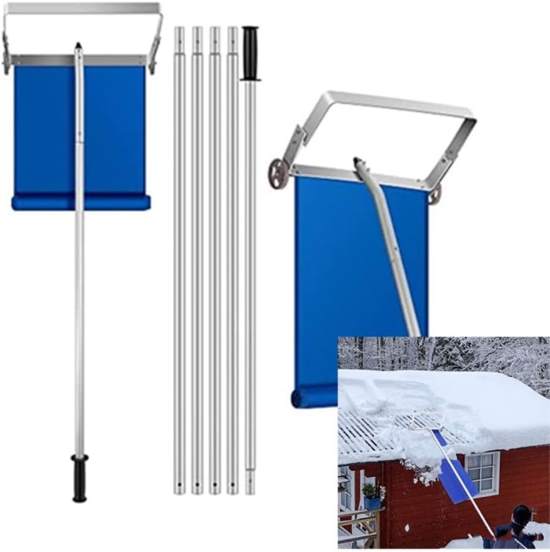
This tool combines a 30 foot adjustable pole with a 420D Oxford cloth slide. In use, the cutting frame separates snow, and the tarp guides it downward in sheets.
It performs well on pitched roofs with moderate accumulation. The anti slip handle improves control in cold conditions. The fabric slide requires occasional inspection to prevent wear.
It may not handle very dense ice crust without additional effort.
User Review – Brian S.
The tarp system moves snow fast. I had to adjust the angle to get smooth sliding, but once I figured it out, it cleared my roof quickly. I check the fabric after each storm.
Key Features
- 30 foot adjustable pole
Covers taller residential roofs safely from ground level. - Oxford cloth slide
Guides snow downward efficiently. - Sturdy cutting frame
Separates compacted snow layers. - Anti slip handle
Improves grip during cold weather use. - Modular assembly
Simplifies storage after winter season.
Pros and Cons
| Pros | Cons |
| Long reach coverage | Fabric needs inspection |
| Effective slide system | Angle sensitive setup |
| Comfortable grip | Not ideal for ice |
Buying Guide
What Actually Matters Before Choosing
Core performance factors
The primary function of a roof snow removal tool is controlled snow displacement. Reach, rake width, and slide efficiency determine how much area you clear per pass. Buyers often focus only on maximum length. In practice, balance and control matter more. A longer pole increases leverage against your shoulders, which affects fatigue over time.
Material quality and durability
Aluminum poles resist corrosion and remain lightweight. Fabric slide systems require inspection because wet snow adds abrasion. Many assume thicker material always equals better performance. In reality, proper tension and attachment points matter just as much for longevity.
Comfort and usability
Grip texture, pole diameter, and assembly complexity influence how often you will realistically use the tool. A tool that feels awkward often ends up unused. Telescoping mechanisms should lock securely without slipping under load.
Maintenance demands
Snow tools face moisture, salt, and freeze thaw cycles. After each use, drying the pole and checking joints prevents long term corrosion. Fabric slides need occasional cleaning to prevent tearing. Buyers underestimate maintenance, which shortens product life.
Environmental compatibility
Steep shingle roofs require protective wheels or smooth rake edges. Metal roofs may allow faster sliding but require careful control. Solar panels demand gentler contact surfaces to avoid scratching.
Safety considerations
Ground based systems reduce fall risk compared to ladder use. However, snow slides release weight suddenly. Always consider where snow will land. Overhead power lines and fragile landscaping create hazards that buyers often overlook.
Common Buyer Mistakes
Many buyers assume longer always means better. A 30 foot pole sounds appealing, but if your roof is single story, that extra length increases fatigue without benefit.
Another mistake is ignoring snow type. Powdery snow clears easily with basic rakes. Wet, dense snow may require slide systems to reduce lifting strain.
Some underestimate storage space. Full length systems require wall clearance in garages. Compact adjustable options suit smaller homes.
Buyers also assume all rake heads protect shingles. Without wheels or smooth edges, scraping can damage roofing materials.
A common oversight involves where snow lands. Sliding large sheets near entryways or parked cars creates secondary problems.
Finally, many delay clearing too long. Deep accumulation increases effort and structural load. Regular lighter clearing often works better than occasional heavy removal.
Related:
Guide for Category 5 Hurricane Roof Installation for Commercial Buildings
Extend Your Roof’s Life with Roof Maxx
How to Match Products to Specific Needs
Casual users
If you clear once or twice a season on a single story home, an adjustable mid length aluminum rake provides enough reach without excess bulk.
Frequent snow regions
For areas with heavy seasonal snowfall, long reach slide systems like SNOWPEELER or MUHM reduce repetitive lifting and save physical strain.
Vehicle owners
Truck drivers and RV owners benefit most from the Avalanche Big Rig Rake because it fits flat surfaces without risking roof damage.
Homes with solar panels
Lightweight adjustable models offer better control around panels and porch extensions.
Physically demanding conditions
Those managing heavy wet snow should prioritize slide systems to reduce repetitive overhead lifting, even if setup takes slightly longer.
Matching tool to roof height, snow type, and physical comfort determines long term satisfaction more than brand name alone.
Conclusion
Roof snow removal tools are not interchangeable. Reach length, slide systems, surface protection, and physical handling all change how a tool performs in winter conditions.
Choose based on your roof height, snow density, and how often you plan to clear buildup. A well matched tool reduces strain, protects roofing materials, and makes seasonal maintenance more manageable.
Review your specific setup before selecting. The right tool simplifies winter maintenance without unnecessary complexity.
FAQs
How often should I remove snow from my roof?
Remove accumulation after significant storms to prevent excessive structural load.
Can roof rakes damage shingles?
Yes, if they lack protective wheels or smooth edges.
Are slide systems better than traditional rakes?
They reduce lifting effort but require space below for snow to fall.
Is a 30 foot reach necessary?
Only for taller two story homes or steep roof angles.
Do these tools work on metal roofs?
Yes, but control is important because snow slides faster.