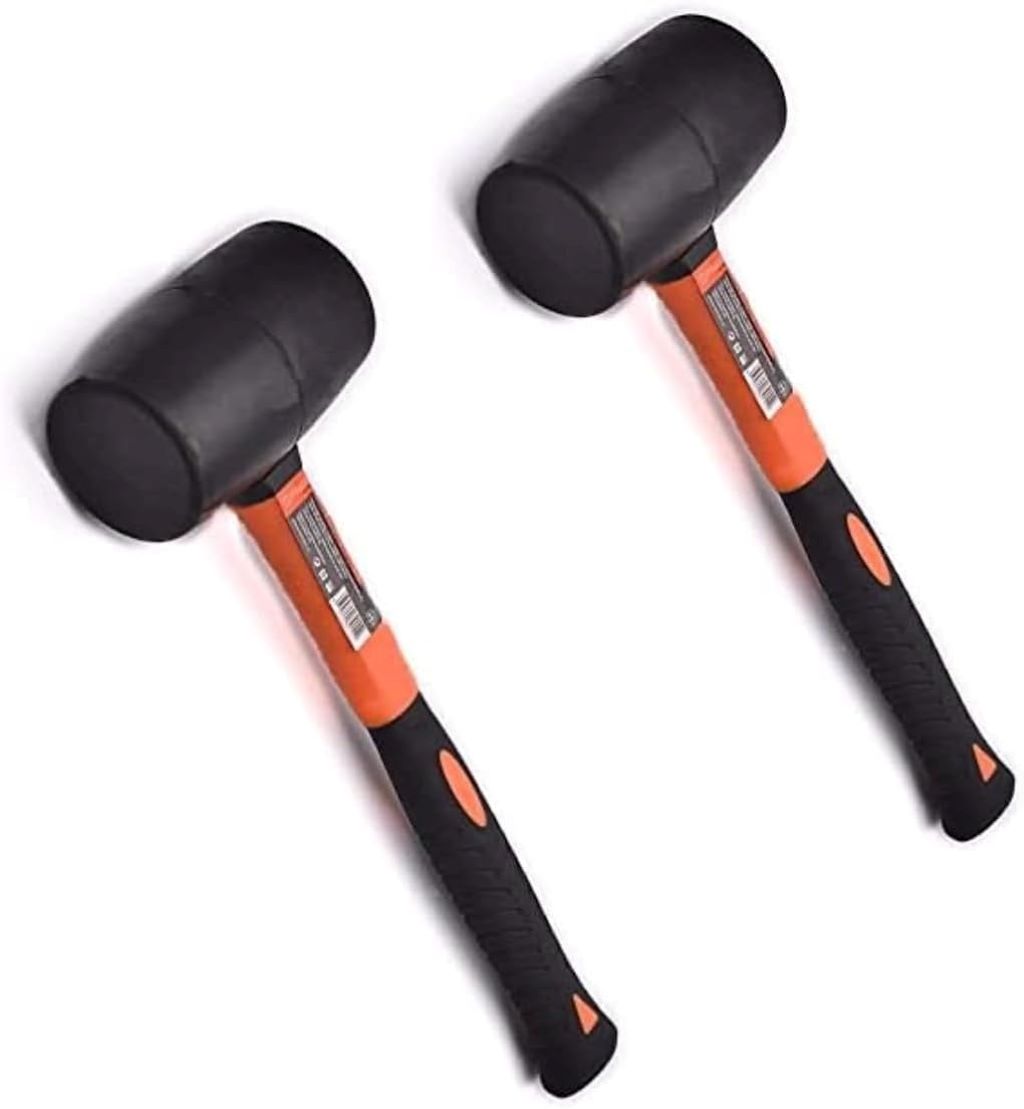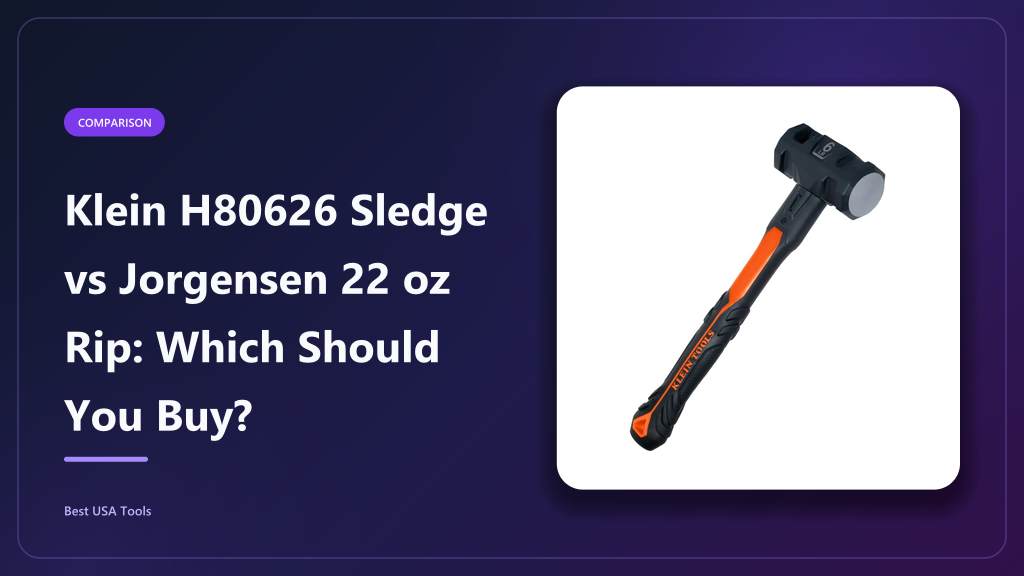
You’re standing in the tool aisle with two very different hammers in front of you, and the Klein Tools H80626 6-Pound Sledge Hammer vs JORGENSEN 22 oz One-piece Forged Rip question isn’t really about which one is better. It’s about which one matches the work on your list. One is a 6-pound striking tool built for demolition and bending rebar. The other is a 22 oz framing hammer made to drive and pull nails.
Here’s the short answer: the Klein Tools H80626 6-Pound Sledge Hammer suits heavy striking, rebar work and demolition, while the JORGENSEN 22 oz One-piece Forged Rip suits framing, board ripping and nail pulling. Below, the research desk breaks down weight, grip, build quality and value using the listings and the buyer reviews we read.


| Product | Details | Rating | Buy |
|---|---|---|---|
|
Editor’s Choice
|
Klein Tools H80626 6-Pound Sledge Hammer |
★★★★⯪
4.8/5
|
Check on Amazon |
|
Top Pick
|
JORGENSEN 22 oz One-piece Forged Rip |
★★★★⯪
4.7/5
|
Check on Amazon |
At a glance
Both hammers earn high marks from buyers, but they solve opposite problems. The Klein H80626 is a small sledge with a 6-pound forged steel head, a fiberglass handle and a shock-absorbing grip, built to hit hard and stay controlled during demolition and rebar work. The JORGENSEN 22 oz is a one-piece forged steel rip hammer with a milled face, magnetic nail holder and straight claw, built for carpentry tasks where you drive and pull fasteners all day. Weight, handle design and intended task separate them far more than their ratings do. One is a two-handed striking tool, the other is a one-handed carpenter’s hammer.
| Spec | Klein Tools H80626 6-Pound Sledge Hammer | JORGENSEN 22 oz One-piece Forged Rip |
|---|---|---|
| Tool type | Small sledge hammer | Rip claw framing hammer |
| Head weight | 6 lb | 22 oz |
| Head material | Forged steel (per feature bullets) | One-piece forged, heat-treated carbon steel |
| Handle and grip | Fiberglass handle, shock-absorbing non-slip grip | Forged steel handle with TPR shock-absorbing grip |
| Striking face | Large smooth, precision-machined flat face | Milled face with magnetic nail starter |
| Nail pulling | No claw, hang hole and rebar pass-through only | Straight rip claw plus side nail puller |
| Overstrike and tethering | Built-in overstrike protection and lanyard hole | Not listed |
| Amazon rating | 4.8/5 from 309 reviews | 4.7/5 from 501 reviews |
| Best sellers rank | #14,185 in Tools & Home Improvement | #15,445 in Tools & Home Improvement |
| Price band | Mid-range | Budget |
Klein Tools H80626 6-Pound Sledge Hammer: strengths and weaknesses
1. Klein Tools H80626 6-Pound Sledge Hammer
Klein Tools has spent more than 160 years making hand tools for electricians, ironworkers and linemen, and the H80626 is the 6-pound member of a family that also comes in 2, 3 and 4-pound versions. The research desk compared the manufacturer’s feature list against the 309 buyer reviews behind its 4.8 out of 5 rating. Here’s the honest split.
Where it shines
A sledgehammer is a striking tool that delivers heavy impact through a large steel head, and this one is sized to do that work in places a full-length sledge won’t fit. Across the reviews we read, buyers describe it as a lineman’s hammer first and a demolition tool second, which matches how Klein markets it.
- Impact in a short package. The manufacturer lists a 6-pound forged steel head on a 16.56-inch body, so you get serious mass without a handle that needs open space to swing.
- Rebar and rod work. Klein states the head bends up to #4 rebar and 1/2-inch rod, a daily task for ironworkers and electrical crews. The hang hole doubles as a rebar pass-through for carrying.
- Overstrike protection. Overstrike protection is a reinforced section below the head that absorbs missed swings before they reach the handle, and it’s built in here rather than added on.
- Grip and vibration control. The handle carries a shock-absorbing, non-slip grip, and buyer reviews report less hand fatigue than they expected from a 6-pound tool.
- Tethering ready. A lanyard hole lets you tie the hammer off at height, and the hang hole makes it easy to clip on a belt.
- Solid buyer feedback. 4.8 out of 5 from 309 reviews and a best sellers rank of #14,185 in Tools & Home Improvement point to steady demand from working buyers.
If you’re already building out a Klein kit, our review of the Klein Tools 80016 breaker finder and GFCI outlet tester covers another job-site staple.
Where it falls short
None of these are deal breakers if you genuinely need a 6-pound sledge. They matter if you’re shopping for one hammer to cover carpentry, repairs and the occasional hard strike.
- It’s heavy. Listed item weight is 7.3 pounds. That’s fine at waist height and punishing overhead, and fatigue is the most common trade-off mentioned in the reviews we read.
- The spec panel is muddled. The detail fields list the head and handle material as plastic, while the feature bullets describe a forged steel head on a fiberglass handle. Trust the bullets, but that’s sloppy metadata for a professional tool.
- No claw, no nail pulling. This is a striking tool. It won’t pull a fastener or pry a board, so it doesn’t replace the hammer on a carpenter’s belt.
- Short reach. At 16.56 inches long, the handle limits leverage compared with a full-length sledge, so deep demolition needs more swings.
- Single-purpose spend. It sits in the mid-range price band, which is more than a budget framing hammer and buys you one category of work.
JORGENSEN 22 oz One-piece Forged Rip: strengths and weaknesses
2. JORGENSEN 22 oz One-piece Forged Rip
Jorgensen built its name on bar clamps and woodworking gear, and this rip hammer comes from Hangzhou Great Star Industrial, the manufacturer behind the brand. It carries a 4.7 out of 5 rating from 501 reviews, the deeper review pool in this comparison. Here’s where the forging earns its keep and where the design shows limits.
Where it shines
A rip claw hammer is a carpentry tool that drives nails and uses a straight claw to pry boards apart and pull fasteners. The Jorgensen spec sheet reads like a checklist for framing crews, and the reviews back most of it up.
- One-piece forged steel. One-piece forged construction is a manufacturing method that shapes the head and handle from a single billet of heat-treated carbon steel, so there’s no joint or epoxy to loosen under repeated strikes.
- Grip that absorbs shock. The handle is coated in TPR, a thermoplastic elastomer that stays slightly tacky and soaks up vibration. Buyer reviews describe the grip as comfortable through long framing sessions.
- Magnetic nail starter. A magnetic nail starter is a recessed holder that keeps a nail upright so you can set it one-handed, and it’s the feature reviewers mention most often.
- Milled face and straight claw. A milled face is a striking surface with a textured pattern that bites the nail head for fewer glancing blows. The rip claw and side nail puller handle board ripping and nail removal.
- Review depth. 4.7 out of 5 from 501 reviews and a best sellers rank of #15,445 in Tools & Home Improvement put it essentially level with the Klein on popularity.
Where it falls short
Most of these limits come down to task fit rather than defects. The point is to know which jobs you’d hand to a different hammer.
- The milled face marks trim. That texture bites nails but leaves visible dents on softwood trim and finished surfaces, so keep a smooth-faced hammer for finish work.
- 22 oz gets tiring. This is a framing weight. Overhead work and long trim sessions will feel it, which is why the brand also sells 16 oz and 20 oz versions.
- No listed tethering or overstrike protection. The listing doesn’t mention a lanyard hole or a reinforced neck, which matters on scaffolding or ladders.
- It’s not a demolition tool. The claw pries boards and pulls nails, but the head isn’t meant for striking concrete, driving stakes or bending rebar.
- Carbon steel needs care. A forged steel body and milled face will show surface rust without an occasional wipe of oil, especially in a damp truck bed.
Head-to-head
Sledge Hammer vs Forged Rip: weight, swing and striking power
The gap here is enormous. The Klein carries a 6-pound head and weighs 7.3 pounds overall, and it’s swung with two hands for anything serious. The Jorgensen weighs a fraction of that at 22 oz and is designed for one-handed swings at nail height. Momentum does the rest: a 6-pound head at the end of a 16.56-inch handle delivers far more force per strike, which is why the Klein bends #4 rebar while the Jorgensen drives nails. The trade-off is control. The heavier tool needs a clean line and a steady stance, while the 22 oz hammer can be corrected mid-swing. If your work is breaking, driving or bending, the Klein takes this round without much argument.
Which hammer is more comfortable over a long day?
Comfort favors the Jorgensen, but not for the reason most shoppers expect. Both handles are built to reduce vibration: Klein uses a shock-absorbing, non-slip grip on a fiberglass handle, and Jorgensen coats a forged steel handle in TPR. The difference is mass. Swinging 7.3 pounds repeatedly tires your shoulders and wrists far faster than swinging 22 oz, and overstrike protection doesn’t change that. Buyer reviews of the Jorgensen describe the grip as comfortable during framing, which matches the design intent. The Klein’s grip is well executed for a sledge and the dampening is real, but an afternoon overhead with it is a workout. For all-day use, the lighter tool wins.
Build materials and long-term durability
The Jorgensen has the cleaner durability story. One-piece forging shapes the head and handle from a single billet of heat-treated carbon steel, so there’s no epoxy joint, no wedge, and no separate handle to replace after a bad swing. The Klein takes a different route: a forged steel head on a fiberglass handle, with overstrike protection molded into the neck. Fiberglass is strong and absorbs shock, and the collar guards the most common failure point. But a handle is still a wear item, and the listing’s own material fields disagree about whether it’s fiberglass or plastic. Both tools should last years in the right hands. On construction method alone, the one-piece forging edges ahead.
Safety features and job-site practicality
For elevated work, the Klein is the safer tool to own. It has a lanyard hole for tethering, which matters on scaffolding or a ladder, plus a hang hole and a rebar pass-through for carrying. Overstrike protection also reduces the chance of a handle failure after a missed swing. The Jorgensen’s listing doesn’t mention a lanyard hole or a reinforced neck, so if you need to tie a hammer off at height, that’s a gap you’d have to work around. In exchange, the Jorgensen offers a magnetic nail starter that keeps your second hand free, which is its own safety feature when you’re balanced on a joist. Different risks, different answers.
Customer ratings, review counts and best sellers rank
This one is close enough to call a tie. Klein sits at 4.8 out of 5 from 309 reviews, Jorgensen at 4.7 out of 5 from 501. One has the higher score, the other has the deeper sample, and a difference of 0.1 of a star is inside normal variation for hand tools. Best sellers rank is similarly tight: #14,185 for the Klein against #15,445 for the Jorgensen in Tools & Home Improvement. Both figures describe steady demand from working buyers rather than a viral spike, the pattern you’d expect from trade-focused brands. Word of mouth on a trade floor, the kind of feedback you’d hear at an event like the Midwest Tool Expo 2027, tends to match those scores.
Value for money: which one earns its place?
Value depends on how many jobs the tool covers. The Jorgensen sits in the budget price band, carries 501 reviews, and handles framing, ripping and nail pulling, which makes it the easier purchase for a home toolbox or a first-year carpenter. The Klein sits in the mid-range band and does exactly one job: heavy striking. If that job shows up every week, the cost per use is low and the tool is worth it. If it’s a once-a-year task, you’re paying for capability that sits in the garage. For demolition where rebound matters, a NEIKO dead blow hammer set does yet another job. For the widest range of tasks per dollar, the Jorgensen takes the round.
Which one should you buy?
Pick Klein Tools H80626 6-Pound Sledge Hammer if you…
Pick the Klein Tools H80626 6-Pound Sledge Hammer if your work involves heavy striking rather than carpentry. It’s the tool for driving stakes, breaking up concrete edges, bending #4 rebar and 1/2-inch rod, and shifting stubborn fixtures. The lanyard hole and hang hole make it easier to secure on a belt or tie off at height, and the overstrike protection is worth having if you swing hard and occasionally miss. If you already own Klein electrical tools, the build standard will feel familiar. Skip it if you want one hammer for hanging pictures, building a deck and pulling nails.
Pick JORGENSEN 22 oz One-piece Forged Rip if you…
Pick the JORGENSEN 22 oz One-piece Forged Rip if your list is mostly carpentry. Framing walls, decking, building crates, ripping nailed boards and pulling fasteners all sit in its wheelhouse, and the magnetic nail starter frees a hand when you’re working alone. It’s lighter, cheaper and far more versatile than the sledge, and the one-piece forged body gives it a long service life with no handle to replace. Choose it if you want one hammer that covers most household and job-site tasks, and you don’t need to break concrete.
Other options
Both brands sell nearby sizes. Klein lists 2, 3 and 4-pound versions of the same fiberglass-handle design, so you can step down if 6 pounds is more than you need. Jorgensen offers 16 oz and 20 oz versions of the same rip hammer, which suit trim work and general carpentry better than the 22 oz. If your priority is demolition with less shock, a dead blow hammer is a different tool worth a look. Framing crews often pair a rip hammer with a nail gun, and a small cordless driver covers the rest.
| Driving stakes, breaking up concrete or bending rebar | Klein Tools H80626 6-Pound Sledge Hammer |
| Framing walls, decking and general carpentry | JORGENSEN 22 oz One-piece Forged Rip |
| Pulling nails and ripping nailed boards apart | JORGENSEN 22 oz One-piece Forged Rip |
| Working at height where tethering is required | Klein Tools H80626 6-Pound Sledge Hammer |
| One hammer for a home toolbox on a budget | JORGENSEN 22 oz One-piece Forged Rip |
Frequently asked questions
What is a 6-pound sledge hammer used for?
A sledgehammer is a heavy striking tool that trades finesse for impact, and a 6-pound head sits at the small end of the sledge range. Klein lists this one for heavy construction work, bending up to #4 rebar and 1/2-inch rod, driving anchors and fixtures, and demolition. The short 16.56-inch handle makes it easier to swing in tight spaces than a full-length sledge. It is not a nail hammer, and it has no claw for pulling fasteners.
Is a 22 oz hammer too heavy for general use?
22 oz is a framing weight, not a general-purpose weight. For deck framing, formwork and driving large nails it’s an advantage, since fewer swings get the nail home. For trim, cabinet work or anything overhead, a 16 oz hammer is easier to control over a long day. Buyer reviews of the JORGENSEN 22 oz generally describe it as comfortable for framing, and the brand also sells 16 oz and 20 oz versions of the same design.
Which brand has better customer ratings?
Close. The Klein Tools H80626 sits at 4.8 out of 5 from 309 reviews, and the JORGENSEN 22 oz sits at 4.7 out of 5 from 501 reviews. The Klein advantage is 0.1 of a star across a smaller sample. In best sellers rank the two are nearly level, at #14,185 and #15,445 in Tools & Home Improvement. A tenth of a star is not a reason to pick a sledge over a rip hammer, and both scores reflect solid owner satisfaction.
Can a sledge hammer replace a rip hammer?
No. A rip claw hammer is a carpentry tool that drives nails and uses a straight claw to pry boards and pull fasteners, and a sledge has neither a claw nor a nail-driving face. The Klein can drive stakes and anchors, but it will damage nail heads and can’t pull them. Most framing crews carry a rip hammer and leave the sledge for demolition. If you want one hammer for both jobs, the rip hammer covers more tasks.
How does a shock-absorbing grip compare with a one-piece forged handle?
Shock-absorbing grip describes the handle material, while one-piece forged describes how the head and handle are made. Klein uses a fiberglass handle with a vibration-dampening, non-slip grip and overstrike protection. Jorgensen forges the head and handle from a single piece of carbon steel and coats it in TPR. Forged steel removes the joint that can loosen, while a fiberglass handle with a soft grip tends to feel kinder after repeated heavy swings.
Is the JORGENSEN 22 oz one-piece forged rip hammer good for framing?
Yes, that’s its main job. The milled face grips the nail head, the magnetic starter holds a nail for one-handed setting, and the straight claw rips nailed boards apart. The 22 oz head drives framing nails with fewer swings than a 16 oz hammer, and 501 buyer reviews average 4.7 out of 5. The trade-offs are weight over long sessions and face marks on finish-grade lumber. Our roundup of cordless power tools for 2026 covers the nailers that often replace the hammer on big framing jobs.
Final verdict
Both hammers are well made, and the choice comes down to the work in front of you. For demolition, stake driving, rebar and rod bending, the Klein Tools H80626 6-Pound Sledge Hammer is the stronger tool, and it earns 4.6 out of 5 from the research desk. A forged 6-pound head, a shock-absorbing grip, overstrike protection and a lanyard hole make it a serious professional tool, and the 7.3-pound total weight is the price of that capability.
For carpentry, framing and general repairs, the JORGENSEN 22 oz One-piece Forged Rip wins on overall value with 4.5 out of 5. One-piece forged carbon steel, a magnetic nail starter, a milled face and a straight claw in the budget price band, backed by 501 reviews at 4.7 out of 5, is a lot of tool per dollar.
On the Sledge Hammer vs Forged Rip decision, buy the Klein if you need force, and the Jorgensen if you need range.
Affiliate disclosure: This article contains affiliate links. If you buy through them we may earn a commission at no extra cost to you. It does not change which products we recommend.