Tools are getting smarter every year. Sensors, software, and better batteries now sit inside drills, saws, and measuring devices. As a result, shops and job sites work faster and waste less. If you want to see these changes up close, mark your calendar for January 28 to 30, 2027. That is when the Midwest Tool Expo 2027 returns to the Michiana Event Center in Shipshewana, Indiana.
This guide covers the smart tools and technology trends worth your time. Additionally, it shows you how to plan your visit and what to ask exhibitors. Exhibitor lists change from year to year, so treat the trends below as a map of what to look for, not a promise of specific products.
Why Smart Tools Matter Right Now
Skilled workers are hard to find. Material costs keep climbing. Meanwhile, customers expect tight deadlines and clean results. Smart tools help with all three problems. They catch mistakes early, they save time on setup, and they give owners clear data about how work gets done.
Consider a simple example. A cordless drill that senses a stuck bit can stop before it twists your wrist or ruins a board. Likewise, a laser measure that sends numbers straight to a phone removes handwriting errors. Small gains like these add up across a busy week.
However, smart does not always mean complicated. The best new tools feel familiar in the hand. They simply add a layer of help in the background. Keep that idea in mind as you walk the show floor.
Connected Power Tools
Bluetooth and App Control
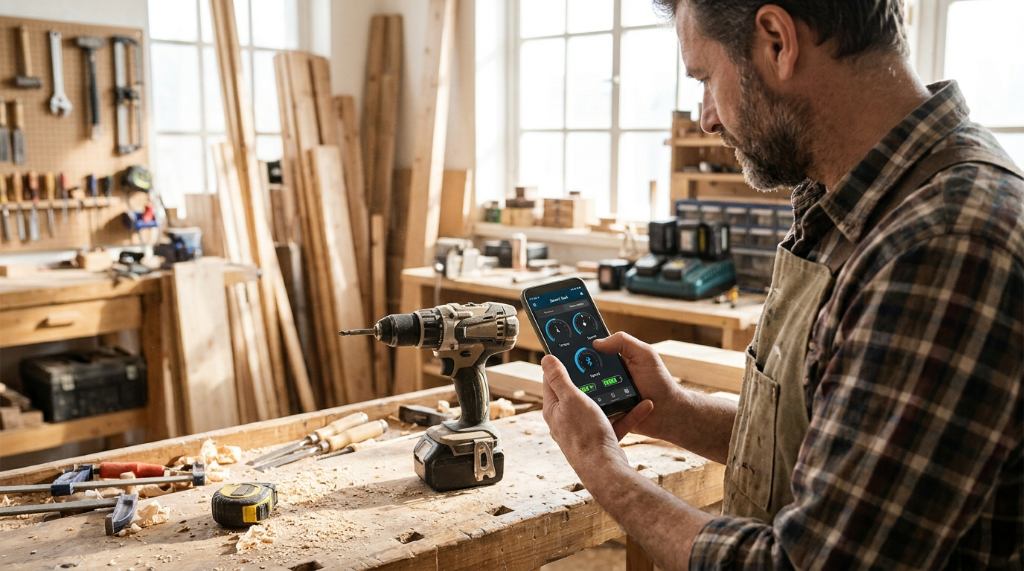
Many leading brands now add Bluetooth to drills, impact drivers, and saws. You pair the tool with your phone, then adjust speed, torque, and shutoff settings on a screen. Therefore, a crew can set the same fastening pressure for every cabinet in a kitchen job.
Some tools also save custom modes. A cabinet maker might store one setting for soft maple and another for oak. With one tap, the tool switches over. This saves trial and error, and it protects expensive material.
Usage Tracking and Theft Prevention
Lost and stolen tools cost contractors thousands of dollars a year. Connected tools fight back with location tags and lock features. If someone takes a tool off the job site, the owner can disable it from an app. In addition, the app shows who last used each tool and for how long.
Look for these features when you talk with vendors:
- Location tracking that works inside trucks and storage rooms
- Remote lock and unlock for each battery or tool
- Usage logs that show run time and service needs
- Alerts when a tool leaves a set work zone
Battery and Cordless Innovation
More Power Without the Cord
Battery technology moves fast. Higher voltage platforms now run table saws, miter saws, and even small planers without a cord. Because of this, woodworkers and builders can work in places with no outlet. They can also cut the trip hazards that cords create.
Cell design keeps improving too. New cells hold more energy in the same size pack, and they handle heat better. Consequently, a pack can run longer on a heavy cut without a drop in speed.
Smart Batteries and Fast Charging
Modern packs carry tiny computers. They track charge cycles, temperature, and health. Some send a note to your phone when a pack needs rest or replacement. Fast chargers can fill a large pack in under an hour, which keeps a crew moving through the day.
Ask exhibitors how many tools share one battery platform. A single platform for drills, saws, lights, and vacuums can save a shop a lot of money over time.
AI and Machine Vision in the Shop
Cameras That Check Quality
Machine vision uses cameras and software to inspect parts. On a production line, it spots a missing hole, a chipped edge, or a wrong size in a fraction of a second. Small shops now have access to this kind of system at lower prices than ever.
Some CNC routers use cameras to find the edge of a board and line up a cut. Others read a marked pattern on a sheet and adjust the toolpath to match. This cuts waste, particularly with costly hardwood and sheet goods.
Saw Safety and Smart Dust Control
Safety systems have grown sharper. Certain table saws sense skin contact and stop the blade in milliseconds. Meanwhile, newer dust collectors turn on by themselves when a tool starts. They also adjust suction to match the job. As a result, the air stays cleaner and the shop stays safer.
Expect more of these systems to reach mid-priced machines. Watch for demos, and ask how much a replacement part costs after a trigger event.
Digital Measuring and Layout Tools
Accurate measuring sits at the heart of every project. Digital tools now make that step faster and more reliable. Laser distance meters read a room in seconds. Digital calipers and angle finders show exact numbers on a clear screen. Many of them send readings to a phone or tablet.
Layout tools have changed as well. Rotating lasers and line lasers now project guides onto walls, floors, and ceilings, and a few models track their own position as they go. Furthermore, handheld scanners can capture a whole room and turn it into a digital plan. Installers use those plans to order materials with fewer errors.
When you test these tools, check three things. First, look at how clear the screen is in bright light. Second, ask how long the battery lasts. Third, see how easily the tool shares data with the software you already use.
Robotics and Collaborative Machines
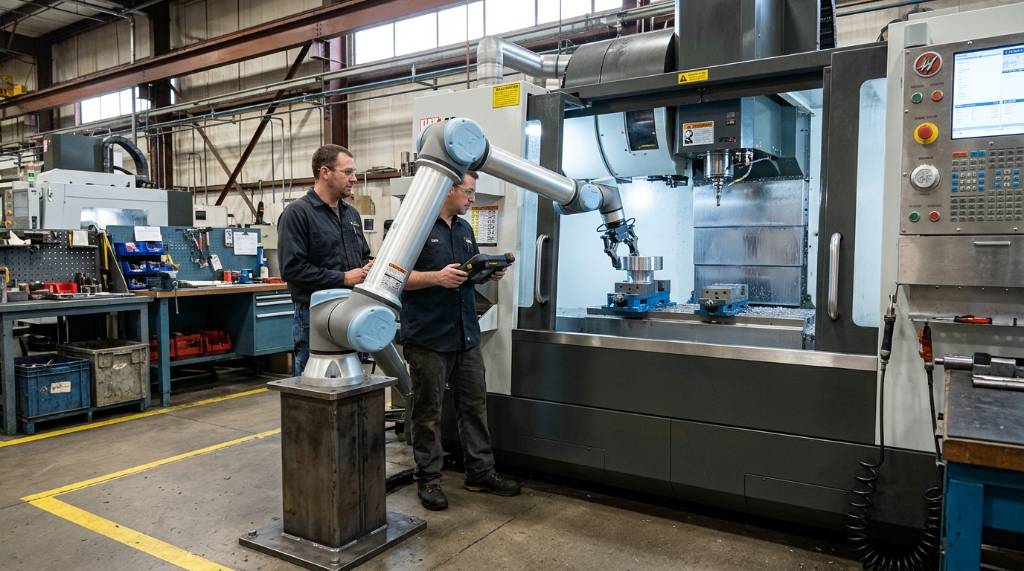
Robots no longer belong only to giant factories. Collaborative robots, often called cobots, work next to people and carry a much smaller price tag. A cobot arm can sand, drill, load a machine, or move parts between stations. It does the dull, repeat work so your team can focus on skilled tasks.
Trade shows give you a rare chance to try these machines. You can watch a cobot load a CNC mill, then ask the vendor how long setup takes. Most vendors will tell you that a basic task takes days to learn, not months.
Mobile robots deserve a look too. These small carts move parts and materials around a plant without a driver. In a large shop, they save steps and cut forklift traffic.
Smart Safety Gear and Wearables
Personal protective equipment is getting a tech upgrade. Smart hearing protection lets you talk to a coworker while it blocks harmful noise. Safety glasses now include anti-fog coatings and built-in displays. Some work gloves track grip force to warn about strain.
Wearable sensors add another layer of care. A small clip on a belt can detect a fall and call for help. Other devices watch heat, noise, and air quality. Therefore, managers can spot a risk before it becomes an injury.
Of course, workers must feel comfortable with any gear that tracks them. Ask vendors how they handle privacy and what data they store.
3D Printing and Digital Fabrication
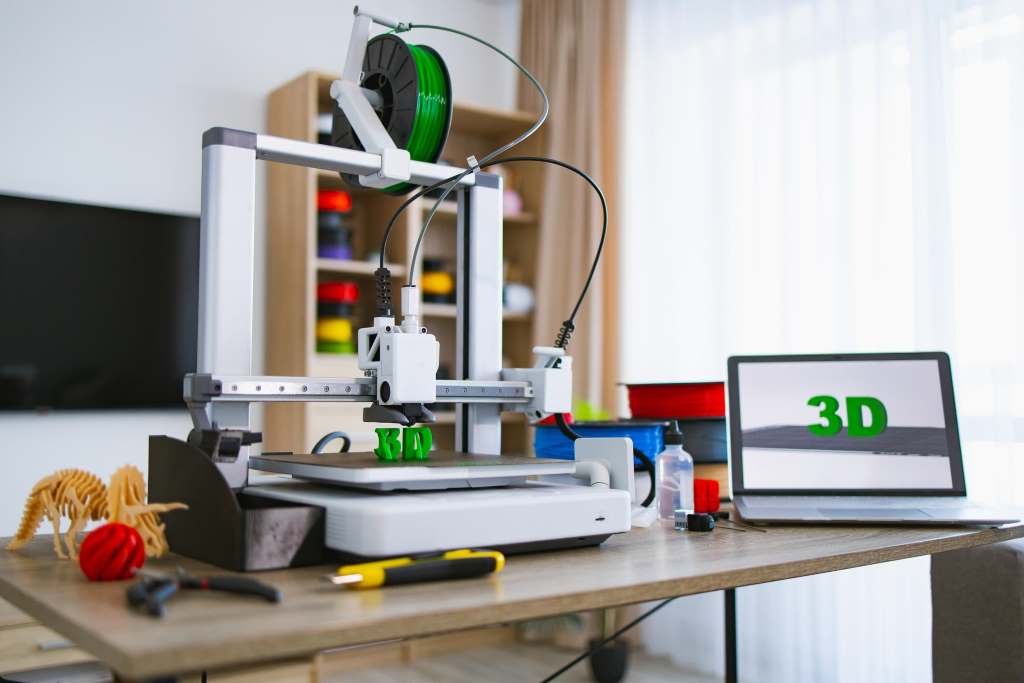
Additive manufacturing keeps growing in small shops. A 3D printer can make a custom jig, a clamp, or a replacement knob in a few hours. That beats waiting a week for a part to arrive.
Desktop laser cutters and engravers also deserve attention. They cut thin wood, acrylic, and leather with fine detail. Shops use them for signs, inlays, and product labels. In addition, many new models include cameras that line up the design with the material on the bed.
If you run a woodworking or metalworking business, these machines can open new product lines. Compare print size, material choices, and software ease before you buy.
Sustainability and Energy Efficiency
Green thinking now shapes tool design. Brushless motors waste less energy and last longer than older brushed motors. Efficient dust systems reduce air pollution in the shop. Meanwhile, some makers now recycle old battery packs and offer repair programs for worn tools.
These features save money as well as resources. A tool that lasts ten years costs less per day than a cheap one that fails in two. Therefore, ask vendors about repair options, spare parts, and warranty length. Those answers reveal how well a brand stands behind its product.
Tool Management Software and Inventory Tech
Software ties many of these tools together. Tool management apps track every item you own, where it sits, and when it needs service. Scan a code on a tool, and the app shows its history. Some systems even order replacement blades or bits when your stock runs low.
Cloud dashboards give owners a clear view of costs per job. Therefore, a contractor can see which tools earn their keep and which ones sit idle. This helps with budgets and with bid pricing.
Before you commit, ask about monthly fees, data export, and support. Good software should grow with your business and should not lock you in.
Quick Comparison of Smart Tool Trends
The table below sums up the main trends, who gains the most, and what to ask at the booth.
| Technology | What It Does | Who Benefits Most | Question to Ask |
| Connected power tools | Adjusts settings and tracks use through an app | Contractors and crews | Does the app work offline? |
| Smart batteries | Reports charge, heat, and health | Cordless tool owners | How many tools share one platform? |
| Machine vision | Inspects parts and aligns cuts | Production shops | How long does setup take? |
| Digital measuring | Captures exact data and sends it to a device | Installers and builders | Does it export to my software? |
| Cobots | Handles repeat tasks beside workers | Small manufacturers | What training do you include? |
| Safety wearables | Warns about noise, falls, and strain | Safety managers | How do you protect worker privacy? |
| 3D printers and lasers | Makes jigs, parts, and custom items | Makers and woodworkers | Which materials does it handle? |
| Tool management software | Tracks inventory, service, and cost | Business owners | What are the monthly fees? |
How to Get the Most From Your Visit
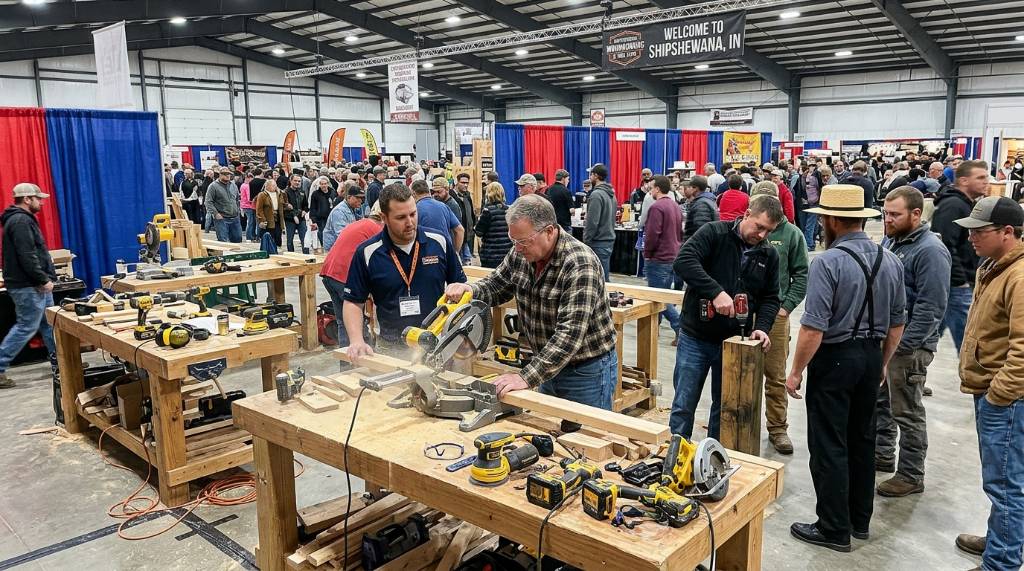
The Midwest Tool Expo 2027 runs January 28 to 30, 2027, at the Michiana Event Center, 455 E Farver Street, Shipshewana, Indiana. In past years, the show has drawn hundreds of vendors, several auction rings, and a full seminar schedule. Check the official event page for current hours, ticket details, and the seminar list before you go.
Before You Go
- List your top three problems, such as waste, slow setup, or tool loss
- Set a budget so you can judge deals with a clear head
- Bring a notebook or use your phone to save vendor names and prices
- Wear comfortable shoes, because the halls are large
At the Show
Start with a quick lap to see the layout. Then return to the booths that match your list. Test tools with your own hands whenever you can. Ask for demos with your own materials, and compare two or three brands side by side.
Attend at least one seminar. Experts often share practical tips that no brochure includes. Additionally, the hallway chats with other woodworkers and builders can teach you plenty.
After the Show
Review your notes within a week. Send follow-up emails to the vendors you liked and ask for written quotes. Then compare costs, warranties, and support options. Take your time, because a smart tool only pays off when it fits your daily work.
Conclusion
Smart tools and technology are changing how people build, cut, and measure. Connected power tools give you control and tracking. Better batteries cut the cord. Machine vision and AI reduce waste, while cobots and 3D printers take on repeat tasks. Safety wearables and software round out the picture by protecting workers and organizing the business.
However, the best choice always depends on your needs. Start with your biggest problem, then look for the tool that solves it. The Midwest Tool Expo 2027 gives you a chance to compare options, ask questions, and test gear in one place. Plan ahead, bring your list, and enjoy three days of hands-on discovery.
Frequently Asked Questions
When is Midwest Tool Expo 2027?
The show runs from January 28 to 30, 2027.
Where does the expo take place?
It takes place at the Michiana Event Center, 455 E Farver Street, Shipshewana, Indiana.
What kinds of products can I see?
Past shows have featured woodworking tools, construction equipment, power tools, and business solutions. Smart and cordless tools keep gaining space.
Is there an auction at the show?
Past years included several auction rings that ran at the same time. Check the official site for the 2027 auction schedule.
Do I need to buy a ticket?
Admission rules can change. Visit the official event website for current ticket and entry details.
What are smart tools?
Smart tools use sensors, software, or wireless links to add features such as tracking, automatic settings, and safety stops.
Are cordless tools strong enough for professional work?
Yes. Modern high voltage batteries now power saws and other heavy tools that once needed a cord.
Is a cobot affordable for a small shop?
Prices have dropped, and many cobots now suit small businesses. Ask vendors about financing and training.
How should I prepare for the show?
List your top problems, set a budget, wear comfortable shoes, and plan which seminars to attend.
Can I test tools before I buy?
Many exhibitors offer hands-on demos. Bring your own material for a realistic test.