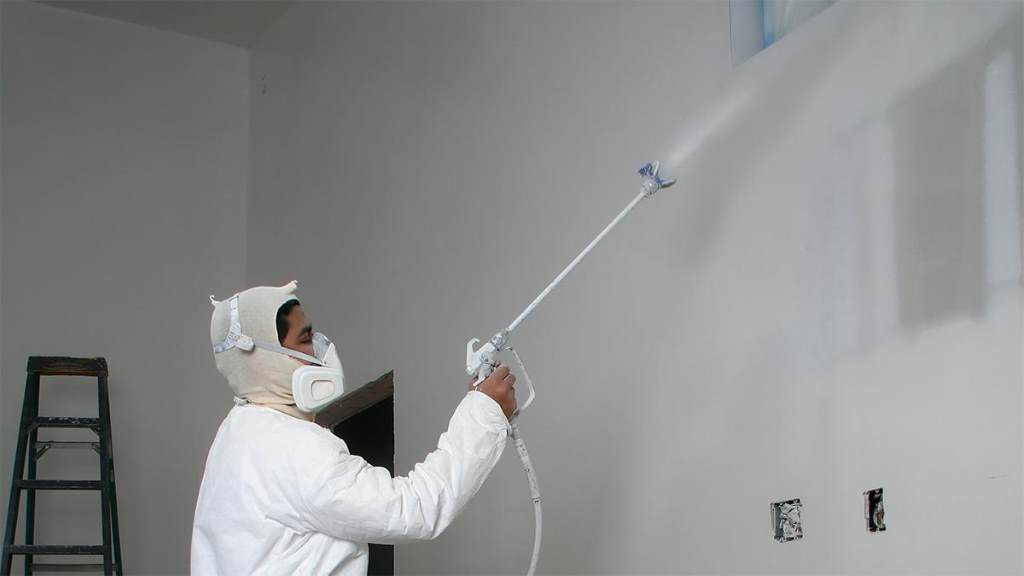
Painting projects rarely fail because of paint quality. They fail because application tools create uneven coats, fatigue, and wasted material. The right sprayer changes the entire workflow. The United States Environmental Protection Agency notes that efficient spray equipment can reduce coating waste and overspray by up to 30 percent in controlled environments. Meanwhile, construction productivity studies from the Bureau of Labor Statistics consistently show faster surface coverage when using spray systems compared with rollers or brushes.
That said, not everyone needs professional grade equipment. Many users simply want reliable, affordable tools that deliver clean results without complicated setup. This guide explores practical options that balance performance, usability, and cost efficiency. The goal is simple. Help you understand how each sprayer feels in daily use and where it fits best.
A Quick Overview of The Best Budget Friendly Paint Sprayer
These tools cover airless systems, HVLP guns, LVLP models, and useful accessories that improve spray control.
- MaXpray M1 Airless Paint Sprayer
- RUST OLEUM Comfort Grip Spray Handle
- ENDOZER Professional HVLP Spray Gun Set
- MaXpray M1 Airless Paint Sprayer InoKraft Version
- InoKraft D1 LVLP Air Spray Gun Basic Kit
- Graco TRU311 TrueAirless 311 Spray Tip
- AEROPRO Tools R500 LVLP Air Spray Gun
Best Budget Friendly Paint Sprayer of 2026
Choosing an affordable sprayer does not mean compromising results. Each product below serves a different use case, from quick touch ups to automotive finishing.
MaXpray M1 Airless Paint Sprayer
Reliable thinning free home sprayer
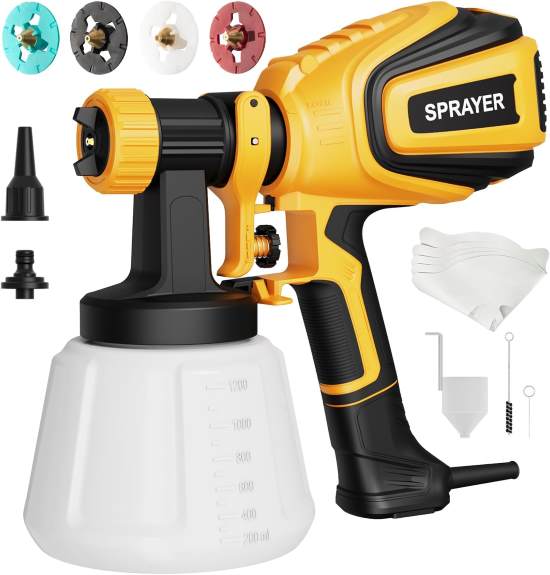
This airless unit feels surprisingly capable for medium DIY projects. Setup takes a little patience at first, but once primed, it delivers steady coverage across walls and exterior siding. The lack of thinning simplifies prep work, which beginners appreciate. The sprayer handles latex paints well and produces minimal overspray when you maintain correct distance.
It suits homeowners tackling room makeovers, fences, or decks. Cleaning requires careful flushing after each session, yet the process remains manageable with warm water and proper solvent use. The tool struggles with fine finishing tasks or intricate cabinetry where HVLP systems offer more precision.
User Review: Daniel R.
I used this for repainting my garage interior. The sprayer covered large areas quickly, and I liked that I did not need to thin the paint. Cleanup took effort, but the results looked smooth.
Key Features
• Airless spray delivery provides fast wall coverage with fewer passes
• Minimal overspray design helps reduce paint waste indoors
• Accessory bundle included supports immediate setup without extra purchases
• Up to ten gallon capacity range suits multi room projects
• Beginner friendly pressure control makes adjustment easier though learning curve remains
Pros and Cons
| Pros | Cons |
| Strong wall coverage speed | Cleanup requires careful flushing |
| Handles thick latex paints | Not ideal for fine finishing |
| Stable pressure performance | Slight learning curve initially |
RUST OLEUM Comfort Grip Spray Handle
Simple control upgrade for aerosol cans
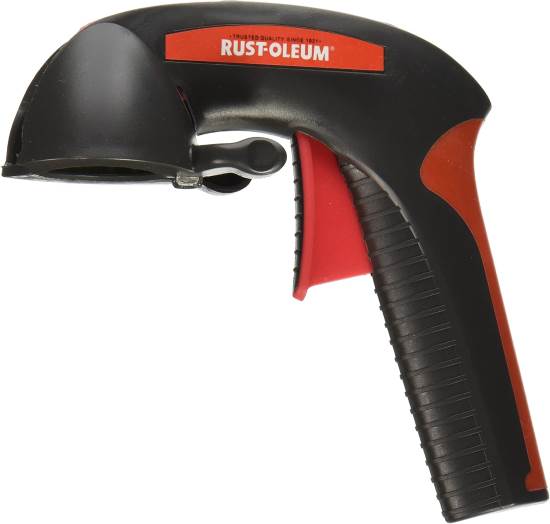
This handle transforms standard spray cans into easier to manage tools. In practice, it reduces finger fatigue and improves trigger control during longer sessions. The grip feels lightweight and intuitive, especially for quick touch ups or craft projects.
It works best for small surface repairs, metal furniture refresh, or decorative work. Since it relies on aerosol cans, users must still manage overspray and ventilation. Durability remains solid, but the accessory offers limited value for large painting jobs.
User Review: Karen S.
I use spray paint for garden furniture often. This handle made a big difference in comfort. My hand did not cramp, and I felt more control over the spray pattern.
Key Features
• Ergonomic trigger mechanism reduces finger fatigue during repetitive spraying
• Universal aerosol compatibility allows use with most standard spray cans
• Lightweight plastic body keeps handling comfortable though not heavy duty
• Improved spray control helps achieve smoother coats on small items
• Quick snap on attachment simplifies switching between cans
Pros and Cons
| Pros | Cons |
| Reduces hand fatigue significantly | Limited to aerosol cans |
| Easy snap on design | Not suited large projects |
| Improves spray consistency | Plastic build feels basic |
ENDOZER Professional HVLP Spray Gun Set
Versatile multi nozzle finishing gun
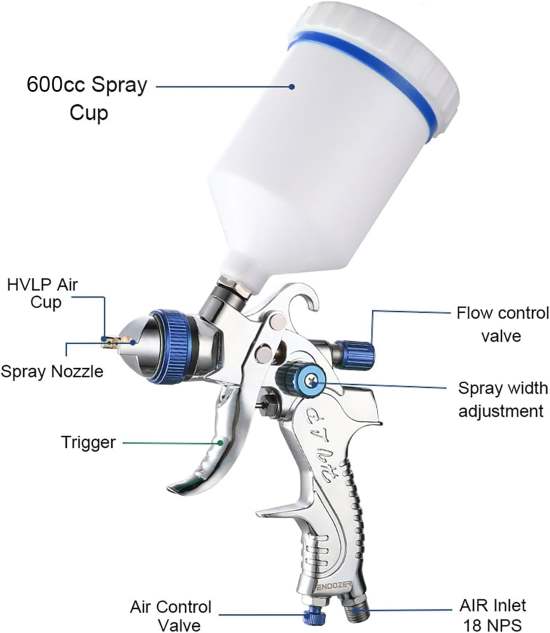
This HVLP set feels tailored for users who value finish quality. The gravity feed design allows controlled paint flow, which works well for cabinets, furniture, and automotive panels. Multiple nozzle sizes expand versatility across primers, stains, and clear coats.
The gun requires an air compressor and careful viscosity adjustment. Cleaning remains detailed but manageable with proper solvent flushing. Beginners may need practice dialing air pressure, yet the learning curve rewards with smooth finishes.
User Review: Miguel T.
I refinished kitchen cabinets with this gun. Once I adjusted the nozzle and air pressure, the finish looked professional. Cleaning took time, but I expected that with HVLP tools.
Key Features
• Multiple nozzle options included support different coating viscosities
• Gravity feed cup design improves paint efficiency and reduces waste
• Fine atomization capability helps create smooth furniture finishes
• Adjustable spray pattern controls allow horizontal and vertical coverage
• Metal construction durability offers long term reliability with proper care
Pros and Cons
| Pros | Cons |
| Smooth finishing capability | Requires external air compressor |
| Versatile nozzle selection | Setup needs practice time |
| Good material transfer efficiency | Detailed cleaning routine |
MaXpray M1 Airless Paint Sprayer InoKraft Version
Refined airless sprayer for DIY projects
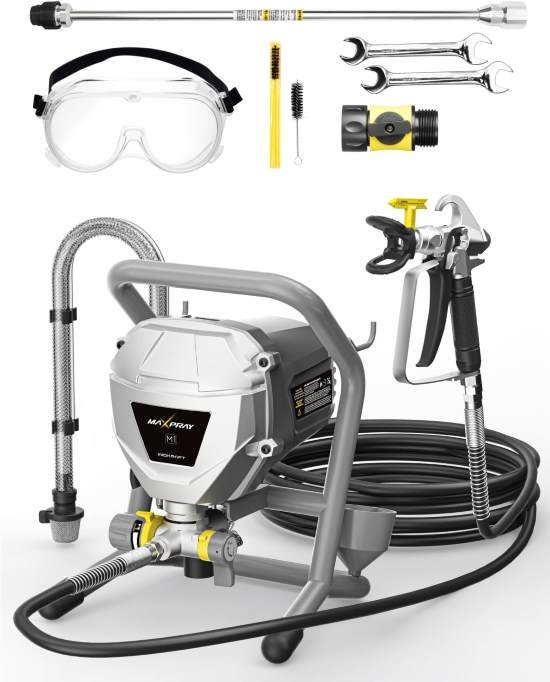
This variant mirrors the original MaXpray concept but introduces subtle improvements in handling and accessory design. In real use, it feels slightly more balanced and easier to maneuver during extended sessions. Coverage remains strong for walls and exterior surfaces.
The sprayer suits users planning seasonal repainting or rental property maintenance. Maintenance mirrors typical airless systems, requiring consistent flushing and filter care. It may feel oversized for small detail projects.
User Review: Hannah L.
I used this for repainting exterior siding. The coverage impressed me, and I liked the included accessories. Cleanup was the only time consuming part.
Key Features
• Balanced sprayer frame design improves handling during longer sessions
• Thinning free paint capability simplifies preparation workflow
• Accessory focused kit supports varied project setups
• Consistent pressure output helps maintain even coats across large surfaces
• DIY oriented design approach makes it accessible though still powerful
Pros and Cons
| Pros | Cons |
| Consistent exterior coverage results | Cleanup requires patience |
| Balanced handling feel | Overkill small detail work |
| Works with thicker coatings | Storage needs space |
InoKraft D1 LVLP Air Spray Gun Basic Kit
Efficient low pressure automotive style sprayer
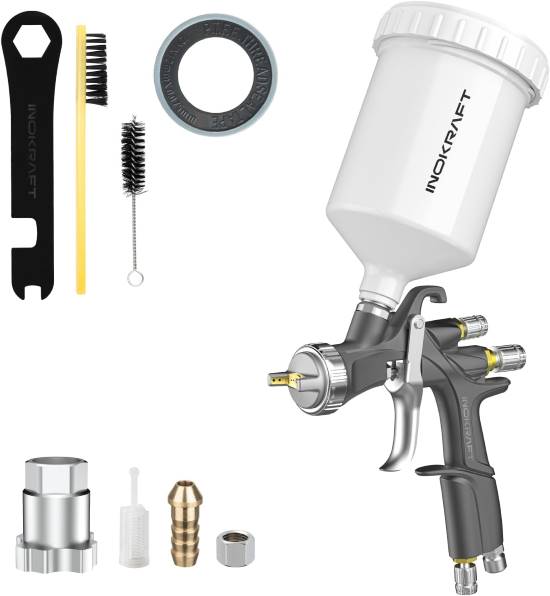
The LVLP approach reduces air consumption while maintaining decent transfer efficiency. In practice, the gun feels responsive and comfortable for detailed painting tasks such as trim, car panels, and small furniture. The included accessories help beginners start quickly.
It requires compressor support and careful pressure tuning. Compared with HVLP, the learning curve feels slightly easier. The sprayer may struggle with very thick coatings without thinning.
User Review: Omar K.
I used this for repainting a motorcycle tank. The spray felt controlled, and overspray stayed minimal. I needed to thin the paint slightly for best results.
Key Features
• Low pressure spray system reduces overspray and air demand
• 1.3 millimeter nozzle setup suits automotive and furniture coatings
• Compact lightweight body improves maneuverability during detail work
• Accessory kit included simplifies beginner setup
• Comfortable trigger response enhances spray consistency over time
Pros and Cons
| Pros | Cons |
| Controlled detail spray pattern | Needs compressor support |
| Lightweight comfortable handling | Thick paint needs thinning |
| Good transfer efficiency | Smaller coverage speed |
Graco TRU311 TrueAirless 311 Spray Tip
Precision tip upgrade for airless sprayers
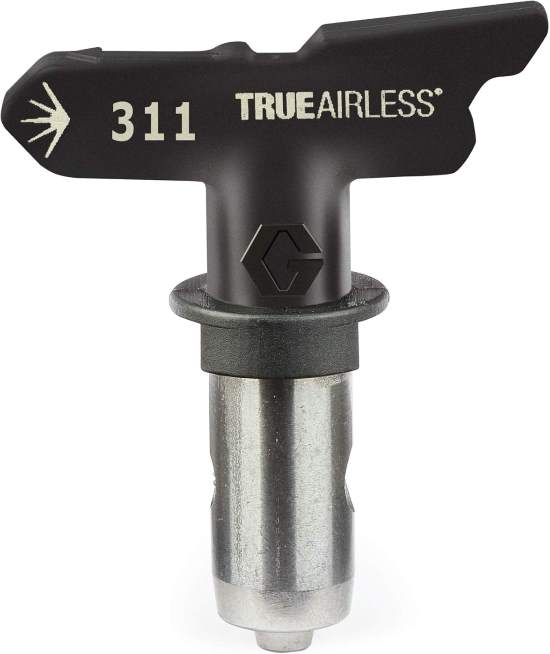
This accessory focuses on improving finish quality rather than replacing equipment. In practice, the tip produces a narrower spray fan, which benefits trim, doors, and smaller wall sections. Installation remains straightforward for compatible airless systems.
The tip wears over time with heavy use, so periodic replacement becomes necessary. It performs best for detail oriented airless projects rather than broad surface coverage.
User Review: Steven P.
Switching to this tip improved my door painting results. The spray felt more controlled, and I noticed less paint drift.
Key Features
• Narrow fan spray pattern supports precise coating on smaller surfaces
• TrueAirless compatibility design ensures reliable performance with Graco systems
• Improved finish consistency helps reduce streaking and patchiness
• Simple twist installation allows quick replacement during projects
• Durable tip material build offers longevity though wear remains expected
Pros and Cons
| Pros | Cons |
| Improves spray precision noticeably | Wear over extended usage |
| Easy installation process | Limited compatibility range |
| Reduces paint drift slightly | Not for large coverage |
AEROPRO Tools R500 LVLP Air Spray Gun
Flexible automotive and DIY LVLP sprayer
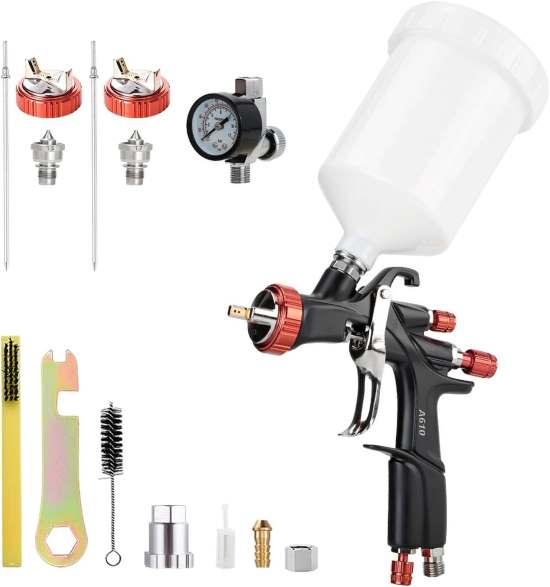
This LVLP gun balances versatility with efficiency. The included nozzle sizes expand its usefulness across primers, base coats, and clear finishes. In hand, the gun feels solid yet lightweight, making it comfortable for extended detailing work.
Like other air driven guns, it requires compressor support and careful adjustment. Cleaning demands attention to nozzle and cup areas. It may overwhelm absolute beginners but rewards users willing to practice.
User Review: Jason D.
I used this for car panel repainting. The spray felt smooth, and the nozzle options helped dial in the finish. It took time to learn, but results were worth it.
Key Features
• Multiple nozzle size flexibility supports diverse coating applications
• Low air consumption system improves compressor efficiency
• Balanced ergonomic grip design enhances comfort during extended use
• Integrated air regulator control allows precise spray tuning
• Metal body durability build ensures longevity with maintenance
Pros and Cons
| Pros | Cons |
| Versatile nozzle configuration | Requires compressor setup |
| Smooth detail spray finish | Learning curve beginners |
| Efficient air consumption design | Cleaning needs diligence |
Buying Guide
What Actually Matters Before Choosing
Performance and Spray Type
Spray type defines workflow. Airless systems cover large surfaces quickly, while HVLP and LVLP guns focus on finish quality and control. Many buyers assume higher pressure equals better results. In reality, correct atomization and paint viscosity matter more. Choosing the wrong system leads to overspray, uneven coats, and wasted paint. Long term satisfaction comes from matching spray style to project scale.
Material Quality and Durability
Body construction, seals, and nozzle materials affect longevity. Budget tools often compromise on internal components rather than outer casing. Buyers sometimes judge durability based on weight alone, which can mislead. Reliable seals and replaceable tips extend tool life and reduce maintenance frustration over time.
Comfort and Usability
Grip shape, trigger tension, and overall balance influence fatigue levels. Extended painting sessions expose ergonomic weaknesses quickly. Many users overlook this factor during purchase, yet discomfort leads to inconsistent spray patterns and breaks in workflow. Comfortable tools encourage better technique and smoother results.
Maintenance and Ownership Effort
Every sprayer demands cleaning. Airless units require thorough flushing, while HVLP guns need disassembly and solvent cleaning. Buyers often underestimate this effort. Neglecting maintenance causes clogging and inconsistent spray patterns. Tools that simplify cleaning promote consistent performance across projects.
Environmental Compatibility
Indoor work requires low overspray and proper ventilation. Outdoor projects tolerate higher pressure systems. Buyers sometimes overlook workspace constraints. Using a high pressure sprayer indoors without masking leads to cleanup challenges and paint drift. Matching tool behavior to environment prevents frustration.
Safety Considerations
Protective gear and ventilation matter regardless of tool cost. Sprayers atomize coatings into fine particles that linger in air. Buyers often focus on finish quality and forget respiratory protection. Prioritizing safety improves comfort and reduces exposure risks during repeated projects.
Related:
Diving Deep into Airless Paint Sprayers: A Comprehensive Guide
What is Zinsser Bullseye 123 Primer Used For? Unleashing the Power of This Versatile Primer
Common Buyer Mistakes
Many buyers assume the most powerful sprayer offers the best results. This assumption fails because excessive pressure increases overspray and reduces control. Evaluating spray type and project scope provides better outcomes.
Another mistake involves ignoring compressor requirements. Air driven guns cannot perform without adequate airflow. Buyers should confirm compressor capacity before purchasing HVLP or LVLP models.
Some users prioritize price over cleaning convenience. Difficult maintenance discourages proper care, leading to clogging and premature wear. Considering cleaning complexity helps preserve performance.
Overlooking nozzle size compatibility creates finish issues. Larger nozzles handle thick coatings, while smaller ones suit stains and lacquers. Matching nozzle size to material improves efficiency.
Buyers also underestimate preparation time. Masking and surface prep affect results more than sprayer cost. Recognizing preparation as part of the workflow leads to better satisfaction.
A final mistake involves neglecting ergonomic comfort. Tools that feel awkward lead to fatigue and inconsistent spray distance. Handling comfort deserves equal consideration alongside performance metrics.
How to Match Products to Specific Needs
Casual users benefit from electric handheld sprayers or aerosol accessories. These tools simplify setup and cleaning, making them ideal for furniture touch ups or seasonal projects. Frequency remains low, so convenience outweighs professional precision.
Heavy users tackling home renovations or exterior repainting often prefer airless systems. These tools deliver fast coverage and consistent output across large surfaces. Regular use justifies the cleaning effort and storage requirements.
Small space users should prioritize LVLP or HVLP guns with controlled spray patterns. Limited overspray helps maintain indoor cleanliness and reduces masking needs. Compact designs also improve maneuverability in tight areas.
Budget conscious buyers focused on longevity should consider replaceable components such as tips and seals. Tools that allow part replacement extend lifespan and reduce ownership costs over time.
Advanced users working on automotive or cabinetry projects benefit from multi nozzle HVLP or LVLP systems. Precision control supports layered finishes and material versatility. Skill level allows them to navigate setup complexity and achieve refined results.
Conclusion
Affordable paint sprayers now cover a wide range of needs, from large wall coverage to detail oriented finishing work. The best choice depends less on brand and more on spray type, workspace, and maintenance commitment. Understanding how each tool behaves in real situations helps avoid frustration and wasted materials.
Before deciding, consider project scale, comfort preferences, and willingness to maintain the equipment. A thoughtful match between tool and task leads to smoother finishes and a more efficient painting process. Use this guide as a reference point while narrowing down options that align with your workflow.
FAQs
Which paint sprayer works best for beginners
Electric handheld sprayers usually offer the easiest setup and cleaning process.
Do all paint sprayers require thinning paint
No, many airless sprayers handle thicker coatings without thinning.
How often should I clean a paint sprayer
Clean immediately after each use to prevent clogging and uneven spray.
Are HVLP sprayers better than airless models
HVLP sprayers provide finer finishes while airless models cover large areas faster.
Can I use one sprayer for every project
Most sprayers specialize in either coverage speed or finishing precision, not both.