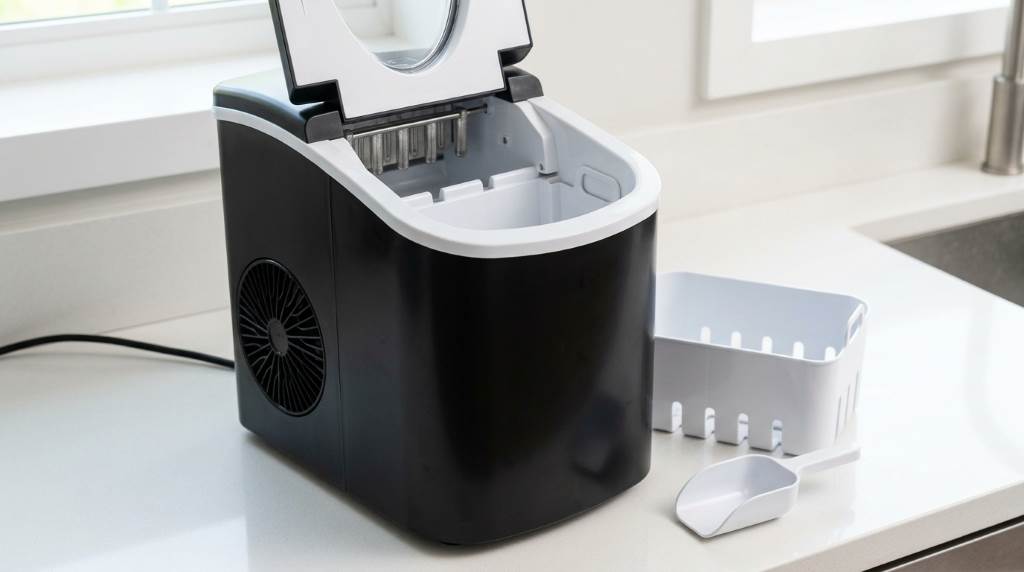
To clean a Frigidaire EFIC128AMZBLK ice maker, unplug the machine, drain all water, wash removable parts, sanitize the interior with a vinegar or mild cleaner solution, rinse thoroughly, and let everything dry before use. Regular cleaning every two to four weeks helps produce fresh tasting ice, reduces mineral buildup, and extends the appliance’s lifespan.
Clean ice makers deliver better tasting ice and help reduce bacteria, mold, and mineral deposits. According to NSF International, food contact surfaces require regular cleaning to maintain hygiene, while the EPA highlights proper sanitation as an important household practice. If you own a Frigidaire EFIC128AMZBLK ice maker, routine maintenance keeps every batch cleaner and protects important internal components. This guide explains each cleaning step using simple methods that anyone can follow safely.
Why You Should Clean Your Ice Maker Regularly
An ice maker constantly handles water, making moisture buildup unavoidable inside the machine. Consequently, minerals, bacteria, and mold may develop without regular cleaning.
Fresh ice also absorbs odors from dirty internal surfaces very quickly. Therefore, routine maintenance improves taste while protecting the appliance from unnecessary wear.
How Often Should You Clean the Frigidaire EFIC128AMZBLK Ice Maker?
Most households should perform a complete cleaning every two to four weeks. However, frequent use or hard water may require more regular maintenance.
Deep cleaning after long storage remains equally important before making fresh ice again. This habit helps prevent unpleasant smells and internal contamination.
Supplies You Will Need
- Soft microfiber cloth
- Warm water
- White vinegar
- Mild dish soap
- Soft sponge
- Small soft brush
- Cotton swabs
- Dry towel
How to Clean Frigidaire EFIC128AMZBLK Ice Maker Step by Step
Step 1: Turn Off and Unplug the Machine
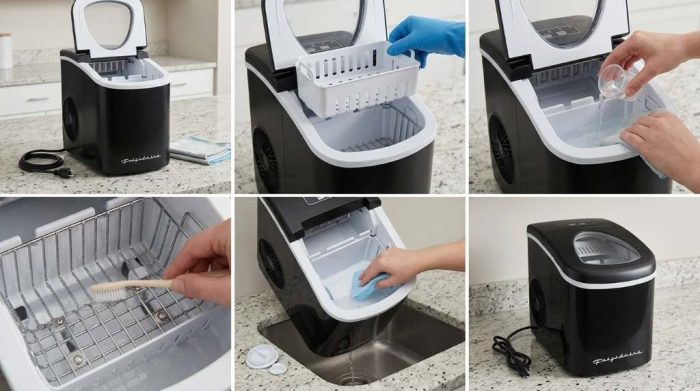
Always disconnect power before starting any cleaning task for maximum safety. This simple step protects electrical components during maintenance.
Next, remove any remaining ice from the storage basket completely. Empty ice should never remain during the cleaning process.
Step 2: Drain All Remaining Water
Locate the drain plug according to your owner’s manual before opening it carefully. Then allow every drop of water to leave the reservoir.
Keeping old water inside encourages mineral deposits and unwanted odors over time. Complete draining makes cleaning much more effective.
Step 3: Remove the Ice Basket
Lift the removable basket gently without forcing any plastic components. Wash it using warm water with mild dish soap.
After washing, rinse thoroughly until no soap remains on the surface. Finally, dry the basket with a clean towel.
Step 4: Clean the Interior Reservoir
Mix equal parts white vinegar and warm water inside a small bowl. Then wipe the interior surfaces using a soft cloth.
Pay extra attention to corners because residue often collects in hidden areas. Avoid abrasive scrubbers that may scratch protective finishes.
Step 5: Clean the Ice Making Area
Carefully wipe around the ice forming components using a damp microfiber cloth. Work slowly to avoid damaging delicate internal parts.
Use cotton swabs to reach narrow spaces around the mechanism safely. Gentle cleaning removes residue without affecting performance.
Step 6: Wash the Exterior
Clean the outer housing with mild soapy water and a soft sponge. Afterwards, wipe everything with a damp cloth.
Dry the exterior completely using a microfiber towel for a clean finish. This step also helps prevent water spots.
Step 7: Rinse Every Surface
Wipe every cleaned area with fresh water to remove vinegar residue completely. Remaining solution may affect the first ice batches.
Repeat the rinse if any vinegar smell remains inside the machine. Clean water leaves the appliance ready for use.
Step 8: Dry Before Restarting
Leave the lid open until every internal surface becomes completely dry. Good airflow speeds the drying process naturally.
Reconnect the power only after moisture disappears from all cleaned areas. Then discard the first two batches of ice.
How to Remove Mineral Buildup
Hard water often leaves white deposits inside the water reservoir and ice making chamber. Fortunately, vinegar dissolves many common mineral deposits effectively.
Allow the vinegar solution to sit for ten minutes before wiping stubborn residue. Afterwards, rinse thoroughly with clean water.
How to Eliminate Bad Odors
Lingering odors usually develop from standing water or forgotten ice inside the appliance. Regular cleaning greatly reduces this common problem.
Additionally, keep the lid open after cleaning until every surface dries naturally. Proper drying limits future odor development.
Common Cleaning Mistakes to Avoid
- Never immerse the entire appliance in water.
- Avoid bleach unless the manufacturer specifically recommends it.
- Do not use steel wool or abrasive brushes.
- Never reconnect power while internal parts remain wet.
- Always discard the first ice batches after cleaning.
Tips to Keep Your Ice Maker Cleaner Longer
- Use filtered water whenever possible.
- Empty unused water after several days.
- Store the appliance dry before long periods without use.
- Clean spills immediately after they appear.
- Inspect the reservoir during weekly kitchen cleaning.
Signs Your Ice Maker Needs Cleaning Immediately
- Ice develops an unusual taste.
- Visible white mineral deposits appear.
- The machine produces unpleasant odors.
- Ice becomes cloudy more frequently.
- Production slows without another obvious reason.
Conclusion
Cleaning your Frigidaire EFIC128AMZBLK ice maker takes only a short time but delivers noticeable benefits. Regular maintenance improves ice quality while protecting important internal components.
Follow this routine consistently to enjoy cleaner ice and dependable performance throughout the year. Start your next cleaning session today and make routine maintenance part of your regular kitchen care.
Frequently Asked Questions
Can I use vinegar to clean the Frigidaire EFIC128AMZBLK ice maker?
Yes, white vinegar safely removes mineral deposits and helps sanitize internal surfaces.
How often should I clean my ice maker?
Clean it every two to four weeks depending on usage and water quality.
Should I throw away the first ice after cleaning?
Yes, discard the first two batches to remove any remaining cleaning residue.
Can I use bleach inside the ice maker?
No, avoid bleach unless your owner’s manual specifically recommends its use.
Why does my ice taste bad after several weeks?
Mineral buildup, bacteria, or stale water commonly affect ice flavor over time.