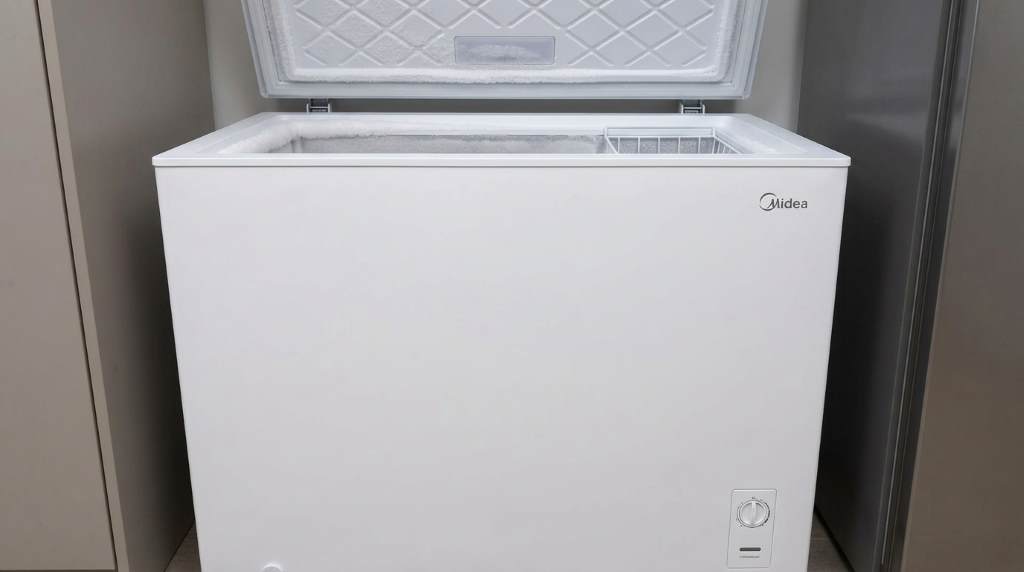
To defrost the Midea MERC07C4BAWW chest freezer, unplug the appliance, remove all stored food, and let the ice melt naturally. Dry the interior completely before restarting the freezer to maintain efficient cooling and prevent future frost buildup.
Regular freezer maintenance improves cooling performance and lowers energy use. According to the U.S. Department of Energy, heavy frost reduces efficiency because the compressor works harder. Likewise, proper appliance maintenance can extend equipment lifespan while lowering operating costs. This guide explains every step clearly if you own the Midea MERC07C4BAWW chest freezer and want safe, effective defrosting.
Why You Should Defrost Your Chest Freezer
Ice naturally forms inside manual defrost freezers after repeated door openings. Excess frost reduces storage space and blocks efficient airflow.
Most manufacturers recommend defrosting once frost reaches about one quarter inch thick. Consequently, the freezer cools more efficiently after proper cleaning.
What You Need Before Starting
- Cooler with ice packs
- Clean towels
- Large shallow pan
- Plastic scraper
- Soft microfiber cloth
- Mild dish soap
- Warm water
- Dry towel
Gather every supply before unplugging the freezer. Therefore, the process becomes faster and more organized.
How to Defrost Midea MERC07C4BAWW Chest Freezer Step by Step
Step 1: Move Food Into Temporary Storage
Transfer frozen food into insulated coolers with frozen ice packs immediately. This method keeps food safely frozen during maintenance.
Group similar items together for easier organization afterward. Additionally, discard expired products before placing everything back.
Step 2: Unplug the Freezer
Disconnect the freezer from the electrical outlet before beginning any cleaning work. This step improves safety throughout the process.
Keep the power cord away from standing water during defrosting. Therefore, electrical hazards remain minimized.
Step 3: Open the Lid Completely
Leave the freezer lid fully open after unplugging the appliance. Warm room air naturally speeds the melting process.
Place towels around the freezer base before ice begins melting. Consequently, surrounding floors stay cleaner and drier.
Step 4: Allow Ice to Melt Naturally
Let the frost melt without using sharp tools or excessive force. Natural melting protects the freezer liner from accidental damage.
Position a shallow pan beneath drainage areas if water begins collecting. Meanwhile, replace soaked towels whenever necessary.
Step 5: Remove Loose Ice Carefully
Use only a plastic scraper after large ice sections loosen naturally. Gentle pressure prevents scratches inside the freezer compartment.
Never use knives, screwdrivers, or metal tools for ice removal. Sharp objects easily puncture freezer walls and cooling components.
Step 6: Clean the Interior
Mix mild dish soap with warm water inside a clean container. Wipe every surface using a soft microfiber cloth.
Clean storage baskets before returning them inside the freezer. Afterwards, rinse all surfaces with clean water.
Step 7: Dry Every Surface Completely
Dry the interior using absorbent towels until moisture completely disappears. Remaining water encourages new frost formation later.
Inspect corners carefully because hidden moisture often remains there. Consequently, drying thoroughly produces better long term performance.
Step 8: Restore Power and Reload Food
Reconnect the freezer after every interior surface becomes completely dry. Close the lid and allow cooling before replacing food.
Wait until proper freezing temperature returns before loading everything. This approach protects frozen food quality.
How Long Does Defrosting Usually Take?
Natural defrosting generally requires two to six hours depending on frost thickness. Warmer room temperatures usually shorten the waiting period.
Avoid rushing the process with unsafe heating devices. Instead, patience protects both the appliance and its cooling system.
Safe Ways to Speed Up Defrosting
- Place bowls of warm water inside the freezer.
- Replace warm water after cooling.
- Use additional towels to absorb melting water.
- Remove loose ice with a plastic scraper only.
- Keep the lid completely open.
These methods safely encourage faster melting without damaging freezer components. However, avoid boiling water that creates excessive heat.
Common Mistakes to Avoid
- Using metal tools
- Pouring boiling water directly onto ice
- Using hair dryers near standing water
- Restarting before complete drying
- Leaving food unrefrigerated too long
These mistakes often shorten appliance lifespan and increase repair costs. Therefore, following safe methods remains the better choice.
How Often Should You Defrost?
Most manual chest freezers benefit from defrosting once or twice each year. Frequency depends on humidity levels and freezer usage.
Check frost thickness every few months during regular maintenance. Then schedule cleaning before heavy ice develops.
Tips to Reduce Future Frost Buildup
- Open the lid less frequently.
- Close the lid firmly every time.
- Store completely cooled food.
- Inspect lid seals regularly.
- Organize food for quick access.
Small maintenance habits significantly reduce future frost accumulation. Consequently, your freezer maintains stronger cooling efficiency.
Signs Your Freezer Needs Immediate Defrosting
- Ice exceeds one quarter inch.
- The lid becomes difficult to close.
- Storage space noticeably decreases.
- Cooling performance declines.
- The compressor runs longer than usual.
Ignoring these warning signs usually increases electricity consumption over time. Early maintenance keeps performance consistent and reliable.
Conclusion
Learning how to defrost Midea MERC07C4BAWW chest freezer correctly protects food quality and improves appliance efficiency. Simple maintenance also helps reduce unnecessary wear on important components.
Follow these steps whenever frost becomes noticeable inside your freezer. Regular care keeps your appliance performing reliably for many years.
Frequently Asked Questions
How thick should frost become before defrosting?
Defrost the freezer when frost reaches about one quarter inch thick.
Can I use a hair dryer to melt the ice?
No, avoid electrical heating devices because they create unnecessary safety risks.
How long should I wait before replacing food?
Wait until the freezer reaches its normal freezing temperature.
Can I chip away ice using a knife?
No, always use a plastic scraper because metal tools can damage the interior.
How often should I clean the freezer after defrosting?
Clean the interior during every complete defrosting session.