
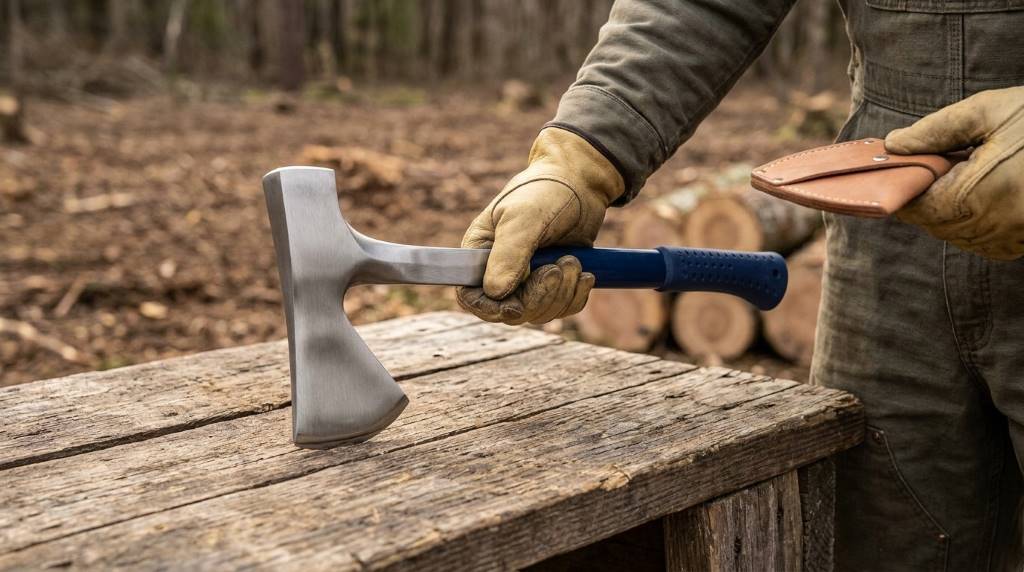
You use an axe safely by maintaining a balanced stance and clearing your swing zone. Next, grip the handle firmly with both hands to guide controlled downward strikes. Always chop wood against a stable wooden chopping block instead of the bare ground.
In fact, forestry safety reports show that proper technique prevents eighty percent of camping axe injuries. The forged steel Estwing campers axe delivers unmatched striking power with its twenty-six-inch handle. Furthermore, its patented grip reduces harsh impact vibrations by up to seventy percent during heavy chopping. Therefore, this comprehensive outdoor guide teaches vital chopping habits, proper ergonomics, and edge maintenance.
Key Takeaways
- First, clear a ten-foot safety circle around your chopping area before swinging the axe.
- Stand with feet shoulder-width apart to keep your body outside the direct swing path.
- Use a sturdy hardwood chopping block to protect the steel edge from ground contact.
- Inspect the Shock Reduction Grip regularly to ensure a secure, slip-free hand hold.
- Hand sharpen the high-carbon steel cutting edge using a dual-grit sharpening puck frequently.
- Finally, coat the polished steel blade with mineral oil before storing it in its sheath.
Solid Forged Steel One-Piece Construction Benefits
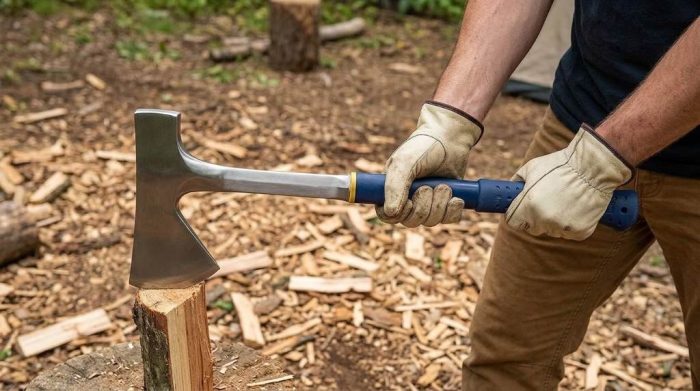
Unmatched Head and Shaft Durability
Traditional camping axes feature separate wooden handles wedged into cast iron axe heads. However, seasonal weather changes often shrink wooden handles and loosen heavy metal heads. The Estwing axe eliminates this danger through one solid piece of forged American steel.
In fact, solid forged steel prevents sudden head separation during high-impact chopping tasks. The continuous steel spine transfers mechanical energy smoothly from your hands into the timber. Consequently, you achieve deep cutting bites without worrying about loose hardware or broken handles.
Patented Shock Reduction Grip Maintenance
Steel handles conduct sharp mechanical shock directly toward your wrists and elbows during strikes. To solve this, Estwing molds a patented vinyl grip directly over the steel shank. This specialized grip reduces impact vibration by up to seventy percent during repetitive cutting.
Additionally, proper grip maintenance ensures firm friction during damp or rainy outdoor conditions. Wash the textured grip with warm soapy water to remove pitch and woodland grime. Inspect the molded vinyl periodically for deep gouges, chemical damage, or excessive wear.
Proper Stance and Swing Ergonomics: The Triangle of Safety
Establishing the Safe Footing Triangle
Wild axe swings cause severe injuries when users lose balance on uneven campsite ground. Therefore, you must establish a wide triangular base before swinging the heavy axe. Place your feet slightly wider than shoulder-width with your knees flexed comfortably.
Furthermore, keep your body directly behind the target block rather than leaning sideways. This deliberate position directs any glancing blow straight downward into the protective chopping block. Never chop firewood while standing with your legs together or crossed on slick dirt.
Two-Handed Swing Path Control
Safe chopping requires complete physical control throughout the entire downward cutting arc. Specifically, place your non-dominant hand firmly near the flared base of the handle. Slide your dominant hand upward near the axe head to begin each swing smoothly.
As you bring the axe downward, slide your upper hand back toward the bottom. Both hands unite at the grip base to maximize leverage right at target impact. Thus, gravity and tool weight drive the blade without forcing wild muscle strain.
Safe Chopping Techniques for Campers
Splitting Firewood and Kindling Safely
Splitting campfire wood requires a stable wooden chopping block to absorb downward momentum. Never split rounds of timber directly on hard rocks or bare campsite soil. In fact, rocks dull the cutting bevel instantly and cause dangerous ricochets.
For small kindling pieces, avoid holding the wood stick upright with your bare fingers. Instead, rest the axe blade directly against the top end of the kindling piece. Strike both the axe head and kindling together firmly against your chopping block.
Limbing Fallen Trunks on the Ground
Clearing branches from fallen logs presents unique hazards for outdoor enthusiasts and trail clearers. Specifically, always stand on the opposite side of the log trunk from branches. The thick tree trunk acts as a solid barrier protecting your legs from deflection.
Next, chop each branch at an acute angle working toward the top of the tree. Striking branches from the base outward slices cleanly through tough wood fibers. Consequently, your blade slices through knots quickly without binding or bouncing off wet bark.
Safe Small Tree Felling and Clearing
Felling dead saplings or small trees requires methodical planning before the initial axe swing. First, inspect the surrounding overhead canopy for hanging deadwood or loose tangled branches. Clear two distinct retreat paths diagonally backward away from the planned falling direction.
Cut a clean directional face notch on the side facing your target landing zone. Next, deliver horizontal back cuts slightly above the notch hinge on the opposite side. Step away immediately along your retreat path as the tree trunk begins to fall.
Estwing Campers Axe Cutting Techniques and Wood Preparation
Choosing the right cutting method protects your equipment and prevents severe outdoor accidents. For example, splitting dry birch logs demands different mechanics than limbing green pine branches. The following comparison table outlines essential field techniques, proper stances, and critical clearance rules.
| Cutting Technique | Wood Material | Proper Body Stance | Key Safety Rule |
|---|---|---|---|
| Kindling Splitting | Dry softwood scraps | Kneeling behind chopping block | Never hold wood with bare fingers |
| Firewood Splitting | Seasoned hardwood rounds | Wide balanced standing triangle | Use a wide hardwood chopping base |
| Log Limbing | Fallen pine and oak boughs | Standing behind the main trunk | Keep the trunk between you and axe |
| Notch Felling | Small standing deadwood | Offset diagonal standing stance | Establish two clear retreat paths |
| Log Bucking | Fallen horizontal trunks | Wide stance on log side | Chop alternating 45-degree notches |
Matching your stance to the specific task minimizes muscle fatigue during long woodcutting chores. Additionally, proper wood preparation ensures rapid campfire ignition and even heat generation. Always stack split firewood neatly off damp ground to maintain dry, combustible timber.
Sharpening and Edge Maintenance in the Field
Honing with a Dual-Grit Sharpening Puck
A sharp axe cuts wood efficiently and prevents dangerous glancing blows on impact. In contrast, dull cutting edges slide off rounded bark and deflect toward your boots. You should carry a dual-grit ceramic sharpening puck on every extended outdoor camping trip.
Lubricate the stone surface with water or light mineral oil before polishing the steel. Next, rub the coarse stone side in small overlapping circular motions along the bevel. Flip the puck to the fine-grit side to remove micro-burrs and polish the razor edge.
Re-Profiling with a Mill Bastard File
Severe rock strikes occasionally create rough chips along the high-carbon forged steel blade. In this situation, an eight-inch mill bastard file re-establishes the correct convex cutting profile. Clamp the axe head securely in a bench vise or between two sturdy logs.
Push the file forward across the blade bevel using smooth, even diagonal strokes. Never drag the file teeth backward across the steel because friction ruins the file. Consequently, forward filing restores the factory convex angle without overheating the tempered steel.
Sheath Storage and Rust Prevention
Cleaning and Protecting the Carbon Steel
American forged steel delivers incredible toughness but requires protection against atmospheric outdoor moisture. Therefore, wipe damp wood sap and forest dirt off the head after every outing. Apply a thin coat of pure mineral oil or protective wax over the metal.
Rust forms quickly when campers store damp axes inside humid basements or vehicle trunks. Furthermore, acidic tree sap etches into unprotected carbon steel and causes unsightly surface pitting. Regular oiling forms a durable hydrophobic shield that preserves the gleaming polished steel finish.
Proper Sheath Use and Safe Transport
Never transport an uncovered axe inside a backpack, vehicle cab, or camping storage bin. In response, Estwing supplies a heavy-duty embossed nylon sheath to shield the sharp edge. Always snap the sheath retention strap tightly across the axe poll before moving camp.
In addition, store your sheathed tool in a cool, well-ventilated dry equipment locker. Keep leather or nylon sheaths clean by brushing away grit from internal seams. Proper storage guarantees that your axe remains sharp, safe, and ready for future adventures.
Conclusion: Master the Campers Axe with Confidence
The Estwing campers axe provides unmatched reliability through its solid forged one-piece American construction. By practicing stable stance ergonomics, you protect your body from dangerous glancing deflections. Moreover, consistent puck honing and routine oiling keep the blade razor-sharp for decades.
Safe chopping habits transform outdoor firewood preparation into an enjoyable wilderness routine. Therefore, inspect your forged blade, sharpen the bevel, and practice safe stance ergonomics outside. Grab your Estwing axe now and prepare your next campfire with total confidence!
Frequently Asked Questions
What makes the Estwing campers axe safer than wooden axes?
Its solid forged one-piece steel design prevents the axe head from flying off loose handles.
How do I clean the patented Shock Reduction Grip?
Wash the textured vinyl grip with warm soapy water to remove dirt and sticky sap.
What sharpening angle works best for this camping axe?
Maintain a thirty-degree convex bevel angle for superior durability while splitting dense camping firewood.
Can I strike the axe poll with a steel sledgehammer?
No, striking the hardened steel poll with another metal tool causes dangerous steel chipping.
How do I prevent rust on the forged steel blade?
Wipe the polished blade clean and apply light mineral oil before securing the protective sheath.


