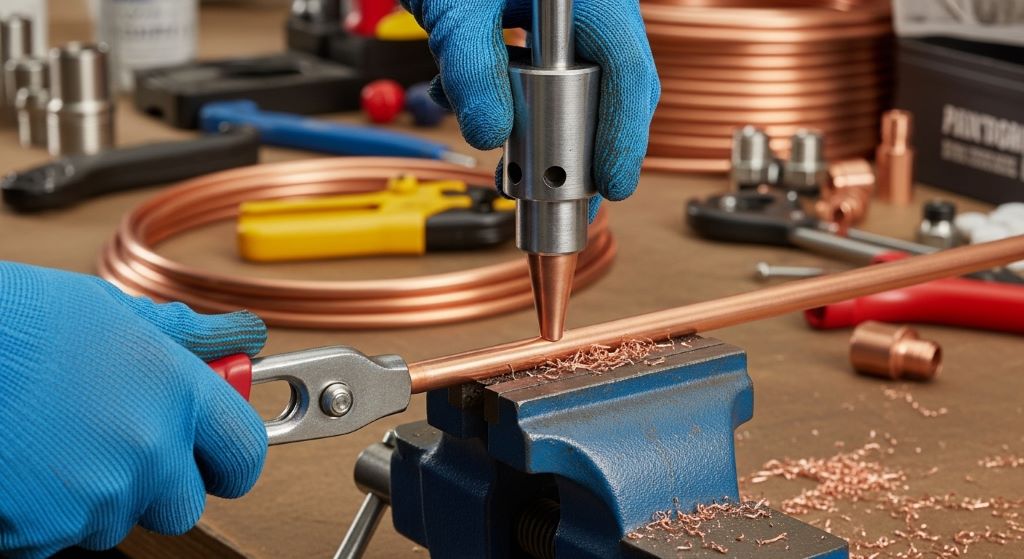
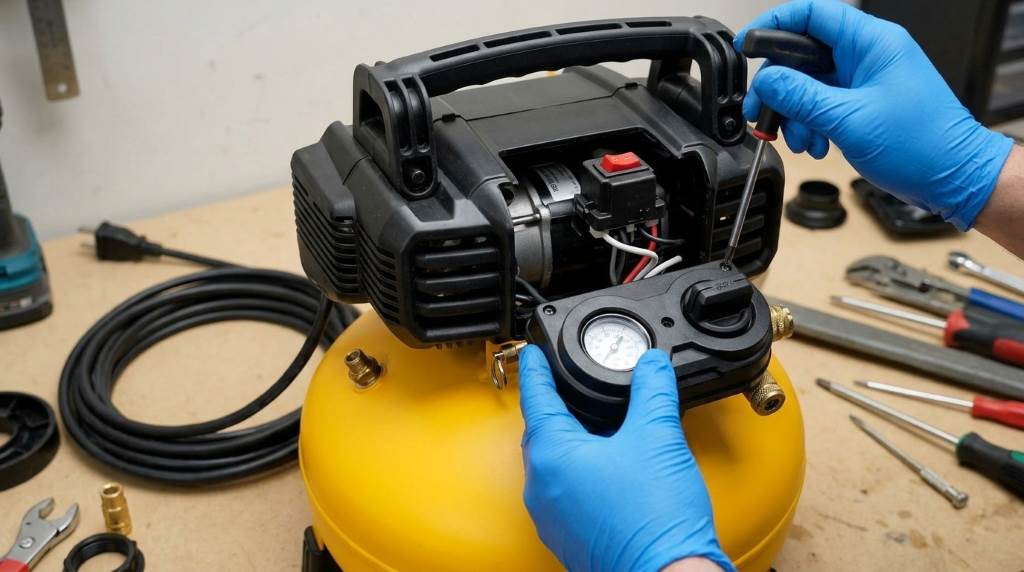
The top tools for electricians include electrical testing equipment, hand tools, wiring and installation tools, power tools, and appropriate safety gear. For most electricians, a digital multimeter, voltage tester, wire strippers, lineman’s pliers, insulated screwdrivers, fish tape, tape measure, drill/driver, and circuit-testing equipment form the foundation of a practical toolkit.
The best electrician tool kit is not necessarily the biggest one. It should contain reliable tools that match the electrical work you perform, your experience level, and the environments where you work. Specialized equipment such as conduit benders, clamp meters, advanced circuit tracers, and thermal imaging tools can then be added as your work becomes more specialized.
Quick Picks: Best Tools for Electricians
| Tool | Recommended Pick | Best For |
| Digital Multimeter | Fluke 117 | Electrical diagnostics |
| Non-Contact Voltage Tester | Fluke 1AC II VoltAlert | Quick voltage detection |
| Lineman’s Pliers | Klein Tools D213-9NE | Cutting, gripping and twisting wire |
| Wire Stripper | Klein Tools 11055EP | Manual wire stripping |
| Automatic Wire Stripper | 10–24 AWG Automatic Wire Stripper | Repetitive wire preparation |
| Screwdriver/Nut Driver | Klein Tools 32500 11-in-1 | Fasteners and general electrical work |
| Electrical Test Kit | Klein Tools 69149P | Basic testing |
| Circuit Breaker Finder | Klein Tools ET310KIT | Circuit identification |
| Clamp Meter | Fluke 325 | Current measurement |
| Fish Tape | Klein Tools 56331 | Pulling wires |
| Tape Measure | Klein Tools Magnetic Tape Measure | Layout and measurements |
| Cordless Drill/Driver | DEWALT 20V MAX XR | Drilling and fastening |
| Impact Driver | DEWALT 20V MAX XR | High-volume fastening |
| Conduit Bender | Klein Tools EMT Conduit Bender | Conduit installation |
| Digital Level | Klein Tools 935DAG | Accurate alignment |
| Crimper | Klein Tools VDV226 | Data/network cable |
| Utility Knife | Klein Tools Folding Utility Knife | Cutting and cable preparation |
| Label Maker | Brother P-touch PT-D210 | Circuit and wire labeling |
| Flashlight | Klein Tools 56074 | Dark work areas |
| Advanced Circuit Tracer | Fluke SmartTrace | Advanced circuit tracing |
1. Digital Multimeter
A digital multimeter is one of the most important diagnostic tools in an electrician’s toolkit. Depending on the model, it can measure voltage, resistance, continuity, current, and other electrical parameters.
For professional electrical work, don’t choose a multimeter solely by price. Pay attention to its safety category rating, measurement capabilities, accuracy, test leads, display readability, durability, and suitability for the electrical environments where you work.
Fluke specifically identifies the 117 as an electrician-oriented multimeter, and its current guidance pairs the 117 with a clamp meter for a broader electrical testing setup.
What to look for in a multimeter
- Appropriate CAT safety rating
- Clear, easy-to-read display
- Auto-ranging capability
- Continuity testing
- Suitable voltage and current ranges
- Durable test leads
- Appropriate protection against electrical transients
- Features that match your type of electrical work
Recommended product: Fluke 117 Electrician’s Multimeter
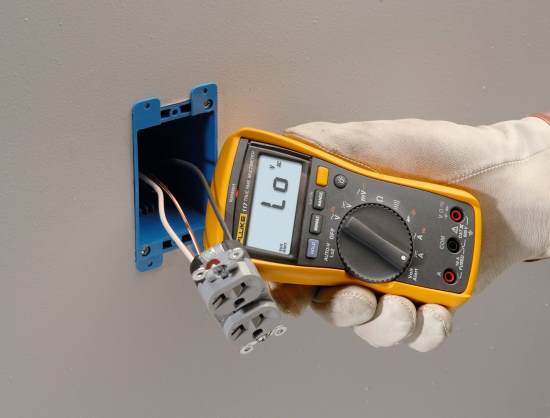
Best for: Professional electrical troubleshooting and everyday field measurements
The Fluke 117 is one of the strongest products to add to this page because it directly satisfies the core “tools for electricians” intent rather than being a peripheral accessory. Fluke describes it specifically as an electrician-focused multimeter and highlights features such as True-RMS measurement and low-input impedance for reducing ghost-voltage problems.
Why we recommend it: It gives the page a credible flagship diagnostic tool and fills one of the most important gaps in the original product lineup.
Potential limitation: It is more expensive than basic meters, so occasional DIY users may not need all of its capabilities.
2. Non-Contact Voltage Tester
A non-contact voltage tester is a convenient first-line tool for detecting the possible presence of AC voltage without making direct contact with a conductor.
Its biggest advantage is speed. An electrician can quickly check an outlet, switch box, wire, or other area before performing further testing.
However, a non-contact tester should not be treated as a substitute for proper electrical testing. It generally indicates that voltage may be present; it does not provide the detailed measurement that a multimeter can.
Best for
- Preliminary electrical checks
- Service calls
- Outlet and switch work
- Quick identification of potentially energized conductors
Recommended product: Fluke 1AC II VoltAlert
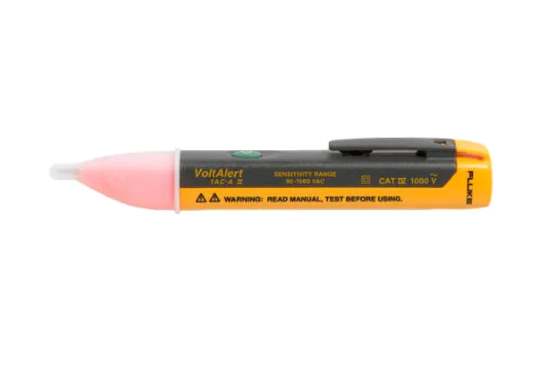
Your existing Fluke 1AC II should stay. Fluke currently lists the 1AC II among its electrician tools and describes it as a fast way to check for energized circuits.
Best for: Quick preliminary voltage checks
Why we recommend it: Its pen-style design is convenient for electricians who want a dedicated tester that can remain readily accessible during service work.
Important: A non-contact tester should not be the only method used to establish that a circuit is de-energized. Follow the appropriate testing procedure for the work being performed.
3. Lineman’s Pliers
Lineman’s pliers are one of the classic electrician hand tools because they combine gripping, twisting, bending, and cutting functions.
A high-leverage design can make cutting heavier conductors easier while reducing the hand force required.
Recommended product: Klein Tools D213-9NE
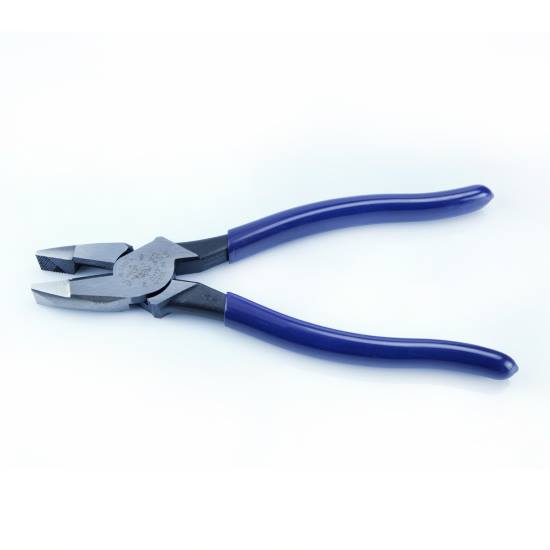
The Klein Tools D213-9NE is a particularly appropriate addition because it is specifically designed as a lineman’s plier. Klein lists a high-leverage design, induction-hardened cutting knives, knurled jaws, and a hot-riveted joint among its features.
Best for: General electrical wiring, gripping, twisting and cutting conductors
Why we recommend it: It represents the kind of everyday hand tool that should appear near the top of a “top tools for electricians” guide.
What to look for:
- Strong cutting edges
- Comfortable handles
- Appropriate wire capacity
- High-leverage design
- Durable joint construction
For electricians working around energized electrical environments, use appropriately rated insulated tools where required. Klein also offers an insulated D213-9NE variant with a 1000-volt marking and standards-based insulation.
4. Wire Strippers
Wire strippers remove insulation from electrical conductors without unnecessarily damaging the underlying wire.
A good stripper should match the wire gauges you work with most frequently. Manual strippers provide precise control, while automatic or self-adjusting models can be useful for repetitive work.
Recommended manual option: Klein Tools 11055EP
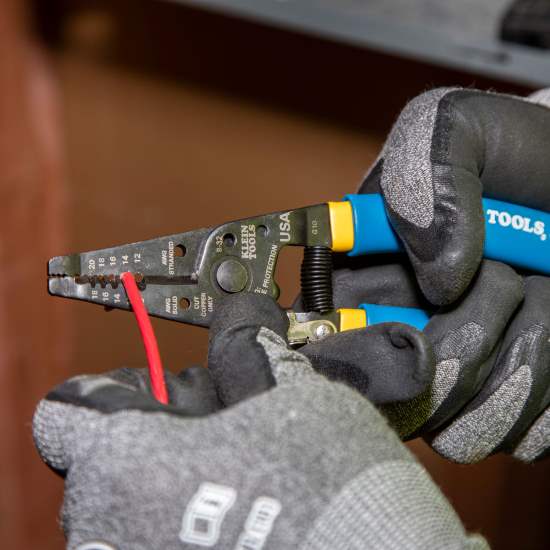
Best for: Everyday manual wire stripping and cutting
A traditional stripper belongs in almost every electrician’s basic hand-tool kit because it offers direct control over the stripping process.
Recommended automatic option: Automatic Wire Stripper, 10–24 AWG
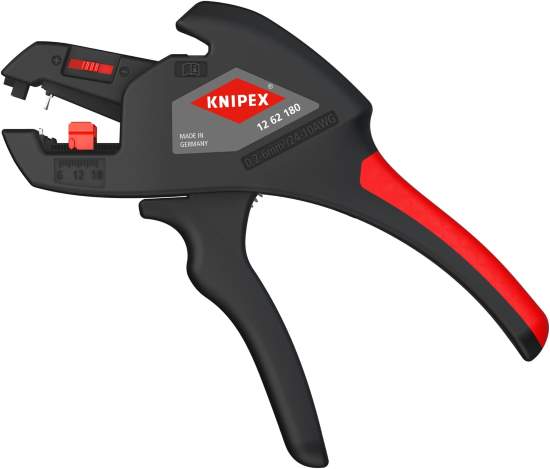
Your existing automatic wire stripper can remain as a specialized speed-focused recommendation.
Best for: Repetitive wire preparation
Why consider it: Automatic stripping can reduce repetitive hand movement when preparing many conductors.
Potential limitation: Manual stripping can provide better control for unusual wire sizes or delicate conductors.
This two-product approach is stronger than listing only an automatic stripper because it explains why an electrician might choose one type over another.
5. Screwdriver and Nut Driver
Electrical installations involve a constant stream of screws and hex fasteners, making screwdrivers and nut drivers some of the most frequently used tools in an electrician’s bag.
A useful set should include common Phillips, slotted, square/Robertson, and other tips required by the equipment you install.
Recommended product: Klein Tools 32500 11-in-1
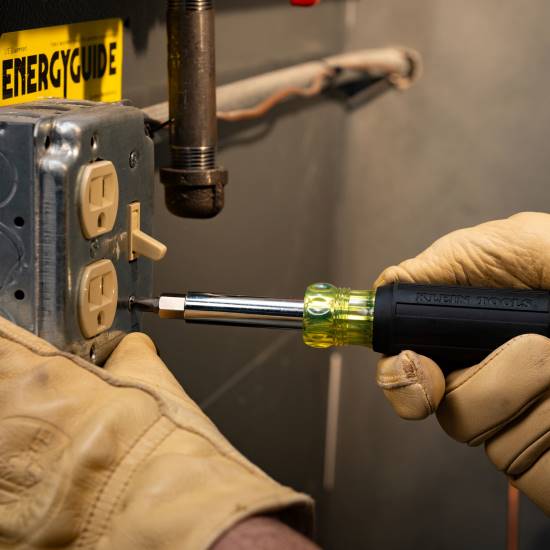
Best for: General electrical fastening and reducing tool-bag clutter
An 11-in-1 tool is particularly useful for electricians who want multiple common driver functions in one compact tool.
Why we recommend it: It provides broader coverage than a single screwdriver while keeping the toolkit relatively compact.
What to look for
- Appropriate electrical rating where required
- Durable tips
- Comfortable grips
- Multiple common tip sizes
- Strong shaft construction
- Easy bit storage
For work where electrical exposure is a concern, choose tools with an appropriate electrical rating rather than assuming every multi-bit screwdriver provides the same protection.
6. Electrical Test Kit
Individual testing instruments are ideal when you know exactly what measurements you need, but a test kit can be useful when building a basic electrical toolkit.
Recommended product: Klein Tools 69149P Electrical Test Kit
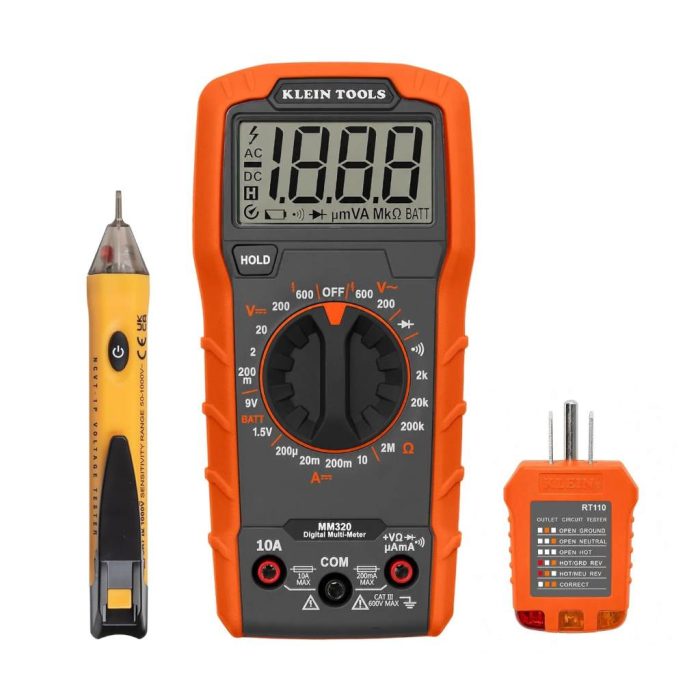
Your existing Klein Tools 69149P fits well here rather than being treated as a replacement for a professional multimeter.
Best for: Apprentices and users building a basic testing setup
Why consider it: A bundled kit can provide several basic testing functions without requiring every instrument to be purchased separately.
Important: Present the exact contents from the current product listing because kit configurations can change.
For advanced electrical diagnostics, use dedicated instruments such as a professional multimeter or clamp meter.
7. Circuit Breaker Finder
A circuit breaker finder helps identify which breaker corresponds to a particular receptacle or circuit.
It can save considerable time during service calls and panel-labeling work, particularly in residential environments.
A breaker finder is not a universal solution for every electrical system. Complex panels, shared circuits, unusual wiring, and signal interference can affect results, so electricians should verify circuits using appropriate testing procedures.
Recommended product: Klein Tools ET310KIT
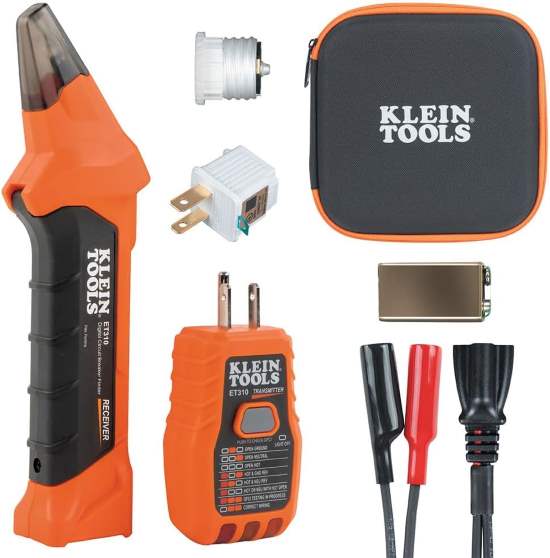
Your Klein Tools ET310KIT is worth keeping as the main breaker-finder recommendation.
Best for: Residential service work and circuit identification
Why we recommend it: The kit format gives it broader utility than a bare receiver/transmitter product, making it a strong fit for electricians who want a dedicated circuit-identification setup.
Alternative: Klein Tools ET310
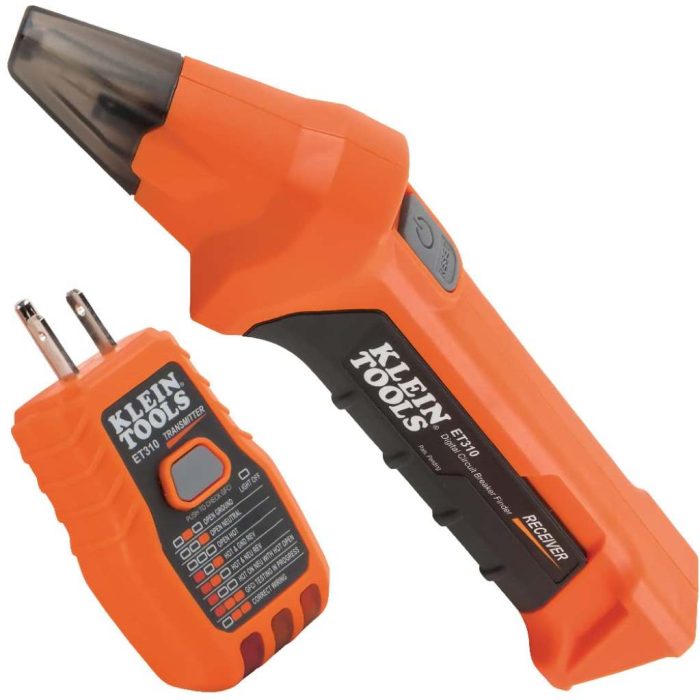
You currently have the ET310 as a separate entry. I would not give it its own full product section.
Instead, mention it as an alternative:
Prefer a simpler standalone option? The Klein ET310 can be considered when you don’t need the additional accessories included with the kit.
This change alone makes the page look substantially less repetitive.
8. Clamp Meter
A clamp meter measures electrical current by clamping around an appropriate conductor, allowing certain current measurements without disconnecting the conductor.
This makes it particularly useful for troubleshooting equipment, motors, circuits, and electrical loads.
Recommended product: Fluke 325
Fluke currently recommends the 325 as a companion to the 117 for electricians and field-service professionals. The 325 adds clamp-based AC/DC current measurement and other diagnostic functions.
Best for: Current measurement and electrical troubleshooting
Why we recommend it: It complements a multimeter rather than duplicating its role.
What to look for
- AC and DC current capability
- Measurement range
- Safety category rating
- Jaw size
- Display readability
- Additional measurement functions
A clamp meter should complement, not automatically replace, a conventional multimeter.
9. Fish Tape
Fish tape makes it possible to route conductors through conduit, walls, ceilings, and other difficult-to-access areas.
Traditional steel fish tape provides stiffness and reach, while fiberglass and other non-conductive options may be better suited to particular situations.
Recommended product: Klein Tools 56331
Best for: Pulling wire and cable through conduit and difficult pathways
Fish tape is one of the important omissions from your original page. Adding it significantly improves the article’s topical completeness because wire pulling is a fundamental part of many electrical installations.
Fish tape is especially useful for
- Pulling wire through conduit
- Routing cable through finished walls
- Long electrical runs
- Retrofit installations
- Difficult wire-pulling jobs
When choosing one, consider length, material, flexibility, stiffness, visibility, and the type of pathway you normally encounter.
10. Tape Measure
A tape measure may look basic compared with electrical testers, but electricians use it constantly.
It helps with outlet placement, panel layouts, conduit runs, equipment positioning, cable routing, and other installation measurements.
Recommended product: Klein Tools Magnetic Tape Measure
Best for: Electrical layout and installation measurements
Look for:
- Easy-to-read markings
- Durable case
- Reliable locking mechanism
- Secure hook
- Appropriate blade length
- Compact design
A magnetic end can be especially convenient when working around suitable metal surfaces.
11. Cordless Drill/Driver
A cordless drill/driver is one of the most useful power tools for electrical installation work.
Electricians use drills for creating holes, installing fasteners, mounting boxes, preparing materials, and many other tasks.
Recommended product: DEWALT 20V MAX XR Drill/Driver
Best for: Drilling, mounting electrical boxes and general fastening
When choosing a cordless drill, balance power with weight, speed control, chuck quality, battery runtime, and the battery ecosystem you already use.
For electricians who spend long days on ladders or in tight spaces, a compact drill may be more practical than the most powerful model.
12. Impact Driver
An impact driver complements a drill/driver by providing high torque for driving fasteners.
It can be particularly useful during rough-in work, equipment mounting, and installations involving many screws.
Recommended product: DEWALT 20V MAX XR Impact Driver
Best for: High-volume fastening and construction installation
More torque is not always better. Overdriving fasteners can damage materials or components, so use the correct bit, setting, and technique.
The impact driver should complement the drill rather than replace it. A drill is generally better suited to controlled drilling, while an impact driver excels at driving fasteners.
13. Conduit Bender
A conduit bender is essential for electricians who install EMT and other bendable conduit systems.
It allows the installer to make controlled bends while maintaining the desired conduit geometry. Accurate bending produces cleaner installations and helps keep conduit runs organized.
Recommended product: Klein Tools EMT Conduit Bender
Best for: EMT and conduit installation
A conduit bender becomes particularly important for:
- Commercial electrical installation
- Industrial work
- EMT installation
- Exposed conduit runs
- Panel and equipment connections
Beginners should learn common bend calculations and techniques rather than relying exclusively on markings on the tool.
14. Digital Level
A level helps electricians install electrical boxes, panels, conduit, fixtures, and other equipment accurately.
Digital levels add useful angle-measurement capabilities for jobs where precise alignment matters.
Recommended product: Klein Tools 935DAG Digital Level
Your Klein Tools 935DAG is a good product to retain.
Best for: Accurate alignment and angle measurement
Why consider it: Its digital approach is useful when electricians need more precise angle information than a basic bubble level provides.
Potential limitation: It is a specialized upgrade. Electricians who mainly perform basic alignment may not need a digital model.
This is also a much better positioning than making the digital level the first item in the entire article. It is useful, but a multimeter or wire stripper is far more central to the primary search intent.
15. Crimping Tool
Crimpers create mechanical and electrical connections between conductors and compatible terminals or connectors.
The correct crimper depends on the connector type, conductor size, and application.
Recommended product: Klein Tools VDV226
Your existing Klein Tools VDV226 is best positioned as a data and low-voltage specialty tool.
Best for: Data cable and network connector work
Why consider it: It expands the toolkit for electricians who also handle low-voltage or networking installations.
Do not present it as the universal crimping tool for every electrical application. Connector-specific crimping tools are designed for particular terminals and systems.
16. Utility Knife
A utility knife is useful for cutting cable sheathing, packaging, drywall materials, tape, and other non-conductive materials encountered during electrical installation.
Recommended product: Klein Tools Folding Utility Knife
Best for: Cable preparation and general jobsite cutting
Look for:
- Secure blade locking
- Comfortable grip
- Compact storage
- Easy blade replacement
- Durable construction
Keep the blade sharp and use the knife only for suitable materials. A dull blade can require excessive force and increase the chance of slipping.
17. Label Maker
Clear labeling is particularly valuable when working with electrical panels, control cabinets, communications wiring, and complex circuits.
Recommended product: Brother P-touch PT-D210
Best for: Circuit, wire and panel labeling
A portable label maker can help identify:
- Circuit numbers
- Panel components
- Wires
- Disconnects
- Control wiring
- Network connections
- Equipment
Good labeling makes future troubleshooting and maintenance easier for the next electrician who works on the system.
18. Flashlight or Headlamp
Electrical work frequently takes place where ambient lighting is poor, including crawl spaces, attics, basements, utility rooms, and unfinished construction areas.
Recommended product: Klein Tools 56074 EDC Pocket Flashlight
Your existing Klein 56074 remains a useful recommendation here.
Best for: Dark panels, crawl spaces, attics and service calls
Its compact format makes it practical for carrying alongside the rest of an electrician’s everyday tools.
What to look for
- Runtime
- Brightness levels
- Beam pattern
- Rechargeability
- Durability
- Appropriate water and dust resistance
A headlamp can be even more useful when both hands need to remain free.
19. Electrical PPE and Safety Equipment
Tools alone do not make an electrician’s toolkit complete. Appropriate personal protective equipment and safety equipment are equally important.
Depending on the work, this can include:
- Appropriate electrical gloves
- Safety glasses
- Arc-rated clothing where required
- Hearing protection
- Protective footwear
- Hard hat
- Lockout/tagout equipment
- Other job-specific PPE
The exact PPE requirements depend on the task, electrical system, workplace procedures, and applicable requirements.
Do not rely on a tool’s insulation or a non-contact tester as a substitute for proper electrical safety procedures.
Recommended product category
Rather than forcing a single pair of safety glasses into the “top 20,” use this section to recommend PPE appropriate to the hazards covered by the article.
20. Advanced Circuit Tracing
Advanced circuit tracing deserves its own specialty category because it goes beyond the basic breaker-finding function.
Recommended product: Fluke SmartTrace
Your existing Fluke SmartTrace is better positioned here than as another generic breaker finder.
Best for: Advanced circuit identification and troubleshooting
Why consider it: It gives experienced electricians an option for more sophisticated circuit-tracing and socket-testing workflows.
For simple residential circuit identification, the ET310KIT is easier to position as the primary recommendation.
Specialty Electrician Tools
Not every electrician needs every tool in the same toolkit.
Your specialty, work environment, and typical jobs should determine which advanced tools are worth buying.
Precision Measurement Tools
HARDELL Rechargeable Stainless Micrometer
The HARDELL Micrometer should remain on the page, but it should not be presented as one of the most essential tools every electrician needs.
Best for: Precision measurement applications
It may be useful for electricians involved in control-panel fabrication, mechanical components, custom work, or other applications requiring fine dimensional measurements.
For routine residential electrical work, however, a micrometer is generally much less important than a multimeter, wire stripper, pliers, screwdriver, or voltage tester.
This distinction improves the credibility of your article because it shows readers that you are not calling every product equally essential.
Best Electrician Tools by Job Type
Not every electrician needs every tool on this list.
Best Basic Toolkit for an Apprentice
An apprentice should begin with:
- Digital multimeter
- Non-contact voltage tester
- Wire strippers
- Lineman’s pliers
- Screwdrivers
- Nut drivers
- Tape measure
- Utility knife
- Level
- Flashlight
- Basic PPE
The goal is to build a practical foundation rather than buy every specialty tool immediately.
Best Toolkit for Residential Electricians
Residential electricians will commonly benefit from:
- Multimeter
- Voltage tester
- Wire strippers
- Pliers
- Screwdrivers
- Drill/driver
- Impact driver
- Fish tape
- Circuit breaker finder
- Tape measure
- Level
- Label maker
- Flashlight
The Klein ET310KIT is particularly relevant here for circuit identification.
Best Toolkit for Commercial Electricians
Commercial work can require a broader range of installation and conduit tools, including:
- Conduit bender
- Drill/driver
- Impact driver
- Fish tape
- Cable cutters
- Crimpers
- Torque tools
- Clamp meter
- Labeling equipment
- Advanced testing equipment
A digital level such as the Klein 935DAG can also be useful when accurate equipment and conduit alignment matters.
Best Toolkit for Industrial Electricians
Industrial electricians may need additional diagnostic and installation equipment depending on the machinery and electrical systems involved.
Useful additions can include:
- Clamp meter
- Advanced multimeter
- Insulation tester
- Thermal imaging equipment
- Torque tools
- Cable cutters
- Specialized crimpers
- Lockout/tagout equipment
- Industrial-rated power tools
How to Choose the Right Electrician Tools
The most expensive tool is not automatically the best tool for your work.
Evaluate each purchase using the following factors.
1. Safety Rating
Electrical testing equipment should have a safety rating appropriate to the environment in which it will be used.
Do not select a meter or tester based solely on its maximum voltage number. The meter’s measurement category and overall design matter.
2. Tool Compatibility
Check whether the tool works with the wire gauges, connectors, conduit sizes, fasteners, and equipment you routinely encounter.
3. Ergonomics
Electricians can use the same hand tools hundreds of times during a working day.
Grip shape, weight, balance, handle design, and required hand force can therefore matter as much as additional features.
4. Durability
Tools spend much of their lives in tool bags, trucks, vans, ladders, and construction environments.
Look for designs that can tolerate the conditions in which you actually work.
5. Battery Platform
If you use several cordless tools, staying within one battery ecosystem can reduce the number of chargers and battery types you need to carry.
This is one reason it can make sense to select your drill and impact driver from the same cordless platform.
6. Accuracy
For measuring and diagnostic equipment, accuracy and repeatability matter more than flashy features.
7. Maintenance
Consider batteries, calibration, cleaning, replacement parts, blade wear, and other ongoing maintenance before purchasing specialized equipment.
Tools Beginners Should Not Buy Immediately
A common mistake is trying to build a professional electrician’s entire toolkit on day one.
Specialized equipment such as hydraulic cable cutters, advanced thermal imaging cameras, powered fish-pulling equipment, industrial testers, and specialized conduit machinery can be expensive and unnecessary for someone who is still learning the trade.
Build your toolkit according to the jobs you actually perform.
A better strategy is:
Start with essential hand tools and testing equipment → add basic power tools → identify recurring tasks → purchase specialized tools that save measurable time.
This approach keeps the initial investment under control while ensuring every new tool has a practical purpose.
Are Expensive Electrician Tools Worth It?
Sometimes.
A premium tool can be worthwhile when you use it frequently, need higher accuracy, depend on its durability, or can save meaningful labor time.
But expensive does not automatically mean better.
For a tool you use occasionally, a reliable mid-range option may provide better value than a professional flagship model.
For frequently used safety-critical testing equipment, however, price should not be the only consideration. Safety ratings, specifications, accuracy, reliability, and suitability for the intended electrical environment deserve much more attention.
Essential vs. Specialty Electrician Tools
The distinction between essential and specialty tools is important when building a toolkit.
Essential for Most Electricians
- Digital multimeter
- Non-contact voltage tester
- Wire strippers
- Lineman’s pliers
- Screwdrivers
- Nut drivers
- Tape measure
- Utility knife
- Flashlight
- Appropriate PPE
Frequently Useful
- Fish tape
- Drill/driver
- Impact driver
- Circuit breaker finder
- Level
- Crimping tool
- Clamp meter
- Label maker
Specialty Equipment
- Advanced circuit tracer
- Thermal imaging camera
- Insulation tester
- Hydraulic cable cutter
- Powered fish tape
- Specialized conduit equipment
- Precision measurement tools
This distinction can save beginners money while helping professionals identify tools that can improve their specific workflows.
What Tools Should an Electrician Carry Every Day?
A practical everyday loadout will vary by job, but many electricians can cover a large portion of routine work with a compact group of tools:
- Digital multimeter
- Non-contact voltage tester
- Lineman’s pliers
- Wire stripper
- Multi-bit screwdriver
- Nut driver
- Tape measure
- Utility knife
- Flashlight or headlamp
- Appropriate PPE
For service electricians, add a circuit breaker finder and clamp meter when the job requires them.
For installation work, fish tape, a drill/driver, impact driver, and conduit tools become more important.
What Tools Should an Apprentice Electrician Buy First?
An apprentice does not need to purchase a professional-grade version of every tool immediately.
A sensible starting sequence is:
First purchases
- Voltage tester
- Multimeter
- Wire stripper
- Lineman’s pliers
- Screwdriver/multi-bit driver
- Tape measure
- Utility knife
- Flashlight
- Required PPE
Add as work requires
- Fish tape
- Drill/driver
- Impact driver
- Breaker finder
- Clamp meter
- Conduit bender
- Label maker
- Specialty crimpers
This approach spreads out the cost while ensuring that each new purchase solves a real problem.
How Many Tools Does an Electrician Really Need?
There is no fixed number.
A residential service electrician may need a very different toolkit from an industrial electrician, commercial conduit installer, low-voltage technician, or maintenance electrician.
The better goal is not to own the most tools. It is to own the right tools for the work you perform repeatedly.
A compact collection of high-quality everyday tools can be more useful than a large bag filled with specialized equipment that rarely gets used.
Final Takeaway
The best electrician toolkit is built around the work you actually perform.
A digital multimeter, voltage tester, wire strippers, lineman’s pliers, screwdrivers, tape measure, fish tape, drill/driver, and appropriate safety equipment form the foundation for many electricians.
Conduit benders, clamp meters, breaker finders, crimpers, advanced testers, and other specialty tools can then be added as the electrician’s work becomes more specialized.
For this guide, products such as the Fluke 117, Fluke 1AC II, Klein D213-9NE, Klein 11055EP, Klein 32500, Klein ET310KIT, Fluke 325, Klein 56331, Klein 935DAG, and DEWALT 20V MAX XR tools provide a much more representative product mix than the original list.
Your existing Klein 56074, Klein VDV226, Klein 69149P, Fluke SmartTrace, Automatic Wire Stripper, and HARDELL Micrometer can remain, but they should be positioned according to their actual use cases rather than presented as equally essential electrician tools.
Instead of buying every tool available, prioritize equipment that improves safety, accuracy, installation quality, or productivity.
A smaller toolkit made up of tools you understand and use regularly is more valuable than a large tool bag filled with equipment that rarely leaves the truck.
FAQs
What are the most important tools for an electrician?
The most important tools generally include a digital multimeter, voltage tester, wire strippers, lineman’s pliers, screwdrivers, tape measure, fish tape, and appropriate safety equipment. The exact toolkit varies by electrical specialty.
What tools should an apprentice electrician buy first?
An apprentice should normally start with essential hand tools, basic electrical testing equipment, measuring tools, a flashlight, and required PPE. Specialized power and diagnostic tools can be added as the apprentice’s work requires them.
Do electricians need a multimeter and a voltage tester?
Yes. They serve different purposes. A voltage tester can provide a quick indication of possible voltage presence, while a suitable multimeter provides detailed electrical measurements. Fluke’s own electrician-tool guidance treats the 117 multimeter and 1AC II non-contact tester as distinct tools with different functions.
What power tools do electricians use?
Common power tools include cordless drill/drivers, impact drivers, hammer drills, saws, rotary hammers, and specialty tools for conduit, cable cutting, and knockout work. The required combination depends heavily on the electrician’s specialty.
Is a circuit breaker finder necessary for electricians?
A breaker finder can be very useful for residential service work and panel identification, but it is not a substitute for proper electrical testing and verification.
What should you look for in an electrical multimeter?
Consider the meter’s safety category rating, measurement capabilities, accuracy, display, durability, test leads, and suitability for the electrical systems you work on.
Is a clamp meter better than a multimeter?
Neither is universally better. A multimeter is versatile for voltage, resistance and continuity measurements, while a clamp meter is particularly useful for measuring current without disconnecting a conductor. Fluke specifically recommends using a DMM and clamp meter together for electricians who need broader diagnostic capability.
Do electricians need an expensive tool kit?
No. Beginners should prioritize the tools they use most frequently. Expensive specialty equipment becomes worthwhile when the electrician’s work actually requires its additional capabilities.
Do electricians need a conduit bender?
Electricians who regularly install EMT or other bendable conduit generally need an appropriate conduit-bending tool. Residential electricians who rarely perform conduit installation may not need one immediately.
Do electricians need a breaker finder and a multimeter?
They perform different jobs. A breaker finder helps identify the circuit associated with a receptacle or circuit, while a multimeter provides electrical measurements. Having both can be useful for electricians who perform regular service and troubleshooting work.
What are the best electrician hand tools?
Common essential hand tools include lineman’s pliers, wire strippers, diagonal cutters, screwdrivers, nut drivers, tape measures, utility knives, and levels. Klein’s D213-9NE, for example, is specifically designed as a high-leverage lineman’s plier.
How often should electricians replace their tools?
There is no universal replacement schedule. Replace a tool when it becomes damaged, unreliable, excessively worn, inaccurate, or no longer appropriate for the work. Testing equipment should also be maintained and verified according to the manufacturer’s requirements and workplace procedures.