You sharpen this splitting axe using a rotary ceramic axe sharpener or fine diamond stone. Next, draw the cutting blade through the ceramic wheel slots at thirty degrees. Finally, hone both sides with light, sweeping passes until the edge shaves cleanly.
Dull firewood axes crush wood fibers rather than slicing through tough grain during winter logging. Fortunately, the Fiskars X27 firewood splitting axe features forged carbon steel with a non-stick fluoropolymer coating. In fact, timber harvesting studies demonstrate that razor-sharp splitting bevels reduce required strike force by thirty-five percent. Therefore, this practical guide details ceramic wheel honing, diamond filing angles, and edge preservation protocols.
Key Takeaways
- Sharpen the hardened carbon steel bit using rotary ceramic sharpeners or diamond bench stones.
- Maintain the factory thirty-degree convex splitting profile along the entire curved cutting bevel.
- Preserve the black low-friction fluoropolymer blade coating by avoiding aggressive coarse belt grinders.
- Deburr the fine cutting apex using light, sweeping stone passes to eliminate wire edges.
- Wipe the sharpened steel with silicone lubricant or light mineral oil after every session.
- Store the axe inside its engineered protective transport sheath in a dry garage workshop.
Understanding X27 Edge Geometry and Proprietary Coatings
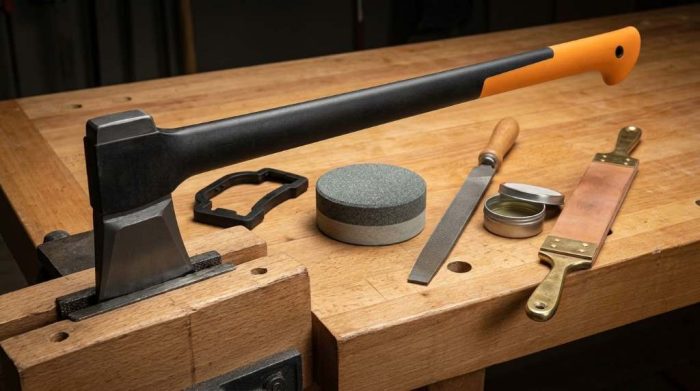
Fiskars engineers developed a specialized blade geometry tailored specifically for maximum splitting penetration. Specifically, the X27 pairs a thin, razor-sharp entry bit with convex splitting cheeks. This progressive wedge design pushes wood fibers apart before the axe head binds.
The forged carbon steel head receives an advanced black PTFE fluoropolymer surface treatment. Consequently, this non-stick finish reduces friction against green wood fibers by forty percent. Aggressive power grinders scrape away this slick coating and cause premature blade rusting.
The steel head is permanently molded directly into the lightweight FiberComp composite handle. Furthermore, this structural union eliminates head loosening common in traditional wooden haft axes. Preserving the exact factory bevel angle ensures effortless splitting performance across countless cordwood piles.
Using the Fiskars Ceramic Axe and Knife Sharpener
The genuine Fiskars ceramic sharpener provides the fastest, safest method for routine field touch-ups. First, place the orange sharpener firmly onto a flat, non-slip workbench surface. Select the dedicated axe setting by sliding the internal ceramic wheel guide forward.
Insert the axe cutting edge into the central groove between the ceramic grooved wheels. Next, push and pull the blade smoothly back and forth with steady downward pressure. The internal ceramic rollers automatically maintain the precise thirty-degree factory cutting angle.
Perform fifteen to twenty rhythmic passes through the ceramic sharpening wheels. Soon, the ceramic abrasive stones restore a uniform, hair-shaving cutting apex along the curve. Wipe away fine metal dust with a soft cloth before testing the cutting edge.
This portable ceramic tool sharpens blades in less than two minutes without removing excess metal. In fact, routine touch-ups prevent minor edge blunting from becoming severe edge failure. Keep this compact sharpener inside your logging toolbox for convenient woodland maintenance.
Sharpening Damaged Edges with Diamond Stones
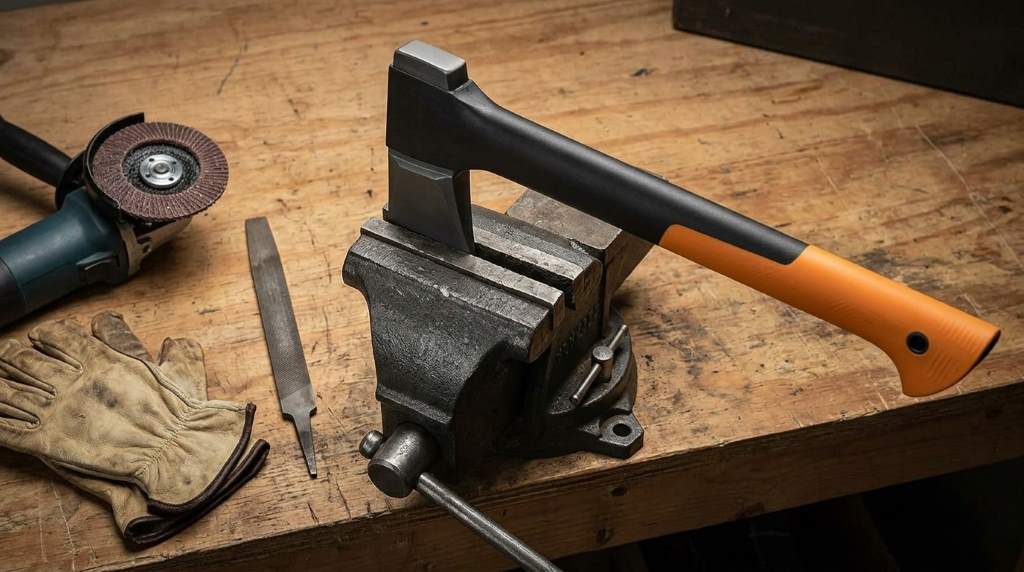
Striking frozen dirt or hidden stones occasionally produces minor nicks across the cutting edge. When ceramic wheels prove insufficient, a dual-sided diamond bench stone restores clean geometry rapidly. First, clamp the axe securely in a bench vise with the bit facing upward.
Lubricate the diamond stone surface with a splash of clean water or lapping fluid. Next, place the coarse 325-grit diamond face flat against the primary cutting bevel. Push the diamond hone diagonally across the blade from heel to toe smoothly.
Maintain a thirty-degree angle while following the natural sweep of the curved bit. In addition, count fifteen strokes on one side before flipping the stone over. Matching stroke counts on both faces prevents creating an asymmetrical, drifting cutting bevel.
Switch to the fine 1200-grit diamond side to refine the newly formed steel apex. Light, circular honing passes erase coarse scratches and polish the steel mirror-bright. This fine finish ensures that the axe glides through knotty birch and maple.
Stropping the Micro-Bevel for Maximum Sharpness
Leather stropping removes microscopic wire burrs that remain after diamond stone sharpening. First, secure a strip of stiff vegetable-tanned leather to a flat wooden paddle. Coat the leather surface with green chromium oxide micro-abrasive polishing paste.
Draw the axe bit backward across the leather strop away from the cutting direction. Never push the blade forward because the sharp edge will slice the leather strip. Tilt the blade upward slightly to polish the micro-bevel apex directly.
Execute twenty trailing strokes on each side using light, uniform arm pressure. Consequently, the stropping compound removes fine burrs and produces a surgical shaving apex. A properly stropped X27 effortlessly slices curled curls of paper with zero snagging.
Fiskars X27 Sharpening Specifications and Tool Matrix
Selecting appropriate abrasive tools ensures fast edge restoration while safeguarding delicate factory coatings. For example, knowing proper grit progressions prevents removing unnecessary structural steel from the wedge. The technical table below outlines critical sharpening specifications, grit recommendations, and maintenance cycles.
| Sharpening Parameter | Factory Recommendation | Maintenance Objective |
|---|---|---|
| Factory Edge Angle | 30 to 35 Degrees Convex | Provides high splitting velocity and chip resistance. |
| Routine Touch-Up Tool | Rotary Ceramic Wheel Sharpener | Restores shaving sharpness in sixty seconds safely. |
| Heavy Repair Tool | 325-Grit Diamond Bench Stone | Removes rock dings without damaging PTFE coating. |
| Polishing Media | 1200-Grit Ceramic or Diamond | Refines apex geometry and eliminates coarse burrs. |
| Final Honing Method | Leather Strop with Chromium Paste | Creates mirror-polished micro-bevel for clean splits. |
| Protective Treatment | Silicone Spray or Camellia Oil | Shields exposed carbon steel apex from moisture. |
Hand-held diamond abrasives preserve the factory temper and protect the composite handle collar. Furthermore, ceramic wheels eliminate the risk of sparks melting the nearby FiberComp handle. Following these calibrated specifications maximizes tool longevity across decades of heavy cordwood splitting.
Avoiding Dangerous Sharpening Mistakes
Many axe owners inadvertently ruin high-performance splitting axes using improper shop equipment. Specifically, never sharpen a modern Fiskars axe on a high-speed dry bench grinder. Rapid friction heats carbon steel beyond four hundred degrees Fahrenheit within seconds.
Excessive heat softens the hardened steel matrix and destroys the factory heat temper permanently. Consequently, the softened metal edge rolls over or dulls after just three strikes. Always utilize manual diamond files, water-cooled grindstones, or ceramic wheels to preserve hardness.
Additionally, avoid filing the blade into a flat, razor-thin woodworking chisel profile. Splitting axes require a sturdy convex bevel to withstand heavy shock against frozen knots. A thin edge chips and folds when striking dense oak or hickory rounds.
Rust Prevention and Storage Best Practices
The black PTFE coating protects most of the forged steel head from outdoor moisture. However, regular sharpening exposes bare, unshielded high-carbon steel along the cutting apex. Therefore, applying corrosion inhibitors after each sharpening session prevents pitting rust.
First, wipe away all metal dust, moisture, and tree sap using rubbing alcohol. Next, spray a thin coat of silicone lubricant or mineral oil across the bevel. The oily barrier locks out atmospheric moisture and prevents rust from degrading edge keenness.
Insert the sharpened axe into its orange locking plastic sheath for storage and transport. The protective sheath shields the razor edge while locking securely around the FiberComp handle. Store the sheathed axe in a dry, temperature-controlled environment away from damp floors.
Conclusion: Keep Your Splitting Axe in Peak Condition
Maintaining a razor-sharp edge on your Fiskars X27 makes firewood processing faster and safer. Routine ceramic wheel touch-ups, diamond stone repairs, and leather stropping preserve the convex wedge. In addition, protective oiling keeps the carbon steel bit ready for winter logging.
Do not waste valuable time and energy struggling with a blunt splitting axe this winter. Inspect your blade today, grab your ceramic sharpener, and restore effortless splitting power immediately!
Frequently Asked Questions
Can I use the Fiskars sharpener for other axe brands?
Yes, the ceramic sharpener works effectively on most camp hatchets and wood splitting axes.
What is the factory edge angle on a Fiskars X27?
Fiskars grinds the X27 splitting blade to an aggressive thirty-degree convex cutting profile.
Will sharpening remove the black coating on the axe?
Sharpening exposes bare steel along the bevel while preserving the coating across the cheeks.
How often should I sharpen my Fiskars X27?
Run the blade through a ceramic sharpener after every five hours of heavy splitting.
Can I use a bastard file on a Fiskars axe?
Yes, a fine mill bastard file reprofiles chipped edges when diamond stones are unavailable.