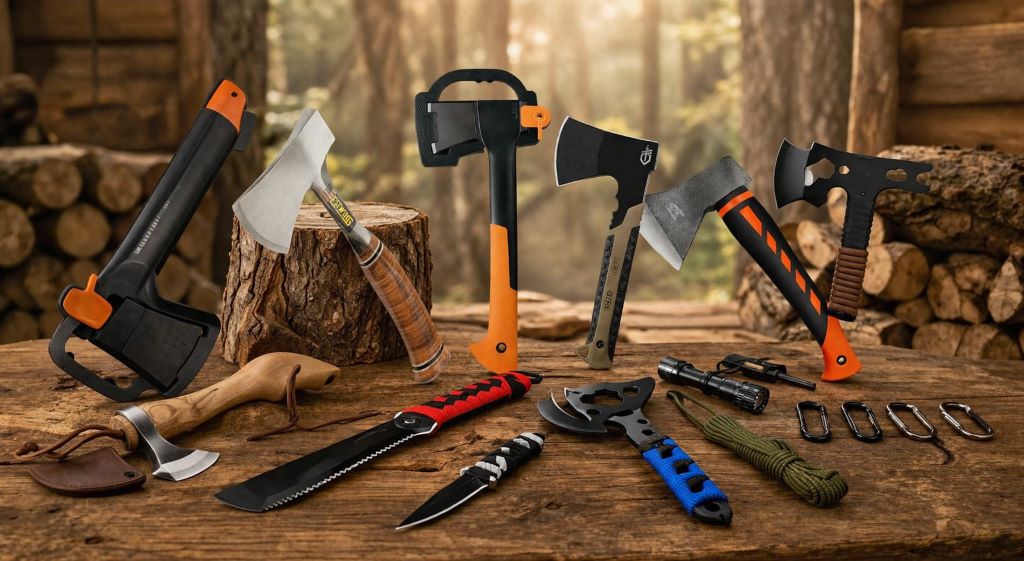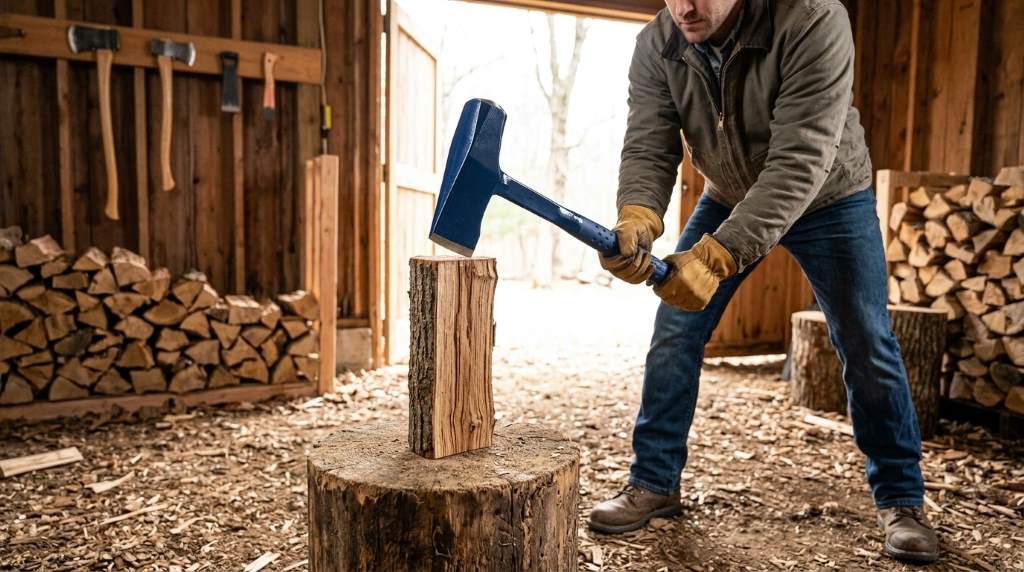
You use this wood splitting maul by placing seasoned firewood atop a solid chopping block. Next, grip the shock-absorbing handle firmly and strike downward into existing grain checks. The weighted four-pound forged steel head forces grain fibers apart instantly without sticking.
Damp autumn evenings demand rapid kindling preparation to maintain consistent warmth inside your home fireplace or woodstove. Fortunately, an authentic Estwing Fireside Friend wood splitting maul combines sledgehammer driving power with axe portability. In fact, forestry splitting trials reveal that wide wedge mauls split dense oak logs fifty percent faster. Therefore, this detailed guide explains proper stance, two-handed swing dynamics, and safe kindling production.
Key Takeaways
- Place split rounds onto a sturdy, level wooden chopping block to preserve the cutting edge.
- Target existing radial grain checks on the log surface to achieve effortless single-strike splits.
- Adopt a balanced, shoulder-width stance to maintain total swing control and personal safety.
- Let the four-pound forged steel head provide downward momentum rather than over-swinging your arms.
- Wipe the forged carbon steel head with light protective oil after splitting green or damp wood.
- Store the maul inside its durable embossed leather sheath in a dry, heated workshop area.
Anatomy of the Fireside Friend and Work Area Preparation
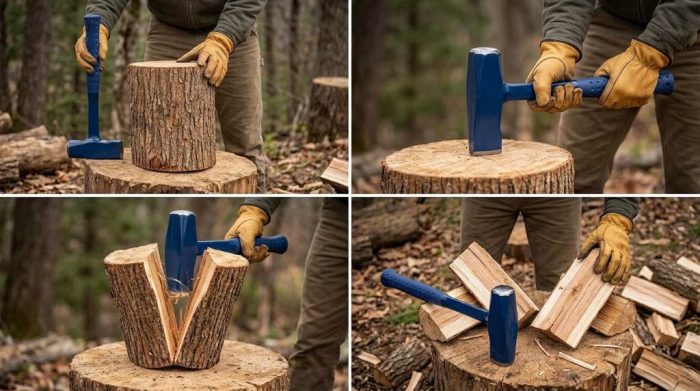
Estwing engineers forged the Fireside Friend maul from a single solid piece of American carbon steel. Specifically, this drop-forged construction eliminates weak wooden handles that loosen, crack, or splinter under heavy impacts. Furthermore, the patented blue shock reduction grip absorbs seventy percent of stinging impact vibrations.
Safe wood splitting always begins with setting up a dedicated, stable outdoor splitting station. First, select a wide, flat hardwood tree stump measuring twelve to sixteen inches in height. Placing logs on bare dirt or gravel risks striking hidden rocks that chip your forged wedge.
Clear all surrounding ground obstacles including loose bark, stray kindling, and garden hoses. Next, verify that nearby bystanders, children, and pets remain at least twenty feet away from your workstation. Wear heavy leather work gloves, steel-toe boots, and ANSI-approved shatterproof safety glasses during every splitting session.
Proper Stance, Body Mechanics, and Swing Technique
Mastering correct ergonomic posture prevents lower back strain and guarantees accurate strikes on every log. First, position your feet slightly wider than shoulder-width with your knees unlocked and flexed. Square your hips squarely toward the center of your hardwood chopping block.
You can operate the compact fourteen-inch Fireside Friend using either a one-handed or two-handed grip. For splitting small pine kindling, grasp the lower grip handle firmly with your dominant hand. However, for dense oak rounds, place your non-dominant hand directly above your primary hand.
Raise the maul smoothly upward to chest height while keeping your core muscles firmly engaged. Next, bring the four-pound head straight downward along a vertical arc into the target log. Allow gravity and the heavy forged wedge to drive the steel downward with maximum impact velocity.
Avoid excessive arm muscle force that causes off-center glancing blows and wrist fatigue. Instead, focus entirely on clean center-line accuracy and consistent follow-through on every stroke. Crisp, controlled downward momentum forces dense wood fibers outward cleanly on initial contact.
Selecting and Reading Wood Grain for Fast Splits
Reading the natural grain structure of firewood logs saves substantial physical energy during processing. First, inspect the top cross-section of the log for visible drying cracks or radial checks. Align your maul blade directly parallel with the widest radial split before swinging.
Avoid striking directly into large, gnarly branch knots embedded deep within the wood grain. Instead, strike along the perimeter edge just outside the tough knot cluster to shear wood cleanly. In fact, splitting around stubborn knots preserves blade sharpness and prevents the maul from binding.
Dry, seasoned hardwood with under twenty percent moisture content splits far more readily than fresh green timber. Furthermore, freezing winter temperatures make wood fibers brittle and significantly accelerate clean splitting action. Process frozen logs during cold winter mornings to maximize your splitting productivity.
Processing Stove Kindling Safely and Accurately
The compact fourteen-inch overall length makes the Fireside Friend the premier tool for preparing stove kindling. First, split medium firewood logs into uniform two-inch square triangular billets on your chopping block. Set each billet upright near the center of the block surface.
Never hold the top of small kindling pieces with your bare fingers while swinging the maul. Instead, balance the wood upright independently or use a dry branch to support shaky sticks safely. Alternatively, rest the maul bit on top of the kindling piece before tapping downward.
Swing with short, controlled wrist taps to slice off thin kindling strips rapidly. Consequently, you produce piles of cedar and pine kindling in just a few minutes without dangerous slips. These narrow kindling sticks catch flame quickly inside woodstoves and fireplace grates.
Estwing Fireside Friend Specifications and Operation Matrix
Comparing physical dimensions against operational capabilities helps users choose the right tool for specific firewood tasks. For example, understanding head weight and handle geometry explains why this maul outperforms standard camp hatchets. The technical reference table below outlines essential tool specifications and operational practices.
| Design Parameter | Factory Specification | Operational Advantage |
|---|---|---|
| Overall Tool Length | 14.25 Inches (362 mm) | Provides compact control for tight woodstove hearths. |
| Total Tool Weight | 4.0 Pounds (1.81 kg) | Delivers heavy sledgehammer impact without arm strain. |
| Head Construction | Solid Forged Carbon Steel | Eliminates loose handle heads and cracked wooden shafts. |
| Handle Grip Material | Molded Vinyl Shock Reduction | Dampens seventy percent of stinging strike vibrations. |
| Cutting Edge Profile | Wide Symmetrical Wedge | Forces wood fibers apart without binding in grain. |
| Included Accessory | Embossed Leather Sheath | Protects cutting edge and prevents accidental cuts. |
Solid steel tool construction ensures complete structural reliability across thousands of rigorous splitting cycles. Furthermore, the wide wedge profile prevents the blade from getting stuck inside stringy elm or birch. Following these operational guidelines guarantees safe and enjoyable firewood preparation all winter long.
Unsticking a Wedged Maul Safely
Stringy or twisted green wood grain occasionally pinches the maul head before the log splits completely. However, you must never pry the steel handle sideways against the wood to break it loose. Prying sideways strains the handle neck and risks chipping the forged cutting bit.
First, lift the stuck log and maul together smoothly using both hands on the handle. Next, invert the tool so the heavy wooden log faces upward above the maul head. Bring the flat poll of the maul down firmly onto your solid wooden chopping block.
The downward inertia of the heavy log forces it down onto the wedge, splitting it apart instantly. Alternatively, drive a small steel or polymer splitting wedge into the opening crack using a dead-blow mallet. This secondary wedge relieves lateral pressure and frees your Fireside Friend in seconds.
Cleaning, Edge Care, and Seasonal Storage
Routine maintenance keeps your Estwing maul rust-free and ready for dependable firewood duty at any moment. First, clean sticky pine sap and dirt off the forged head using mineral spirits or citrus cleaner. Dry the entire metal surface thoroughly using a clean cotton rag.
Inspect the cutting edge periodically for mushrooming metal or minor burrs from accidental ground strikes. Touch up the primary wedge bevel using a standard mill bastard file or coarse diamond stone. Unlike slicing axes, splitting mauls perform best with a sturdy, slightly rounded convex wedge profile.
Apply a protective film of pure mineral oil or paste wax over all bare forged steel surfaces. Slide the oiled head into its heavy-duty leather sheath and snap the retention strap shut securely. Store the sheathed maul in a dry tool shed or garage workshop away from moist floors.
Conclusion: Master Your Firewood Splitting Tasks
Using the Estwing Fireside Friend maul turns tedious firewood processing into a fast, satisfying seasonal chore. Maintaining proper footing, reading wood grain checks, and letting the four-pound head drive downward ensures clean splits. In addition, routine cleaning and oiling preserve this American-forged heirloom tool for generations.
Do not struggle with dull hatchets or unstable axes at your fireplace hearth this winter season. Grab your Estwing Fireside Friend maul today and enjoy effortless firewood splitting for cozy, crackling hearth fires!
Frequently Asked Questions
Can I swing the Estwing Fireside Friend with one hand?
Yes, you can swing this maul with one hand for kindling or two hands for logs.
How sharp should a wood splitting maul edge be?
A splitting maul needs a clean, durable wedge profile rather than a delicate razor-sharp edge.
Can I hit the poll of the Fireside Friend with a sledgehammer?
No, striking the hardened steel poll with another hardened steel hammer causes dangerous metal chipping.
What wood species splits easiest with the Fireside Friend?
Dry, seasoned red oak, ash, and straight-grain birch split fastest with this compact four-pound maul.
How do I stop the maul handle from slipping in wet weather?
Wear rubberized or leather work gloves to ensure a secure grip on the molded vinyl handle.