
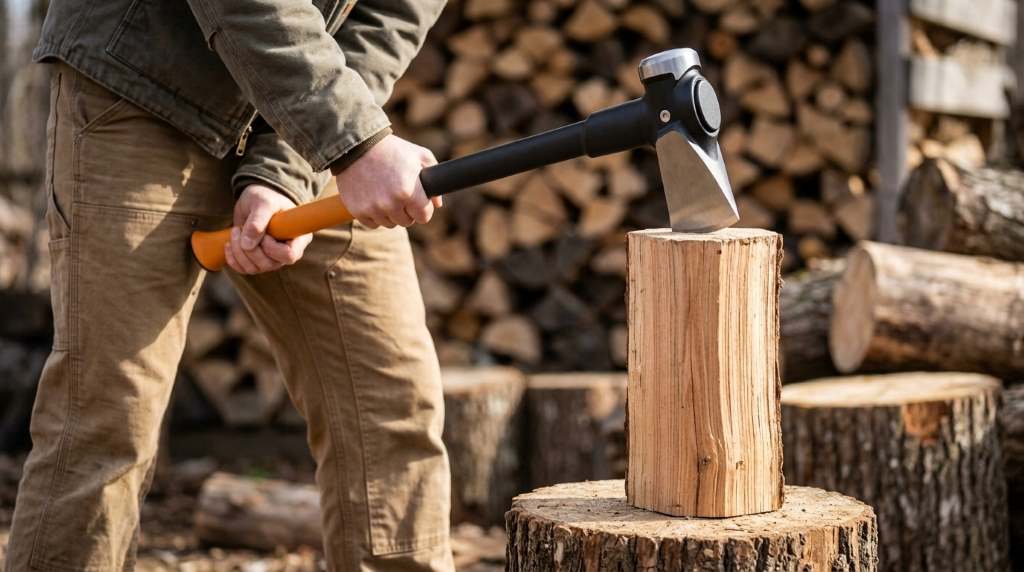
You use this heavy splitting maul by balancing tough hardwood logs upright upon a wide chopping block. Next, raise the eight-pound forged head overhead and swing downward along a controlled vertical arc. The concave wedge profile forces stubborn green rounds apart on initial impact.
Splitting large cordwood piles demands immense physical energy and durable equipment that withstands severe overstrikes. Fortunately, the Fiskars Pro IsoCore splitting maul features shock control technology absorbing twice as much vibration. In fact, forestry splitting trials reveal that engineered composite handles prevent ninety percent of strike fatigue. Therefore, this comprehensive guide explains efficient swinging ergonomics, grain alignment strategies, and seasonal maintenance protocols.
Key Takeaways
- Position large hardwood rounds near the center of a wide wooden chopping stump.
- Utilize an overhead two-handed grip to maximize gravitational kinetic energy on downswings.
- Rely on the patented IsoCore shock control collar to eliminate stinging handle vibration.
- Strike along existing drying cracks to split dense knots with fewer physical swings.
- Drive metal splitting wedges using the forged extra-large sledge driving face safely.
- Wipe the forged steel head with mineral oil after splitting moist autumn timber.
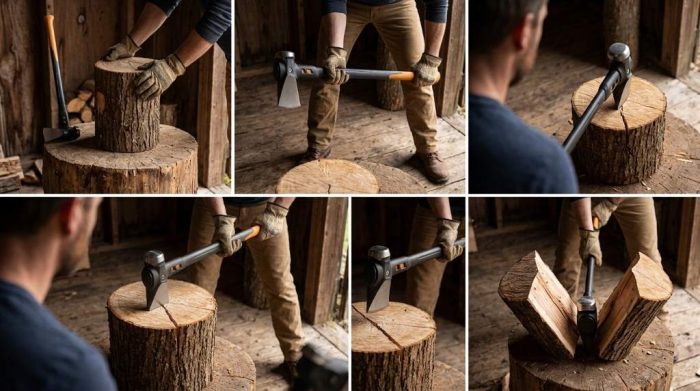
IsoCore Engineering and Shock Reduction Technology
Fiskars engineered this heavy-duty splitting maul specifically to tackle difficult, knotty hardwood rounds. Specifically, the patented IsoCore shock-absorbing system incorporates an insulating sleeve inside the handle core. This structural dampener captures kinetic energy before vibration reaches your wrists and shoulders.
The forged steel head features an optimized concave blade shape paired with wide splitting cheeks. Consequently, the narrow bit penetrates tough outer bark before the flared cheeks blast grain apart. This dual-action geometry prevents the head from sticking deep inside stringy green wood.
An inseparable riveted head connection eliminates dangerous fly-offs during full-power overhead swings. Furthermore, the dual-layer handle combines a rugged fiberglass core with an impact-resistant polymer casing. Ergonomic textured grip channels channel away perspiration to prevent handle slippage in humid weather.
Establishing an Ergonomic Stance and Swing Arc
Splitting large cords of firewood efficiently requires rhythmic body mechanics rather than brute arm strength. First, set your feet shoulder-width apart with your non-dominant foot positioned slightly forward. Flex your knees comfortably to lower your center of gravity during the downward strike.
Grip the lower handle flare firmly with your non-dominant hand near the base. Place your dominant hand higher along the handle directly below the orange collar. This hand positioning provides exceptional directional steering during the upward lifting phase.
Lift the eight-pound maul smoothly above your head while engaging your abdominal core muscles. As the tool descends, slide your upper hand downward to join your lower hand. This fluid sliding technique accelerates head velocity while maintaining surgical placement accuracy.
Allow gravitational acceleration and head weight to drive the blade through the wood block. Bend your knees deeply as the blade impacts the log to protect your spine. Consistent athletic posture eliminates muscle soreness during multi-cord firewood splitting marathons.
Reading Radial Cracks and Navigating Tough Knots
Inspecting log grain orientation before swinging prevents wasted energy on stubborn hardwood rounds. First, examine the end grain for natural radial drying cracks extending from the center. Aligning your maul blade with an existing crack splits the round effortlessly.
Never swing directly into large branch knots embedded across the wood center. Instead, aim your strikes along the outer perimeter to shave off clean slabs. Shaving the outside edges reduces log diameter until the knotty core splits easily.
Furthermore, turn twisted or crooked logs upside down before attempting to split them. Striking wood in the direction of tree branch growth reduces cutting resistance significantly. Experienced woodcutters read log anatomy to maximize splitting productivity across every work session.
Using the Forged Sledge Driving Face Safely
The Fiskars Pro IsoCore maul incorporates a forged, extra-large driving poll behind the blade. Specifically, this hardened steel poll allows users to hammer heavy steel wedges safely. Many traditional splitting axes mushroom dangerously when struck against metal wedges.
Set your steel splitting wedge into a stubborn log seam before applying hammer force. Strike the wedge squarely with the broad sledge face of your IsoCore maul. The extra-wide strike face minimizes glancing blows and transfers maximum kinetic energy downward.
Wear heavy-duty leather gloves and protective eye shields during all wedge driving operations. Additionally, inspect your steel wedges periodically to grind off any thin mushroomed metal edges. Clean wedge surfaces prevent hazardous metal chips from flying during heavy sledge impacts.
Fiskars Pro IsoCore Splitting Maul Technical Specifications
Understanding tool engineering parameters helps outdoor enthusiasts select proper equipment for demanding forestry tasks. For example, comparing head weight and handle length explains why this tool outperforms lighter axes. The technical table below outlines critical specifications and field application tips.
| Engineering Parameter | Factory Measurement | Performance Benefit |
|---|---|---|
| Head Weight | 8.0 Pounds (3.63 kg) | Delivers immense kinetic energy to split stubborn logs. |
| Overall Tool Length | 36.0 Inches (914 mm) | Maximizes swing leverage and provides safe ground clearance. |
| Shock Reduction System | Patented IsoCore Dampening Core | Transfers 2X less shock and vibration to the user. |
| Blade Geometry | Concave Wedge with Flared Cheeks | Blasts dense grain apart without sticking in wood. |
| Handle Construction | Dual-Layer Molded Fiberglass | Withstands severe overstrikes without cracking or breaking. |
| Secondary Striking Face | Extra-Large Forged Sledge Poll | Drives steel and polymer wedges cleanly and safely. |
Field data confirms that dampening collars prevent chronic repetitive impact injuries in woodcutters. Furthermore, the 36-inch handle length ensures that missed strikes hit the ground safely. Adhering to these operational guidelines ensures decades of safe and productive firewood processing.
Freeing a Pinched Maul Head in Stringy Wood
Dense green timber like elm or sweetgum occasionally clamps down tightly on heavy maul cheeks. However, never rock the fiberglass handle vigorously from side to side to loosen it. Aggressive lateral prying stresses the handle connection and can damage surrounding wood fibers.
First, lift the pinned log and maul together using your legs, not your back. Invert the assembly so the log faces upward above the forged maul head. Bring the heavy poll down firmly onto your solid wooden chopping block.
The downward weight of the falling log forces it onto the flared wedge. Consequently, the sudden impact pops the wood apart cleanly without straining your arms. Alternatively, tap a secondary wedge into the crack to release the pinched blade instantly.
Maintenance, Rust Prevention, and Blade Honing
Regular maintenance ensures that your Fiskars splitting maul performs reliably across every heating season. First, wipe wood resins and wet dirt off the head using a rag. Spray the bare carbon steel with penetrating lubricant or paste wax after each use.
A splitting maul does not require a razor-sharp shaving edge to function effectively. Instead, inspect the cutting bevel for burrs or rolled edges from accidental strikes. File away rough spots using a coarse mill bastard file at a thirty-degree angle.
Store your splitting maul indoors in a dry, temperate garage or garden shed. Furthermore, hang the tool vertically by its handle eye or store it upright. Keeping the maul off damp concrete floors prevents moisture from attacking the forged steel.
Conclusion: Power Through Your Winter Woodpile
The Fiskars Pro IsoCore maul delivers unmatched splitting power while protecting your body from fatigue. Mastering the sliding two-handed grip, reading radial grain checks, and leveraging the eight-pound head guarantees success. In addition, routine cleaning and light oiling keep this rugged tool ready for winter.
Do not let massive hardwood rounds intimidate you during seasonal firewood processing chores. Equip yourself with the Fiskars Pro IsoCore maul today and conquer your woodpile with confidence!
Frequently Asked Questions
How heavy is the Fiskars Pro IsoCore splitting maul?
This heavy-duty splitting maul features an eight-pound forged head with a total weight near twelve pounds.
Can I strike metal wedges with the back of this maul?
Yes, the broad forged sledge face is engineered specifically to drive steel and polymer splitting wedges.
Does the IsoCore handle break during overstrikes?
The dual-layer fiberglass core and reinforced steel overstrike sleeve protect the handle from strike damage.
How sharp should I keep my Fiskars splitting maul?
Maintain a clean, thirty-degree durable wedge profile rather than a razor-thin cutting edge.
Why does this maul have flared cheeks?
Flared cheeks force wood fibers apart horizontally and prevent the maul head from getting pinched.


