Starting a garden often feels simple until daily tasks begin stacking up. Watering, soil care, weed control, and basic maintenance quickly reveal the need for reliable tools. According to the Food and Agriculture Organization, small scale home gardening contributes to food security for over 800 million people worldwide. Research from the National Gardening Association also shows that new gardeners often abandon projects due to poor tool choices rather than lack of interest.
This guide explores practical, beginner friendly tools for gardening that make early gardening easier without overwhelming complexity. Each product below reflects real world usability, comfort, and durability. The goal is not perfection but consistency. With the right equipment, simple habits become easier to maintain, and that consistency often determines long term gardening success.
A Quick Overview of The Best Tools for Gardening
These tools for gardening focus on comfort, ease of use, and everyday practicality for new gardeners.
- Flexi Hose Expandable Garden Hose with 8 Function Nozzle
- Grampa’s Weeder Stand Up Weed Puller Tool
- 4 in 1 Soil Moisture Meter Digital Tester
- 9 Piece Heavy Duty Gardening Hand Tools Set with Organizer
- AMES Poly Scoop with Hardwood Handle
- Fiskars X7 14 Inch Lightweight Hatchet Axe with Sheath
- Felco F2 Pruning Shears 9.25 Inch Swiss Made Clippers
- KVR Upgraded Garden Kneeler and Seat Foldable Stool
Best Tools for Gardening in 2026
Each of these tools for gardening addresses a core beginner challenge such as watering, soil monitoring, or weed control. Together they create a balanced starter setup.
Flexi Hose Expandable Garden Hose with 8 Function Nozzle
Lightweight hose for flexible watering
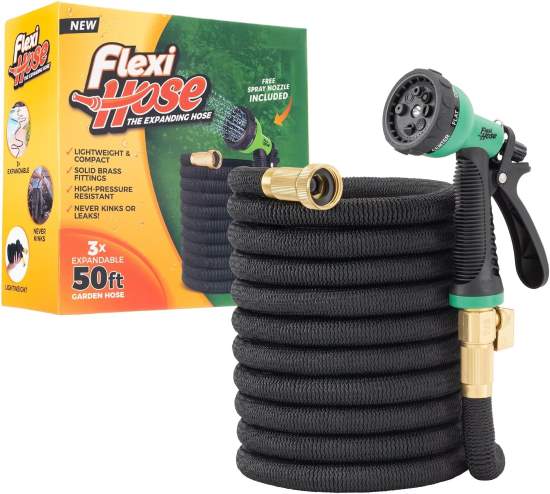
Using this hose feels noticeably different from traditional rubber hoses. It starts compact and expands when water flows, which makes storage simple. The lightweight feel reduces arm fatigue, especially when watering larger areas or raised beds. The nozzle offers multiple spray patterns that suit delicate seedlings and stronger watering needs.
Beginners often appreciate how easily the hose coils back after use. Brass fittings provide a secure connection, though proper tightening prevents minor leaks. It performs well in small to medium gardens and balconies where maneuverability matters. However, dragging it across rough surfaces may shorten its lifespan.
Routine care includes draining water after use and storing it away from direct sun. This hose suits beginners who want a manageable watering solution without heavy lifting.
User Review: Amanda K.
“I struggled with bulky hoses before this. The expandable design makes watering less tiring, and I like switching spray modes for my herbs and flowers.”
Key Features
• Expandable design reduces storage space making it ideal for apartments or compact sheds
• Multiple spray settings improve watering control allowing gentle mist or stronger rinse depending on plant type
• Lightweight structure reduces arm strain helpful for beginners with limited strength
• Solid brass connectors support leak resistance though proper tightening remains necessary
• Double latex core improves flexibility but rough surfaces may still cause wear over time
Pros and Cons
| Pros | Cons |
| Easy storage and handling | Sensitive to rough surfaces |
| Multiple spray pattern choices | Needs careful drying after use |
| Lightweight for daily watering | May twist under high pressure |
Grampa’s Weeder Stand Up Weed Puller Tool
Long handle weed removal without bending
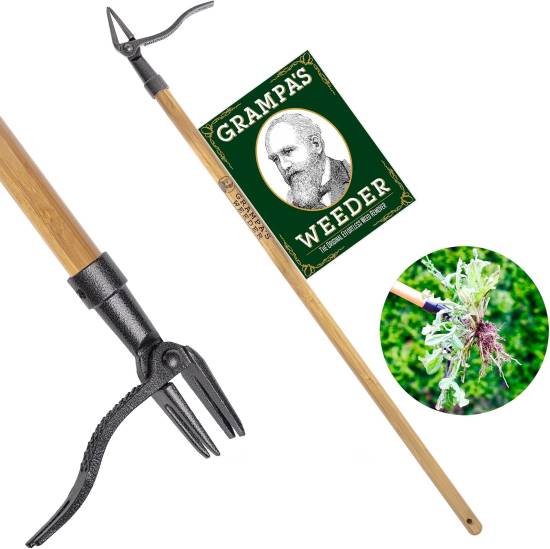
This weed puller focuses on posture and ease of use. The long bamboo handle allows upright operation, which reduces knee and back strain. The steel claw head grips weeds effectively, especially those with deeper roots. Using foot pressure to insert the claw feels intuitive after a few attempts.
Beginners find this tool particularly useful in lawns and loose soil. It removes weeds cleanly without disturbing surrounding plants. However, compacted clay soil may require extra effort. Maintenance mainly involves cleaning soil from the claw and storing it dry.
The weeder suits gardeners who want a low effort approach to weed management and those concerned about physical strain during repetitive tasks.
User Review: Daniel R.
“I use this weekly in my lawn. It saves my back, and I can remove weeds quickly without kneeling. Hard soil needs a little extra push though.”
Key Features
• Stand up design protects posture reducing strain during frequent weeding sessions
• Four claw steel head grips deep roots helping prevent regrowth in softer soils
• Bamboo handle feels sturdy yet light making control easier for beginners
• Foot pedal improves soil penetration though very hard ground may limit effectiveness
• Simple mechanical operation reduces learning curve ideal for first time gardeners
Pros and Cons
| Pros | Cons |
| No bending required design | Struggles in compacted soil |
| Effective root removal tool | Learning technique takes practice |
| Comfortable lightweight handle | Less precise near tight plants |
4 in 1 Soil Moisture Meter Digital Tester
All in one soil monitoring device
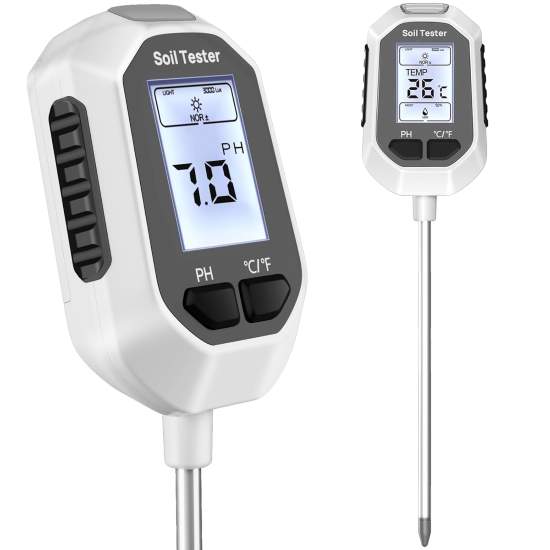
This device helps beginners understand soil conditions beyond guesswork. The digital display shows moisture, temperature, pH, and sunlight intensity. In practice, inserting the probe into soil gives quick feedback that informs watering and plant placement decisions.
The backlit display improves readability outdoors. Beginners often find moisture tracking particularly helpful to avoid overwatering. The probe works best in loose soil, while very dry or rocky ground may require careful insertion. Cleaning the probe after use prevents inaccurate readings.
This meter suits indoor plant enthusiasts, balcony gardeners, and beginners experimenting with different plant types. It may feel excessive for minimal gardens but adds confidence when managing multiple plants.
User Review: Sara L.
“I stopped overwatering once I started using this meter. The sunlight reading also helped me move plants to better spots.”
Key Features
• Multi function readings simplify plant care decisions reducing trial and error for beginners
• Backlit LCD improves outdoor visibility making readings easier during evening checks
• Quick probe response saves time though readings improve with proper insertion depth
• Portable design supports indoor and outdoor use convenient for mixed gardening setups
• Temperature and pH insights guide plant selection but advanced gardeners may need more precise tools
Pros and Cons
| Pros | Cons |
| Clear multi data readings | Probe sensitive to hard soil |
| Helpful for watering decisions | Requires cleaning after use |
| Compact and easy handling | pH accuracy varies slightly |
9 Piece Heavy Duty Gardening Hand Tools Set with Organizer
Comprehensive starter hand tool kit
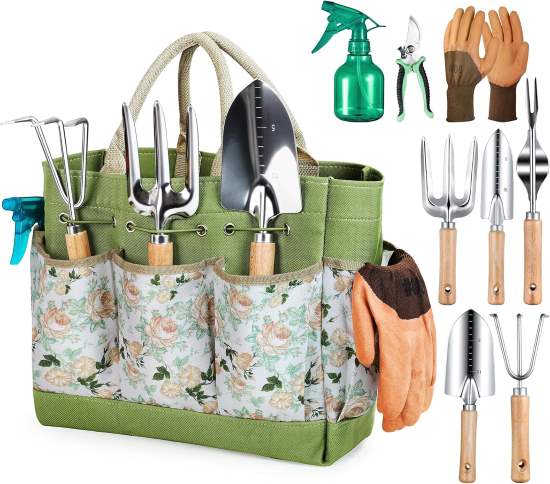
This set provides a practical entry point for beginners building a tool collection. The kit includes essentials such as a trowel, pruner, cultivator, and gloves stored in an organizer bag. The tools feel balanced and manageable for small tasks like potting, transplanting, and light soil preparation.
Rust resistant materials support outdoor use, though drying tools after washing extends longevity. The organizer helps prevent misplacement, which beginners often struggle with. The set performs well for container gardening and small beds but may feel insufficient for heavy digging tasks.
Overall, this kit suits beginners who want variety without purchasing individual tools. Occasional sharpening and cleaning maintain performance over time.
User Review: Priya M.
“This kit covered almost everything I needed when starting. The bag keeps tools together, and I use the pruner frequently for trimming herbs.”
Key Features
• Variety of tools supports multiple tasks reducing the need for separate purchases
• Rust resistant finish improves durability though proper drying remains important
• Comfort grip handles enhance control useful during longer planting sessions
• Organizer bag simplifies storage and transport helping beginners stay organized
• Balanced weight aids precision work but heavy soil digging may require stronger tools
Pros and Cons
| Pros | Cons |
| All in one beginner kit | Not for heavy digging tasks |
| Comfortable grip handles | Bag size limits extra storage |
| Rust resistant materials used | Pruner needs occasional sharpening |
AMES Poly Scoop with Hardwood Handle
Large capacity scoop for material handling
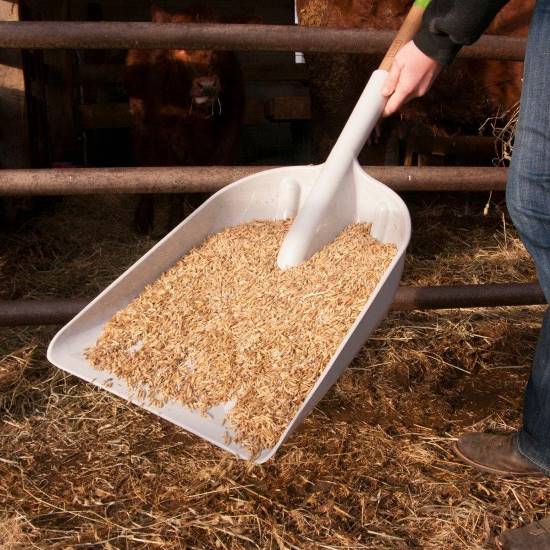
This scoop excels in moving mulch, soil, compost, and leaves. The wide poly blade carries lightweight materials efficiently, while the hardwood handle offers steady grip. Beginners often find it helpful during soil preparation and cleanup tasks.
The D grip improves control when lifting bulky loads. The scoop performs best with loose materials rather than compact soil or gravel. Cleaning after use prevents buildup that may affect handling. Storing it indoors helps preserve the wooden handle.
This tool suits gardeners managing larger beds or frequent soil amendments. It may feel oversized for balcony gardens but proves useful during seasonal planting and maintenance.
User Review: Thomas J.
“I use this scoop for mulch and compost. It moves large amounts quickly, and the handle feels comfortable even during longer sessions.”
Key Features
• Wide scoop capacity speeds material transfer reducing repetitive trips during soil preparation
• Poly blade keeps weight manageable making lifting easier for beginners
• Hardwood handle provides sturdy grip though exposure to moisture may affect longevity
• D grip design improves lifting control especially when handling loose mulch
• Durable construction suits seasonal heavy tasks but compact spaces may limit usefulness
Pros and Cons
| Pros | Cons |
| Moves large volumes quickly | Bulky for small spaces |
| Comfortable D grip handle | Not ideal for dense soil |
| Lightweight poly scoop build | Wooden handle needs care |
Fiskars X7 14 Inch Lightweight Hatchet Axe with Sheath
Compact cutting tool for outdoor garden tasks
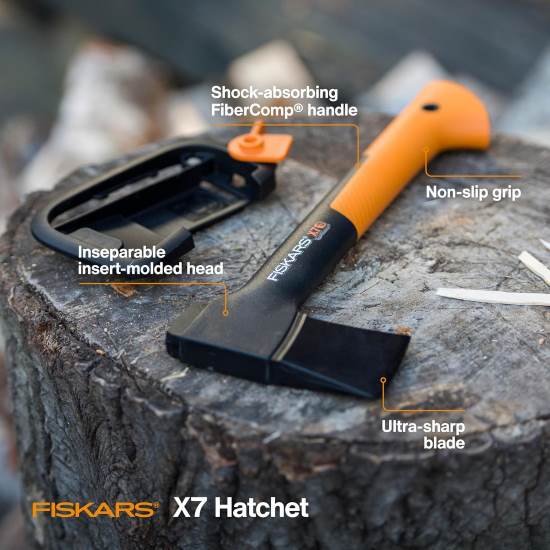
Although primarily marketed for camping, this hatchet fits certain gardening situations such as trimming small branches, splitting kindling for garden fire pits, or clearing woody debris. The lightweight feel makes it manageable for beginners who need occasional cutting power without a full sized axe.
The forged steel head provides clean cuts on smaller wood pieces, and the low friction blade helps reduce sticking. The shock absorbing handle softens vibration during repeated swings. In practice, it works best for light pruning or wood splitting rather than heavy tree work.
Maintenance involves drying the blade, occasional sharpening, and storing the sheath securely. This hatchet suits gardeners with trees, shrubs, or outdoor spaces that generate woody waste. It may feel unnecessary for balcony or container gardeners.
User Review: Mark T.
“I mainly use this for trimming fallen branches and preparing kindling. It feels balanced and does not tire my hands quickly.”
Key Features
• Compact 14 inch size improves control making it manageable for beginners handling small cutting tasks
• Low friction blade reduces sticking allowing smoother cuts through soft wood and branches
• Shock absorbing handle limits vibration which improves comfort during repeated swings
• Forged steel head supports edge retention though regular sharpening still improves performance
• Protective sheath enhances safe storage important when keeping tools around family spaces
Pros and Cons
| Pros | Cons |
| Lightweight and easy control | Not suited for heavy chopping |
| Comfortable shock absorbing handle | Requires blade maintenance care |
| Useful for branch trimming | Limited gardening specific role |
Felco F2 Pruning Shears 9.25 Inch Swiss Made Clippers
Precision pruners for detailed plant care
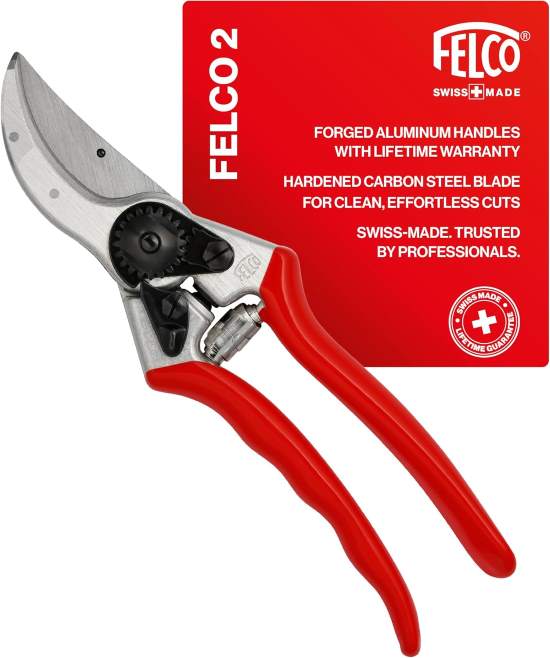
These pruning shears feel immediately refined in hand. The aluminum body balances durability with manageable weight, while the bypass blade delivers clean cuts that protect plant tissue. Beginners often notice improved pruning accuracy compared to basic pruners.
The shears excel when trimming herbs, flowers, and small branches. Smooth cutting action reduces hand fatigue during repeated pruning sessions. Replaceable parts add long term value since worn blades or springs can be swapped instead of replacing the entire tool.
Routine care includes cleaning sap residue and occasional sharpening. The shears perform best for precision pruning rather than thick woody stems. This tool suits beginners focused on plant health, shaping, and seasonal trimming tasks.
User Review: Elena P.
“I upgraded from basic pruners and immediately noticed cleaner cuts. They feel comfortable even after trimming multiple plants.”
Key Features
• Precision bypass blade supports clean cuts helping plants heal faster after pruning
• Lightweight aluminum body improves handling reducing fatigue during extended use
• Ergonomic grip enhances control useful when shaping delicate stems and flowers
• Replaceable components extend lifespan though replacements require basic maintenance knowledge
• Smooth cutting action improves efficiency but very thick branches may exceed capacity
Pros and Cons
| Pros | Cons |
| Clean precise pruning results | Higher maintenance expectations |
| Comfortable ergonomic grip | Not for thick branches |
| Replaceable long lasting parts | Learning sharpening improves results |
KVR Upgraded Garden Kneeler and Seat Foldable Stool
Comfort focused kneeling and seating support
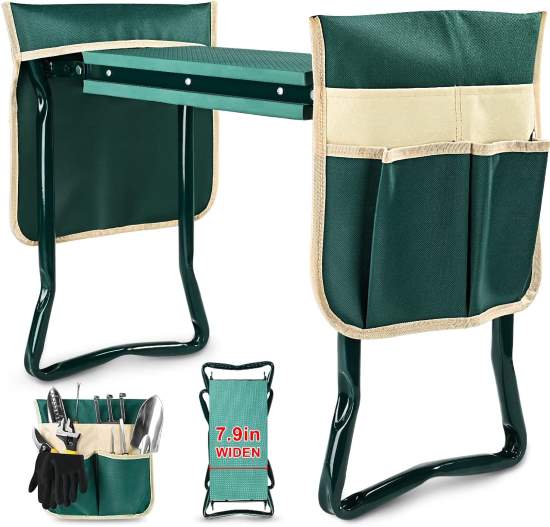
Extended gardening often leads to knee and back strain. This foldable kneeler addresses that challenge by offering both kneeling support and a stable seat. The padded surface feels comfortable during planting, weeding, or harvesting sessions close to the ground.
The foldable frame simplifies storage and transport, while side handles help users stand up safely. A detachable tool pouch keeps small tools within reach, reducing constant bending. Beginners often appreciate how the kneeler encourages longer gardening sessions without discomfort.
It performs well in small to medium gardens and raised beds. However, uneven ground may affect stability, so careful placement helps. Cleaning the padding and folding it dry maintains durability. This tool suits gardeners prioritizing comfort and mobility during repetitive ground level tasks.
User Review: Linda S.
“My knees used to ache after planting sessions. This kneeler made gardening more comfortable, and I like having tools nearby in the pouch.”
Key Features
• Dual kneeler and seat design improves versatility allowing posture changes during longer gardening sessions
• Soft padded surface reduces knee pressure helpful for beginners adjusting to ground level work
• Foldable frame simplifies storage ideal for gardeners with limited shed or balcony space
• Support handles assist standing movement improving safety and reducing strain
• Side tool pouch keeps essentials accessible though carrying heavier tools may affect balance
Pros and Cons
| Pros | Cons |
| Comfortable padded kneeling support | Stability varies on uneven ground |
| Foldable easy storage design | Pouch holds limited tools |
| Helpful standing support handles | Bulky for very small spaces |
Buying Guide: Choose The Affordable Tools for Gardening
What Actually Matters Before Choosing
Core performance factors
Beginners often focus on appearance rather than function. Tool performance depends on how well it handles repetitive tasks without fatigue or frustration. For example, watering tools should offer pressure control while soil tools must balance strength and precision. Buyers frequently underestimate how small inefficiencies compound over daily use. Reliable performance leads to consistent gardening habits, which ultimately shapes long term success.
Material quality and durability
Material choice determines lifespan and maintenance demands. Metal components resist wear but may rust without care. Plastic parts reduce weight yet vary widely in strength. Beginners sometimes assume all tools last equally, but exposure to moisture, sunlight, and soil acidity affects durability. Investing in balanced materials prevents early replacement cycles and reduces ownership effort.
Comfort and usability
Comfort rarely receives enough attention during tool selection. Grip texture, handle length, and overall weight directly affect fatigue levels. A tool that feels slightly awkward during testing may become frustrating after repeated use. Beginners often misinterpret discomfort as inexperience rather than poor design. Comfortable tools encourage longer gardening sessions without strain.
Maintenance demands
Every tool requires some level of upkeep. Cleaning soil residue, drying metal parts, and occasional sharpening all contribute to longevity. Buyers often overlook this aspect and blame tools when performance declines. Understanding maintenance expectations early helps prevent disappointment and ensures consistent results over time.
Environmental compatibility
Garden environments vary widely. Balcony gardens require compact, lightweight tools, while larger outdoor spaces benefit from long handled equipment. Beginners sometimes purchase tools unsuited to their space, which reduces practicality. Matching tool size and design to the gardening environment improves efficiency and storage convenience.
Safety considerations
Safety becomes important when using sharp pruners or heavy tools. Beginners may underestimate risks associated with repetitive strain or improper lifting. Features like ergonomic grips and stable handles reduce injury potential. Evaluating safety alongside performance supports confident daily use.
Related:
Walensee Mini Action Hoe – Durable 14-Inch Garden Weeder with Cushioned Grip Review
VIVOSUN 6.5” Curved Titanium Garden Pruner – Precision Hand Shear
Common Buyer Mistakes
Many beginners assume that more features always mean better tools. In practice, complex tools may introduce learning curves that slow routine tasks. Evaluating ease of use often matters more than feature count.
Another common mistake involves ignoring weight. A heavy tool may feel sturdy initially but quickly becomes tiring. Buyers should test comfort and balance rather than equating weight with quality.
Storage needs also get overlooked. Bulky tools create clutter in small spaces, which discourages regular use. Considering storage solutions alongside purchase decisions prevents frustration later.
Beginners frequently expect tools to perform equally across all soil types. In reality, compact clay and loose soil require different approaches. Understanding local soil conditions helps set realistic expectations.
Some buyers neglect maintenance requirements entirely. When rust or dull edges appear, they assume the tool failed. Regular cleaning and care preserve functionality and extend lifespan.
Finally, many gardeners purchase full tool sets without understanding their immediate needs. While variety can help, unused tools create unnecessary complexity. Starting with essential tools and expanding gradually often leads to better satisfaction.
How to Match Products to Specific Needs
Casual users with small gardens benefit from lightweight, multi purpose tools that require minimal setup. Compact watering solutions and basic hand tools often meet daily needs without overwhelming storage space.
Frequent gardeners working in larger areas should prioritize durability and ergonomics. Long handled tools and material handling equipment reduce physical strain during extended sessions.
Gardeners with limited storage space need collapsible or compact designs. Expandable hoses and organized tool kits prevent clutter and simplify access.
Budget conscious buyers focused on longevity should evaluate material quality and maintenance expectations rather than upfront variety. Durable essentials often outperform large kits in long term value.
Advanced beginners experimenting with plant varieties may appreciate monitoring tools like soil meters. These tools support learning and reduce trial and error, especially when managing diverse plant requirements.
Ultimately, matching tools to gardening frequency, space constraints, and personal comfort leads to consistent use. Consistency remains the most reliable predictor of gardening success.
Conclusion
Starting a garden becomes easier when tools support daily habits rather than complicate them. Lightweight watering, posture friendly weeding, soil monitoring, versatile hand tools, and efficient material handling each address a specific beginner challenge.
The best choice depends on space, comfort preferences, and gardening frequency. By focusing on usability and realistic expectations, beginners can build a toolkit that grows alongside their skills. Explore your gardening routine, identify the tasks you repeat most, and choose tools that simplify those moments.
FAQs
What tools should every beginner gardener start with
A watering tool, basic hand tools, and a weed remover cover most early gardening tasks.
Is a soil moisture meter necessary for beginners
It helps prevent overwatering and improves plant care confidence.
How often should gardening tools be cleaned
Cleaning after each use prevents rust and maintains performance.
Are expandable hoses durable for long term use
They last well with proper storage and gentle handling.
Do beginners need large material handling tools
Only if managing mulch, compost, or larger garden beds regularly.