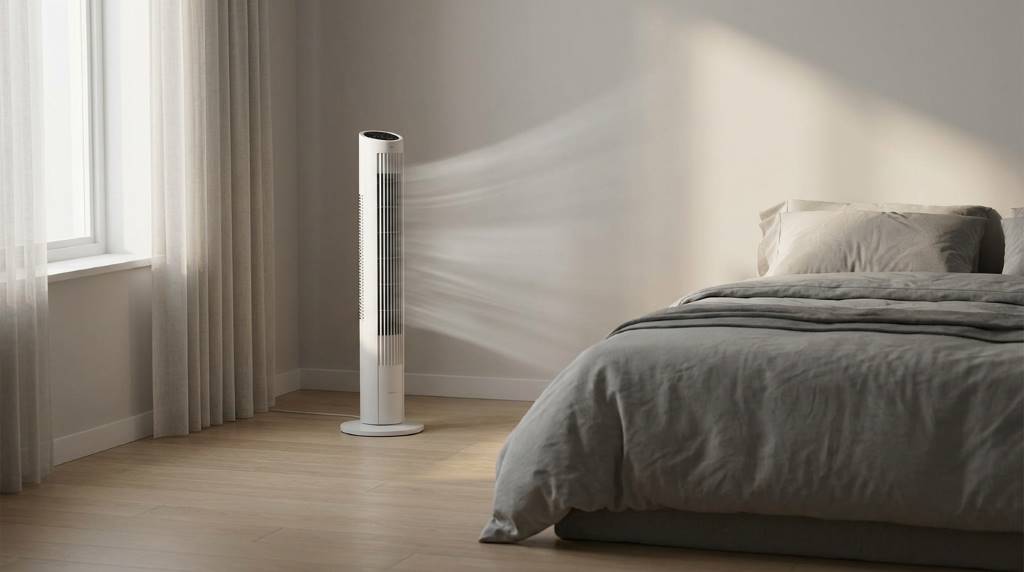
Place your tower fan about 2 to 4 feet from the bed while keeping airflow directed across the sleeping area instead of directly toward your face. Position it away from walls, curtains, and furniture so air circulates freely and cools the entire room more effectively.
Proper fan placement improves comfort, supports better airflow, and reduces hot spots throughout your bedroom. Studies show people generally sleep better in cool environments around 60 to 67 degrees Fahrenheit, while improved air circulation also increases overall comfort. If you are comparing tower fan bedroom models, correct positioning matters just as much as the fan itself. This guide explains simple placement techniques that maximize cooling performance without increasing energy use.
Why Proper Tower Fan Placement Matters
Good positioning helps cool the entire room instead of one small area. Better airflow also reduces stagnant warm air around furniture and corners.
Correct placement allows your fan to move air efficiently with less effort. As a result, your bedroom feels cooler while the fan operates quietly.
Choose the Best Location First
Keep the Fan Near the Bed
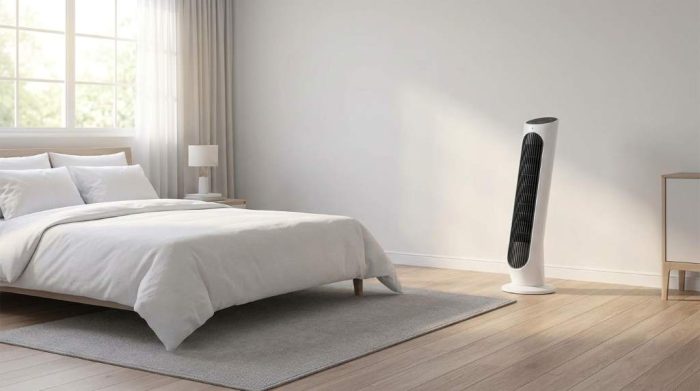
Place the fan within comfortable airflow distance without blocking walking paths. Usually, two to four feet provides balanced cooling for most bedrooms.
Avoid placing the fan directly beside your pillow every night. Instead, angle airflow across your body for greater comfort.
Leave Enough Open Space
Tower fans need clear space around their air intake and outlet. Blocked airflow lowers cooling performance and increases operating strain.
Keep several inches between the fan and nearby furniture or walls. This simple adjustment improves air movement throughout the room.
Position the Fan for Maximum Airflow
Direct airflow across the center of the bedroom whenever possible. Cross room circulation creates a more even cooling effect.
Many modern tower fans include oscillation for wider air distribution. Therefore, enable oscillation when cooling multiple sleeping areas.
- Aim airflow slightly above mattress level.
- Allow unrestricted airflow across open floor space.
- Avoid blowing directly into heavy curtains.
- Keep vents free from dust buildup.
Use Windows to Improve Cooling
Open windows during cooler evenings whenever outdoor temperatures allow. Fresh air helps remove trapped indoor heat more efficiently.
Position the fan so it pulls cooler air inside the bedroom. Alternatively, reverse airflow to push warm air outside during hot afternoons.
Create Cross Ventilation
Open another window in a nearby room whenever possible. Air naturally flows through connected spaces with greater efficiency.
This method reduces stuffiness while improving indoor comfort throughout the night. Consequently, your bedroom often feels cooler without additional equipment.
Avoid Common Placement Mistakes
Many homeowners unknowingly reduce cooling performance through poor placement choices. Small adjustments often create noticeable improvements immediately.
- Do not place the fan behind furniture.
- Avoid corners with limited airflow.
- Never block the rear air intake.
- Keep electrical cords safely organized.
- Avoid unstable or uneven surfaces.
These simple corrections improve airflow while helping the motor operate efficiently. Additionally, proper placement supports longer equipment life.
Adjust Position for Different Bedroom Sizes
Small Bedrooms
Small rooms cool quickly with proper airflow direction. Place the fan near one side of the bed instead of the center.
Use lower speed settings when airflow already reaches the entire room. This approach reduces noise while maintaining comfort.
Medium Bedrooms
Position the fan several feet from the bed with oscillation enabled. Balanced airflow spreads cooling across a larger sleeping space.
Keep pathways clear so air reaches every section without obstruction. Consequently, temperature differences become much less noticeable.
Large Bedrooms
Large rooms require stronger air circulation across greater distances. Place the tower fan closer to the center whenever practical.
You may also combine ceiling airflow with tower fan circulation. Together, they improve overall cooling without excessive energy consumption.
Consider Bedroom Furniture Layout
Furniture placement affects how air travels around the room. Large dressers and wardrobes often interrupt natural airflow.
Move the fan where air can circulate around major furniture pieces. Even small changes frequently improve cooling performance significantly.
- Keep airflow clear beside the bed.
- Avoid placing fans behind chairs.
- Leave space around nightstands.
- Reduce clutter near air pathways.
Use Fan Features Effectively
Modern tower fans include useful settings that improve nighttime comfort. Learning these features increases cooling efficiency without extra effort.
Sleep Mode
Sleep mode gradually lowers airflow while reducing operating noise overnight. Therefore, many users enjoy uninterrupted rest with this setting.
Timer Function
Timers automatically shut the fan off after several hours. This feature saves electricity while maintaining early night comfort.
Oscillation
Oscillation distributes air evenly throughout the bedroom instead of one location. Wider airflow also reduces cold spots on your body.
Maintain Safe Placement
Always position the fan on a stable, level surface before operation. Stable placement prevents accidental tipping during daily use.
Keep cords away from walkways to reduce tripping hazards. Also, avoid placing electrical equipment near water sources.
Clean dust from air vents regularly for consistent airflow performance. Routine maintenance also helps preserve motor efficiency over time.
Simple Positioning Checklist
- Place the fan two to four feet from the bed.
- Leave open space around the air intake.
- Aim airflow across the sleeping area.
- Use oscillation for wider circulation.
- Keep windows in mind for natural ventilation.
- Clean vents regularly for strong airflow.
Conclusion
Proper tower fan placement delivers better airflow, quieter operation, and improved sleeping comfort without increasing electricity use. Small positioning adjustments often produce surprisingly noticeable cooling improvements every night.
Apply these placement tips today and test different angles until airflow feels balanced throughout your bedroom. The right position helps your tower fan perform at its full potential.
Frequently Asked Questions
Where should I place a tower fan in my bedroom?
Place it two to four feet from the bed with airflow directed across your sleeping area.
Should a tower fan blow directly on me while sleeping?
No, gentle airflow across your body usually provides greater overnight comfort.
Can I place a tower fan next to a wall?
Yes, but leave enough clearance so the air intake remains completely unobstructed.
Does oscillation improve bedroom cooling?
Yes, oscillation spreads airflow evenly across the room and reduces warm spots.
How often should I clean my tower fan?
Clean the vents every few weeks to maintain strong airflow and efficient performance.