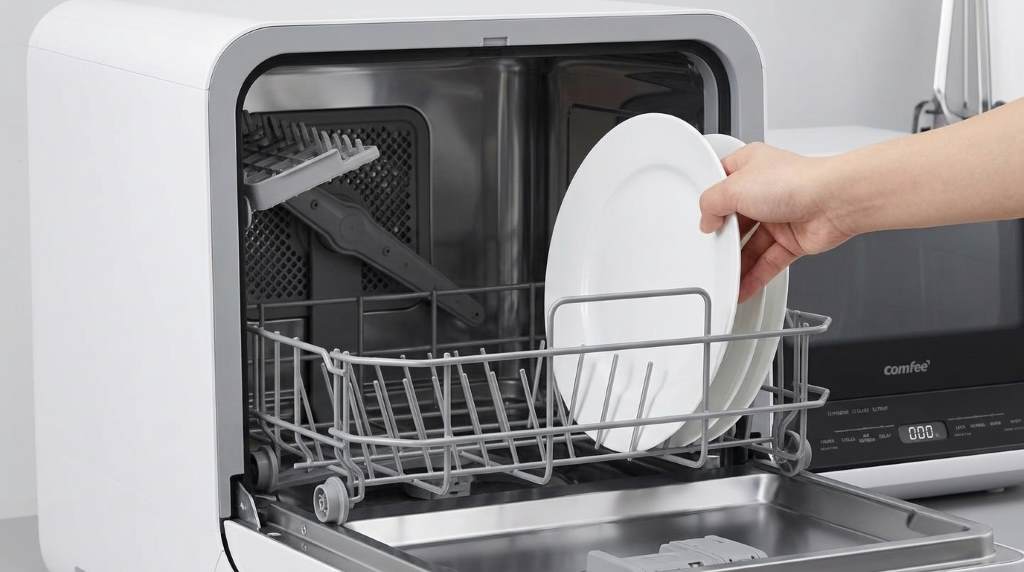
Load a Comfee mini dishwasher countertop by placing larger dishes at the back and sides, smaller items toward the front, and keeping spray arms completely clear. Proper spacing allows water and detergent to reach every surface, resulting in cleaner dishes and fewer wash issues.
Learning the correct loading method improves washing performance and helps protect delicate kitchenware. Studies suggest that modern compact dishwashers can use significantly less water than hand washing when loaded correctly. Therefore, following the right technique saves water while improving cleaning results. This guide also complements Comfee portable mini dishwasher countertop information for users seeking better everyday performance.
Why Proper Loading Matters
Every countertop dishwasher depends on unrestricted water circulation for effective cleaning. Correct placement helps every dish receive consistent spray coverage during each cycle.
Improper loading often causes leftover food particles, cloudy glasses, and wet dishes after washing. However, simple adjustments usually solve these common problems immediately.
Balanced loading also reduces stress on racks, spray arms, and internal components. As a result, the dishwasher operates efficiently over a longer period.
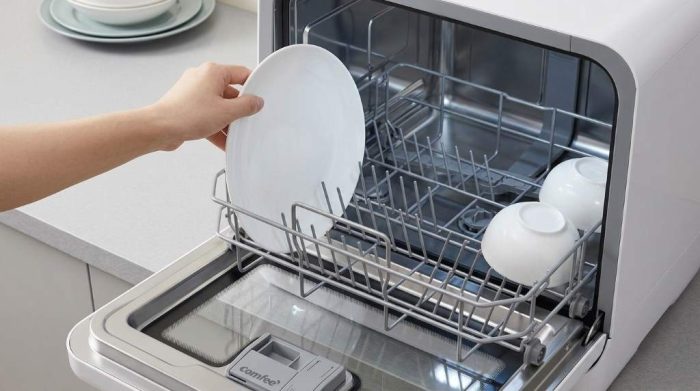
Understand the Interior Layout
Before loading dishes, become familiar with the rack arrangement and spray arm movement. Knowing each section prevents accidental blockages during operation.
Main Rack
The main rack holds dinner plates, bowls, cups, mugs, and serving dishes. Arrange every item securely without forcing pieces into tight spaces.
Cutlery Basket
The removable basket keeps forks, knives, and spoons separated during washing. Mixing directions improves water access while preventing nesting.
Spray Arm Area
The rotating spray arm distributes water throughout the dishwasher interior. Always verify that nothing blocks its complete rotation before starting.
How to Load Plates Correctly
Place dinner plates vertically instead of stacking them flat. Water reaches both sides more effectively with proper spacing between each plate.
Position larger plates near the back where they cannot block smaller dishes. Meanwhile, keep the dirty surfaces facing toward the center.
Avoid overloading every available slot simply because extra space appears available. Instead, leave enough room for water to circulate freely.
Best Way to Arrange Bowls
Angle bowls downward so food particles wash away naturally during the cleaning cycle. Standing water drains faster from properly tilted bowls.
Keep larger bowls along the sides whenever possible for improved water flow. Additionally, separate deep bowls to avoid shadowing smaller pieces.
Loading Cups and Glasses
Place cups upside down to prevent water collection after washing finishes. Stable positioning also reduces movement during powerful spray cycles.
Leave small gaps between glasses to prevent accidental contact while washing. Consequently, delicate glassware remains cleaner and better protected.
How to Place Utensils
Mix forks, spoons, and similar utensils throughout the basket for even cleaning. Separate identical pieces because nesting limits water exposure.
Keep sharp knife blades pointed downward whenever recommended by the manufacturer. Furthermore, handle every sharp utensil carefully during unloading.
- Alternate spoon directions.
- Mix forks with spoons.
- Separate serving utensils.
- Avoid overcrowding the basket.
- Keep long utensils away from spray arms.
Items You Should Not Block
Several internal components require complete freedom throughout every wash cycle. Blocking these areas reduces cleaning quality immediately.
- Rotating spray arm
- Detergent dispenser
- Water inlet area
- Rack movement path
- Drain opening
Should You Rinse Dishes First?
Remove large food scraps before placing dishes inside the dishwasher. However, light residue usually washes away during normal cleaning cycles.
Avoid heavily prewashing every item because detergents often perform better with small food residues. Therefore, scrape instead of completely washing dishes first.
Common Loading Mistakes
Many cleaning problems come from loading habits instead of mechanical failures. Fortunately, these mistakes remain easy to correct.
- Stacking bowls together
- Blocking spray arm movement
- Overfilling the rack
- Mixing oversized cookware with small dishes
- Placing cups upright
- Ignoring detergent dispenser clearance
Loading Different Kitchen Items
Small Plates
Arrange smaller plates near the front without blocking larger dishes behind them. Maintain equal spacing for consistent water coverage.
Mugs
Place mugs upside down at a slight angle for better drainage. Keep handles positioned outward whenever practical.
Plastic Containers
Secure lightweight plastic containers carefully because strong water pressure may move them. Additionally, avoid covering larger dishes underneath.
Baby Bottles
Wash bottle components separately according to manufacturer instructions for best sanitation. Small accessories should remain inside suitable holders.
Tips for Better Cleaning Results
Choosing the correct wash cycle improves cleaning performance for different dish types. Matching detergent quantity also prevents unwanted residue.
- Use dishwasher specific detergent.
- Clean the filter regularly.
- Check spray arms often.
- Run hot water before starting.
- Avoid excessive detergent.
- Unload the bottom rack last.
Simple Maintenance After Loading
Inspect the dishwasher after every few cycles for trapped food particles. Regular maintenance helps maintain consistent cleaning performance.
Wipe door seals gently using a soft damp cloth whenever necessary. Likewise, empty the filter according to maintenance recommendations.
When to Run a Full or Partial Load
Run a full load whenever practical for better water and energy efficiency. Nevertheless, avoid squeezing additional dishes into crowded spaces.
Partial loads remain useful when clean dishes are needed quickly. Proper spacing remains more important than filling every available position.
Final Thoughts
Correctly loading a Comfee mini dishwasher countertop takes only a few extra moments before each cycle. Better placement improves cleaning quality while protecting your dishes and appliance.
Start using these loading techniques during your next wash for consistently cleaner results. Small improvements today can make every future dishwasher cycle more effective.
Frequently Asked Questions
How should plates face inside the dishwasher?
Place plates vertically with dirty surfaces facing the center.
Can bowls touch each other?
No, leave space between bowls for proper water circulation.
Should I rinse dishes before loading?
Scrape away large food pieces, but avoid fully prewashing dishes.
Why are my dishes still dirty after washing?
Blocked spray arms or overcrowded racks usually reduce cleaning performance.
Can plastic containers go inside the dishwasher?
Yes, secure dishwasher safe plastic containers to prevent movement during washing.