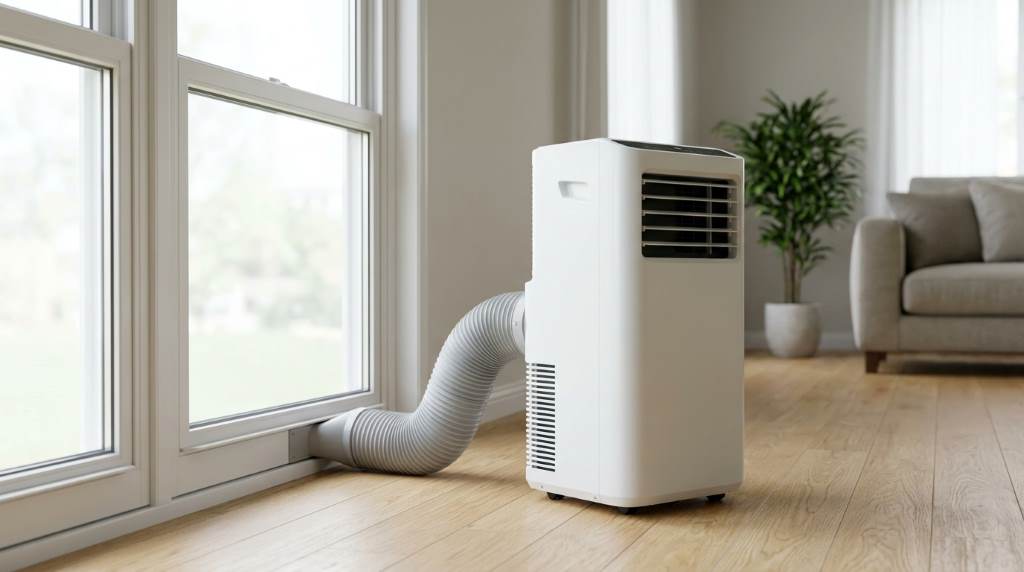
You should always vent portable air conditioners outdoors through a window, sliding door, wall, or ceiling. Proper venting removes hot air, improves cooling performance, reduces energy waste, and prevents indoor heat buildup.
Many households rely on portable air conditioners because they install quickly without permanent modifications. According to the U.S. Department of Energy, cooling accounts for about 12% of household energy costs. Additionally, proper air sealing and venting improve overall efficiency and indoor comfort. Therefore, understanding how to vent portable air conditioners correctly helps maintain better cooling while reducing unnecessary energy consumption.
Why Proper Venting Matters
Portable air conditioners remove heat from indoor spaces before exhausting it outside through a vent hose. Without correct venting, hot air remains indoors and reduces cooling efficiency.
Proper airflow also lowers compressor workload and helps the unit maintain consistent temperatures. As a result, the appliance operates more efficiently and experiences less unnecessary strain.
How Portable Air Conditioners Remove Heat
Unlike window air conditioners, portable models keep the cooling system inside the room. However, they still require an outlet for releasing collected heat.
The compressor transfers indoor heat into the exhaust hose before pushing it outdoors. Consequently, only cooled air remains inside the room when installation follows manufacturer recommendations.
Best Ways to Vent Portable Air Conditioners
Vent Through a Window
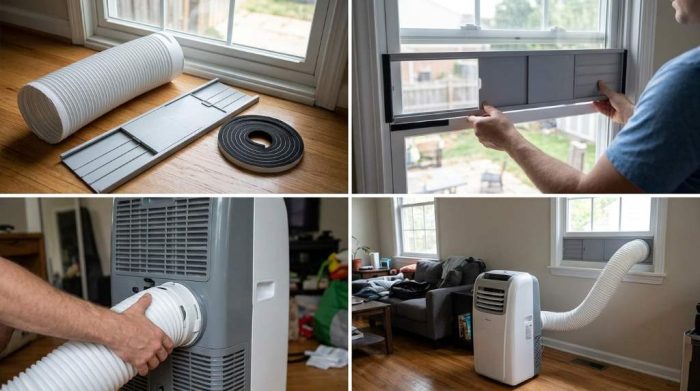
Window venting remains the simplest and most effective installation method for most homeowners. Most portable units include adjustable window kits that fit standard windows.
Secure the panel tightly before attaching the exhaust hose. Afterwards, seal every remaining opening to prevent warm outdoor air from entering.
Use a Sliding Glass Door
Sliding doors provide another practical venting option when windows remain unavailable. Many manufacturers sell extension panels designed specifically for taller openings.
Install the panel firmly before connecting the hose. Then inspect every edge carefully to eliminate unwanted air leaks.
Vent Through a Wall
Wall venting creates a permanent solution for frequently used portable air conditioners. This installation requires drilling an appropriately sized exhaust opening.
Many homeowners prefer professional installation because precise measurements prevent structural damage. Consequently, the exhaust system remains secure throughout long term operation.
Vent Through the Ceiling
Some rooms require ceiling venting because windows remain inaccessible. However, this method usually demands custom ductwork and professional planning.
Always verify manufacturer recommendations before choosing this installation approach. Otherwise, poor airflow may reduce cooling performance significantly.
Step by Step Guide to Vent a Portable Air Conditioner
- Select the nearest outdoor venting location.
- Position the portable air conditioner close to that opening.
- Install the supplied window or wall vent kit securely.
- Connect the exhaust hose tightly to both ends.
- Keep the hose as short and straight as possible.
- Seal every visible air gap carefully.
- Plug in the unit and test the airflow.
- Confirm warm air exits completely outdoors.
Keep the Exhaust Hose Short
Long exhaust hoses trap additional heat before releasing it outside. Therefore, shorter hoses improve airflow and increase cooling efficiency.
Avoid unnecessary bends because they restrict hot air movement. Instead, create the straightest possible path between the unit and the outdoor opening.
Seal Every Air Leak
Small openings allow warm outdoor air to enter continuously. Consequently, the portable air conditioner works harder while cooling becomes less effective.
Use weather stripping, foam insulation, or sealing tape around the vent kit. These inexpensive materials noticeably improve indoor comfort during hot weather.
Single Hose Versus Dual Hose Systems
Single Hose Models
Single hose systems pull indoor air for cooling before exhausting heat outside. Therefore, they may create slight negative air pressure inside larger rooms.
These models generally cost less and install quickly. However, efficiency sometimes decreases in larger living spaces.
Dual Hose Models
Dual hose systems draw outdoor air for condenser cooling while exhausting hot air separately. Consequently, they cool rooms faster and waste less conditioned indoor air.
Many users notice stronger cooling performance during extended operation. Additionally, these systems maintain more balanced indoor air pressure.
Common Venting Mistakes to Avoid
- Never vent hot air into an attic.
- Never exhaust air into a garage.
- Avoid extending the exhaust hose excessively.
- Do not crush or sharply bend the hose.
- Never block the air intake vents.
- Avoid operating without sealing window gaps.
- Always follow manufacturer installation instructions.
Maintenance Tips for Better Airflow
Clean the air filter regularly because dust restricts airflow quickly. Consequently, cooling performance stays consistent throughout the season.
Inspect the exhaust hose monthly for cracks or loose connections. Furthermore, remove accumulated dust from exterior vents whenever necessary.
Check window seals after severe weather because shifting panels sometimes create air leaks. Regular inspections maintain efficient cooling and reduce unnecessary energy use.
When Professional Installation Makes Sense
Professional assistance helps when wall or ceiling venting requires structural modifications. Experts also ensure proper sealing and safe installation procedures.
Professional installation often reduces future maintenance problems through accurate fitting. Therefore, many homeowners prefer expert assistance for permanent venting solutions.
Conclusion
Learning how to vent portable air conditioners correctly improves cooling performance while reducing unnecessary energy waste. Short exhaust hoses, tight seals, and proper outdoor venting deliver the best overall results.
Inspect your current installation today and correct any airflow problems immediately. Small improvements often produce noticeably better comfort and more efficient cooling.
Frequently Asked Questions
Can I vent a portable air conditioner into another room?
No, always vent the hot air directly outdoors.
Can I extend the exhaust hose?
No, longer hoses reduce airflow and cooling efficiency.
Does every portable air conditioner need venting?
Yes, standard compressor based portable air conditioners require outdoor venting.
Can I use a portable air conditioner without a window?
Yes, you can vent through a wall, ceiling, or sliding door instead.
Should I seal the window around the vent kit?
Yes, sealing every gap prevents warm outdoor air from entering.