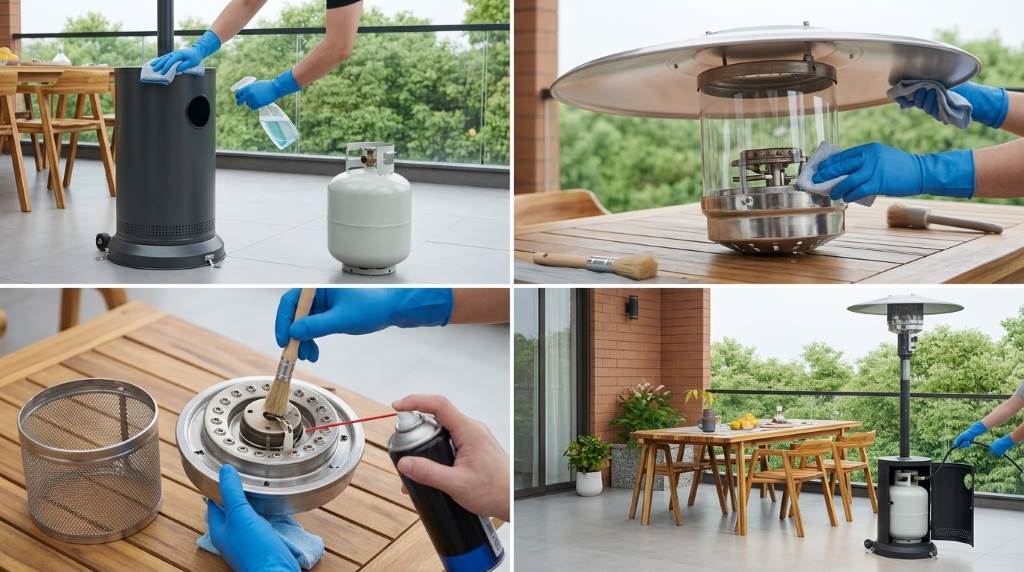
You clean this outdoor heater by wiping the tabletop and scrubbing soot off the burner. Next, clear trapped debris from the pilot orifice using compressed air and a thin wire. Finish by polishing the aluminum dome and inspecting the propane hose for safe operation.
Outdoor dining spaces stay comfortable with reliable warmth during brisk autumn evenings. Fortunately, the East Oak round table patio heater pumps out 48,000 BTUs across outdoor decks. In fact, field data shows regular cleaning boosts radiant heat efficiency by thirty percent. Therefore, this comprehensive guide outlines exact steps to restore every component safely.
Key Takeaways
- Disconnect the propane cylinder and allow forty-five minutes for full cooling before cleaning.
- Scrub resin wicker tabletop surfaces gently using warm soapy water and soft nylon bristles.
- Always wipe stainless steel panels along the grain direction to prevent surface scratches.
- Remove carbon soot from the emitter screen using a soft brass wire brush.
- Clear spider webs from venturi tubes with compressed air to prevent yellow flames.
- Shield your clean heater with a heavy-duty waterproof cover during idle outdoor periods.
Essential Safety Precautions Before Cleaning
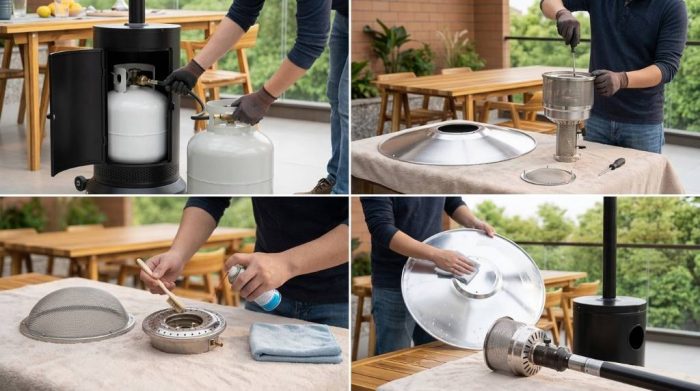
Safety protocols protect you from pressurized gas leaks and accidental flash fires. First, rotate the brass gas cylinder handwheel clockwise until it closes tightly. Unthread the regulator coupling nut from the propane cylinder valve by hand.
Hot metal components retain high thermal energy long after extinguishing the burner flame. Therefore, wait at least forty-five minutes for the heater assembly to cool down. Premature handling can cause severe skin burns or warp delicate heating components.
Furthermore, relocate the propane cylinder to an open, shaded outdoor space during maintenance. Never perform cleaning tasks near active flames, open fire pits, or indoor living areas. Proper preparation ensures a smooth, worry-free maintenance session from start to finish.
Recommended Cleaning Supplies and Maintenance Schedule
Gathering the right materials beforehand speeds up your entire patio heater maintenance routine. Specifically, non-abrasive detergents protect powder coatings while lifting stubborn outdoor grime and pollen. The following schedule outlines recommended cleaning frequencies and ideal cleaning agents for each component.
| Component Area | Cleaning Agent | Cleaning Frequency | Maintenance Objective |
|---|---|---|---|
| Round Tabletop Surface | Mild soap and warm water | Bi-weekly during use | Remove drink rings, food grease, and dust. |
| Burner Tube & Emitter | Brass brush & vacuum | Every two to three months | Scrub away carbon soot and optimize airflow. |
| Pilot Orifice & Venturi | Compressed air canister | Monthly or before seasonal startup | Dislodge spider webs and eliminate ignition delay. |
| Aluminum Reflector Dome | Microfiber cloth & glass cleaner | Monthly during active season | Restore reflective shine for downward heat transfer. |
| Propane Hose & Housing | Damp rag & soapy water | Before every tank exchange | Detect micro-leaks and clear out insect nests. |
Adhering to this routine schedule extends the working lifespan of your patio heater. Consequently, clean burner ports burn fuel efficiently without generating noxious black smoke. Always avoid harsh chlorine bleach, steel wool, or abrasive scouring powders.
Cleaning Round Tabletop Surfaces by Material
The round table surface collects beverage spills, food crumbs, and sticky tree sap constantly. In addition, different tabletop materials require distinct cleaning methods to prevent cosmetic deterioration. Matching your cleaning technique to your specific tabletop material guarantees stunning visual results.
Maintaining Resin Wicker Tabletops
Synthetic resin wicker creates a sophisticated woven texture around the central heater pole. However, dust and dried drink sugars easily settle inside the narrow woven crevices. Mix two tablespoons of mild dish soap into a bucket of warm water.
Dip a soft-bristle nylon brush into the soapy suds and scrub the weave gently. Next, rinse the wicker thoroughly using a clean damp microfiber towel. Allow the textured resin surface to dry completely in the ambient outdoor breeze.
Polishing Stainless Steel Table Surfaces
Stainless steel tabletops resist severe outdoor weather while providing a modern patio aesthetic. Nevertheless, airborne salt, mineral deposits, and greasy fingerprints dull the metallic sheen over time. Apply a specialized non-abrasive stainless steel cleaner or diluted white vinegar onto the surface.
Always wipe the metal along the original grain direction using a lint-free cloth. Furthermore, avoid circular rubbing motions that create microscopic swirled scratch marks. Finish with a light coat of food-safe mineral oil to repel future liquid rings.
Degreasing Tempered Glass Table Inserts
Tempered glass inserts provide an elegant, smooth surface for resting outdoor drinks and snacks. For example, cocktail drips and greasy snack oils leave noticeable streaks across transparent glass. Spray an ammonia-free glass cleaner or equal parts distilled water and white vinegar.
Wipe the glass using a waffle-weave microfiber cloth to eliminate streaks immediately. Additionally, lift the glass edge carefully to wipe accumulated condensation underneath the insert. Moisture trapped under the glass can harbor mildew or discolor the underlying metal frame.
Cleaning the Burner Tube and Removing Carbon Soot
Carbon soot forms when unburned hydrocarbons collect on the heating element over time. As a result, heavy soot accumulation chokes oxygen flow and produces uneven heat delivery. Inspect the double-layer mesh emitter regularly for dark black residue around the perforations.
Loosen the emitter screen mounting fasteners using a screwdriver to access the burner tube. Next, brush the stainless steel mesh exterior with a soft brass wire brush. Brass bristles remove stubborn baked-on carbon soot without scratching the underlying metal alloy.
Then, run a shop vacuum nozzle over the burner tube ports to extract debris. Tap the burner tube gently with a rubber mallet to dislodge loose soot flakes. Clean gas ports produce a bright blue pilot flame and steady radiant warmth.
Clearing the Pilot Orifice and Venturi Tubes
Outdoor spiders find the scent of propane gas additives remarkably attractive during humid weather. Consequently, spiders spin dense silk webs inside narrow venturi tubes and pilot openings. These silk obstructions starve the burner of fresh combustion air and cause ignition failure.
Direct a blast of canned compressed air into the venturi air shutter openings. Alternatively, insert a flexible pipe cleaner through the intake tubes to sweep out cobwebs. Repeat this process several times until the intake passages show zero visible residue.
Now, examine the tiny pilot orifice hole located beside the spark igniter pin. Insert a thin guitar string or sewing needle to clear stubborn mineral deposits. Never enlarge the factory orifice opening, because oversized holes disrupt the delicate gas pressure.
Cleaning the Aluminum Reflector Dome
The wide aluminum reflector dome directs radiant infrared heat downward toward your patio guests. However, rain spots, outdoor dust, and bird droppings reduce reflector heat reflection significantly. Restoring dome cleanliness maximizes the effective warming radius across your outdoor seating zone.
First, remove the dome canopy wing nuts to lower the shield safely to ground level. Wash both sides of the aluminum reflector with mild automotive soap and microfiber sponges. Rinse with clean water and buff the aluminum with dry towels to prevent spotting.
Inspecting the Propane Regulator and Gas Hose
Thorough maintenance requires examining the flexible gas delivery hose beneath the round table assembly. Specifically, sun exposure and temperature shifts cause dry rot, surface cracking, and rubber stiffness. Inspect the entire black rubber hose length under bright outdoor light every month.
Next, apply a solution of liquid dish soap and warm water over all connections. Expanding soap bubbles immediately indicate a loose threaded fitting or damaged hose wall. Replace any compromised hose immediately with a factory-certified regulator assembly before lighting the heater.
Protective Cover Use and Seasonal Storage Prep
Outdoor environmental exposure accelerates metal corrosion, paint fading, and internal burner contamination. Therefore, invest in a heavy-duty, waterproof patio heater cover made from UV-resistant Oxford fabric. Premium covers feature zippered side panels and adjustable drawstrings that withstand strong wind gusts.
Always confirm that the heater cools down completely before draping the protective cover over it. Trapping heat beneath synthetic vinyl fabric can melt protective linings and damage delicate finishes. In addition, install moisture-absorbing silica packs inside the lower propane compartment during humid seasons.
Before winter arrives, disconnect the propane tank and store the cylinder upright outdoors. Never store pressurized propane cylinders inside basements, attached garages, or enclosed storage sheds. Meanwhile, roll the cleaned heater frame into a dry shed or sheltered garage corner.
Conclusion: Keep Your Patio Heater Shining and Efficient
Routine cleaning transforms your outdoor dining heater into a reliable source of cozy warmth. Clearing burner soot, polishing the tabletop, and purging venturi tubes ensures flawless ignition every time. In fact, regular preventive maintenance saves you costly repair bills and extends unit longevity.
Take thirty minutes this weekend to clean your outdoor patio heater from top to bottom. Then, gather your loved ones around the warming radiant flame for unforgettable evening memories. Enjoy exceptional patio comfort in every season with proper care and routine maintenance today!
Frequently Asked Questions
How often should I clean my East Oak round table patio heater?
Clean the tabletop bi-weekly and scrub the burner tube every two to three months.
What causes yellow, sooty flames on a patio heater?
Spider webs and carbon buildup inside venturi tubes restrict airflow and cause yellow flames.
Can I use a pressure washer to clean my outdoor patio heater?
No, high water pressure damages delicate burner components, electrical igniters, and gas seals.
How do I unclog a blocked patio heater pilot orifice?
Blow compressed air through the nozzle and clear debris gently using a fine needle.
Should I remove the propane cylinder before winter storage?
Yes, always disconnect the tank and store the cylinder upright in an outdoor space.