
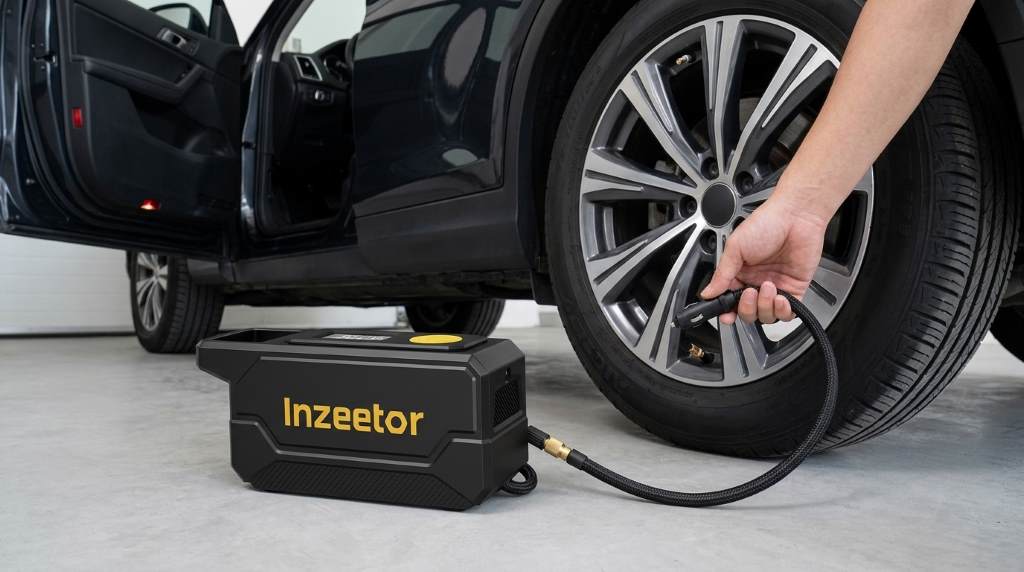
To use the Inzeetor 150 PSI tire inflator, connect the air hose securely to the tire valve, set your target pressure, and start the compressor. The unit automatically stops when it reaches the selected PSI, making inflation quick, accurate, and simple.
Keeping tires at the correct pressure improves fuel efficiency and extends tire life. Studies from the U.S. Department of Energy show proper tire inflation can improve gas mileage by up to 3%, while the National Highway Traffic Safety Administration reports underinflated tires contribute to thousands of preventable crashes annually. Many drivers also rely on the Inzeetor 150 PSI tire inflator portable air compressor for convenient roadside inflation. This guide explains every step clearly, helping you use the inflator safely and efficiently.
What Is the Inzeetor 150 PSI Tire Inflator?
The Inzeetor 150 PSI tire inflator is a portable digital air compressor for vehicle tires and inflatable equipment. It combines automatic pressure control with a compact design for everyday convenience.
Most models include a digital display, LED work light, inflation hose, power cable, and multiple nozzle adapters. These accessories allow the inflator to handle different inflation tasks with ease.
Before You Start
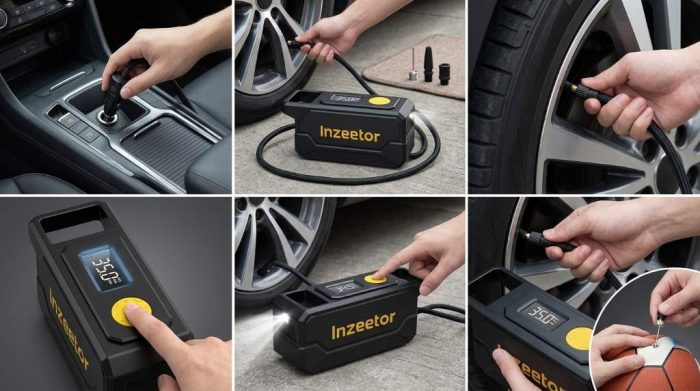
Read the user manual before operating the inflator for the first time. Understanding the controls helps prevent mistakes and improves safety.
Next, locate the recommended tire pressure for your vehicle. You can usually find this information inside the driver’s door frame or in the owner’s manual.
Items You Need
- Inzeetor tire inflator
- Vehicle or portable power source
- Valve cap remover if needed
- Clean tire valve
- Owner’s manual
How to Use the Inzeetor 150 PSI Tire Inflator
Step 1: Park Safely
Park your vehicle on a flat surface before inflating any tire. Switch off the engine and engage the parking brake.
Step 2: Check Tire Pressure
Remove the valve cap carefully before connecting the inflator hose. Compare the current pressure with the manufacturer’s recommended PSI.
Step 3: Connect the Inflator
Attach the air hose firmly to the tire valve stem. Ensure the connection feels secure without allowing air to escape.
Step 4: Connect the Power Supply
Plug the inflator into the required power source according to your model. Confirm the display powers on before continuing.
Step 5: Set the Target Pressure
Press the control buttons to select your desired PSI value. Double check the setting before starting inflation.
Step 6: Start Inflation
Press the power button to begin inflating the tire. Watch the display as the compressor steadily increases air pressure.
Step 7: Automatic Shut Off
The inflator stops automatically after reaching your selected pressure. This feature helps prevent accidental overinflation.
Step 8: Disconnect Everything
Remove the hose carefully after inflation finishes completely. Replace the valve cap immediately to protect the valve stem.
How to Inflate Other Items
The included adapters allow inflation of bicycles, motorcycles, sports balls, and small inflatables. Always choose the correct attachment before starting the compressor.
Different inflatable products require different pressure levels for safe operation. Check the recommended pressure before adding air.
Important Safety Tips
- Inspect the hose before every use.
- Avoid exceeding the recommended pressure.
- Allow the compressor to cool during extended operation.
- Keep children away while using the inflator.
- Store the unit in a dry location.
- Disconnect power after every use.
Common Mistakes to Avoid
Many users forget to check the recommended PSI before inflation. That mistake can reduce handling performance and tire life.
Another common issue involves loose hose connections during operation. Air leaks make inflation slower and produce inaccurate pressure readings.
Some people continue running the compressor unnecessarily after inflation finishes. Using the automatic shut off feature prevents this problem.
Maintenance Tips
Clean the inflator regularly using a soft dry cloth after each use. Remove dust from the air vents to maintain proper airflow.
Inspect the hose and electrical connections before every inflation session. Replace damaged components immediately for reliable operation.
Store the inflator inside its carrying case whenever possible. Proper storage protects internal components from moisture and physical damage.
When Should You Check Tire Pressure?
Check tire pressure at least once every month for consistent performance. Also inspect pressure before long road trips.
Measure pressure while tires remain cold for the most accurate reading. Driving increases temperature and temporarily raises tire pressure.
Benefits of Using the Inzeetor 150 PSI Tire Inflator
- Fast and accurate tire inflation
- Digital pressure display
- Automatic shut off feature
- Portable and compact design
- Multiple nozzle attachments
- Simple operation for beginners
Troubleshooting Common Problems
The Inflator Does Not Turn On
Check the power connection and inspect the fuse if applicable. Verify your power source supplies adequate voltage.
The Tire Is Not Inflating
Confirm the hose connects tightly to the valve stem. Look for leaks around the fitting before restarting.
The Display Shows Incorrect Pressure
Disconnect the hose and reconnect it securely before testing again. Dirty valve stems sometimes affect pressure readings.
The Compressor Stops Early
Review the preset pressure because the automatic shut off activates at your selected PSI. Increase the setting only if necessary.
Conclusion
The Inzeetor 150 PSI tire inflator makes tire maintenance straightforward through digital controls and automatic pressure management. Following the correct steps improves safety, tire life, and driving performance.
Keep the inflator inside your vehicle for emergencies and regular maintenance. Practice these steps regularly to inflate tires quickly and confidently whenever needed.
Frequently Asked Questions
How long does the Inzeetor tire inflator take to inflate a tire?
Most standard vehicle tires reach the desired pressure within a few minutes.
Can I use it for bicycle tires?
Yes, the included adapters support most bicycle tire valves.
Does the inflator stop automatically?
Yes, it automatically stops after reaching the preset pressure.
Can I inflate sports balls with this device?
Yes, use the appropriate needle attachment included with the inflator.
Should I check tire pressure when tires are cold?
Yes, cold tires provide the most accurate pressure measurements.


