Desktop fabrication has moved from niche hobby to everyday tool. Schools, makers, and small businesses now rely on compact printers for prototypes, repairs, and creative work. According to the United States Department of Commerce, additive manufacturing adoption among small manufacturers has grown steadily over the past decade, with more than one third reporting regular use. Academic research from MIT also shows that faster print speeds and automated calibration have reduced user error rates significantly.
This shift explains why budget friendly machines now offer features once limited to premium models. Reliable auto leveling, enclosed builds, and multi color systems have become accessible. The challenge is no longer finding an affordable 3D printer. It is choosing one that actually performs well in daily use.
A Quick Overview of The Best Budget Best 3D Printer of This Year
Here are the standout 3D printers worth attention:
- FLASHFORGE Adventurer 5M Pro 3D Printer with 1 Click Auto Printing System
- Bambu Lab P1S 3D Printer
- Bambu Lab A1 Combo Multi Color 3D Printer with AMS Lite
- ELEGOO Centauri Carbon 3D Printer
- FLASHFORGE Adventurer 5M Pro Multi Filament Multi Color 3D Printer
- FLASHFORGE Adventurer 5M Pro 3D Printer with Auto Calibration
- FLASHFORGE Adventurer 5M Pro Multi Color 3D Printer with Multi Color Extruder
- Creality Multicolor 3D Printer Combo
- ELEGOO Saturn Resin 3D Printer
- FLASHFORGE AD5X 3D Printer
Best Budget Best 3D Printer of 2026
These 3D printers approach affordability from different angles. Some prioritize speed, others focus on simplicity or material flexibility. The following reviews reflect practical use rather than specification sheets.
FLASHFORGE Adventurer 5M Pro 3D Printer with 1 Click Auto Printing System
Compact Core XY speed focused performer
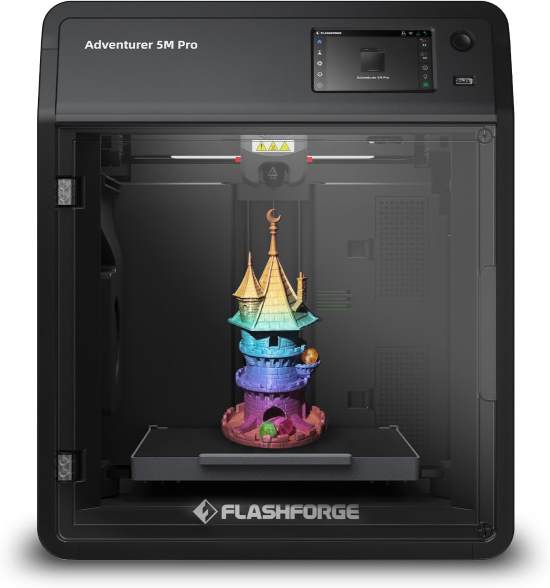
The Adventurer 5M Pro feels purpose built for fast iteration. Its Core XY motion system keeps movements stable even at higher speeds, which becomes obvious when printing functional parts. The 220×220×220 mm build space fits most hobby and prototyping needs without dominating desk space.
Setup stays refreshingly simple. The one click printing workflow reduces slicer guesswork, and the detachable nozzle makes maintenance far less intimidating for beginners. During extended prints, the enclosed structure helps maintain temperature stability, though it can feel slightly restrictive when working with oversized objects.
This printer suits users who want reliable speed without diving deep into tuning. It performs well for everyday PLA and PETG parts. However, advanced material experimentation may require more manual adjustment.
User Review: Rahim H.
I mainly print mechanical brackets and small tools. This printer cut my iteration time significantly. Nozzle swaps feel painless. I wish the build volume was slightly larger, but overall reliability impressed me.
Key Features
• Core XY motion stability improves print accuracy during fast movements
• 600 mm per second speed capability reduces waiting time for prototypes
• Quick detachable 280°C nozzle simplifies maintenance and material changes
• Fully enclosed structure supports consistent temperature control
• 220×220×220 mm build area balances space efficiency with versatility
Pros and Cons
| Pros | Cons |
| Fast consistent motion system | Limited oversized print capacity |
| Easy nozzle replacement process | Learning curve for advanced materials |
| Stable enclosed printing environment | Touchscreen navigation basic |
Bambu Lab P1S 3D Printer
Fully enclosed precision focused workhorse
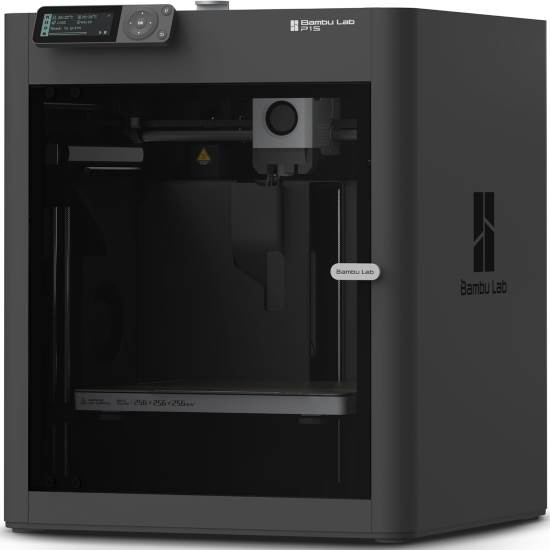
The P1S stands out for its quiet confidence. It runs smoothly, and the enclosed design creates a controlled printing environment that benefits engineering filaments. The printer feels sturdy and well insulated, which becomes noticeable during long prints.
Calibration happens quickly, and the machine maintains dimensional accuracy across repeated jobs. Its ability to integrate with multi material systems expands creative possibilities without overwhelming beginners.
This printer works best for makers who want dependable precision with minimal manual intervention. It handles frequent use gracefully. On the downside, the enclosed structure makes quick physical adjustments slightly less convenient.
User Review: Arif M.
I run a small print service from home. The P1S delivers consistent results across different materials. I rarely reprint parts. Opening the enclosure for quick tweaks can feel a bit slow, but reliability outweighs that.
Key Features
• Fully enclosed build chamber supports stable printing with engineering plastics
• Automated calibration workflow reduces setup time before each print
• High precision motion control improves dimensional consistency
• Multi material compatibility allows flexible creative and functional projects
• Robust frame construction minimizes vibration during operation
Pros and Cons
| Pros | Cons |
| Excellent dimensional consistency | Access inside enclosure slower |
| Reliable automated calibration process | Slightly heavier footprint |
| Stable prints across materials | Learning advanced features takes time |
Bambu Lab A1 Combo Multi Color 3D Printer with AMS Lite
Accessible multi color creativity platform
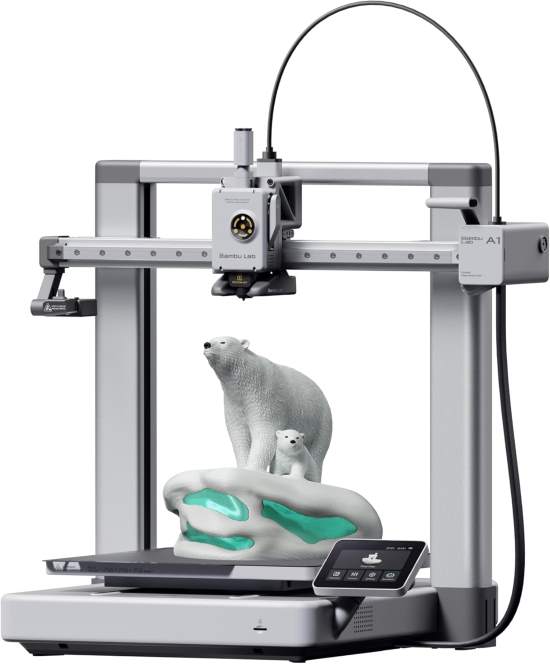
The A1 Combo focuses on ease of use. The AMS Lite system handles color switching automatically, which opens creative workflows without complex setup. The printer feels approachable, especially for users transitioning from single color machines.
Print quality remains consistent across color changes, and the automatic calibration removes much of the usual tuning frustration. The footprint stays reasonable, though the AMS module adds extra space requirements.
This printer suits hobbyists, educators, and creative designers. It excels at decorative models and visual prototypes. Heavy functional printing may reveal slower transitions during multi color jobs.
User Review: Tania S.
I print figurines and design samples. The multi color system changed my workflow completely. Setup took less time than expected. Larger multi color prints do extend print duration, but the results justify it.
Key Features
• AMS Lite color system enables automated multi color transitions
• Full auto calibration process ensures consistent first layer results
• Precision motion tuning supports smooth surface finish
• User friendly interface reduces beginner learning curve
• Compact footprint despite add ons fits shared workspaces
Pros and Cons
| Pros | Cons |
| Effortless multi color printing | Color changes extend print time |
| Simple beginner friendly workflow | AMS requires extra desk space |
| Consistent surface quality output | Limited heavy industrial use |
ELEGOO Centauri Carbon 3D Printer
Spacious build area balanced performer
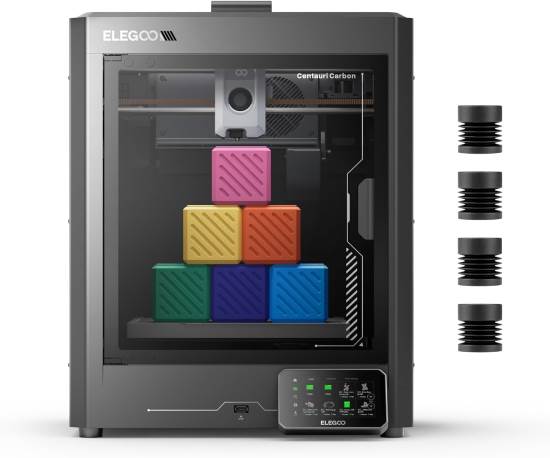
The Centauri Carbon offers a larger 256×256×256 mm build volume, which immediately expands project flexibility. The frame feels solid, and the auto calibration system reduces first layer struggles that often frustrate new users.
Printing larger functional parts becomes practical, and the machine handles standard filaments reliably. However, the open design exposes prints to ambient temperature changes, which may affect more demanding materials.
This printer works well for makers who prioritize size and straightforward operation. Workshops and classrooms benefit from its generous workspace.
User Review: Faisal R.
I needed a bigger build space for cosplay props. This printer delivered exactly that. Auto leveling works reliably. I sometimes struggle with warping on sensitive filaments, but PLA prints look great.
Key Features
• 256×256×256 mm build volume supports larger models and assemblies
• Automatic calibration system reduces first layer failures
• Rigid carbon inspired frame enhances motion stability
• Open design accessibility simplifies manual adjustments
• Reliable standard filament compatibility supports everyday projects
Pros and Cons
| Pros | Cons |
| Large versatile print area | Open frame affects temperature stability |
| Reliable auto leveling function | Bulkier footprint on desk |
| Accessible maintenance workflow | Advanced materials require tuning |
FLASHFORGE Adventurer 5M Pro Multi Filament Multi Color 3D Printer
Productivity focused multi material setup
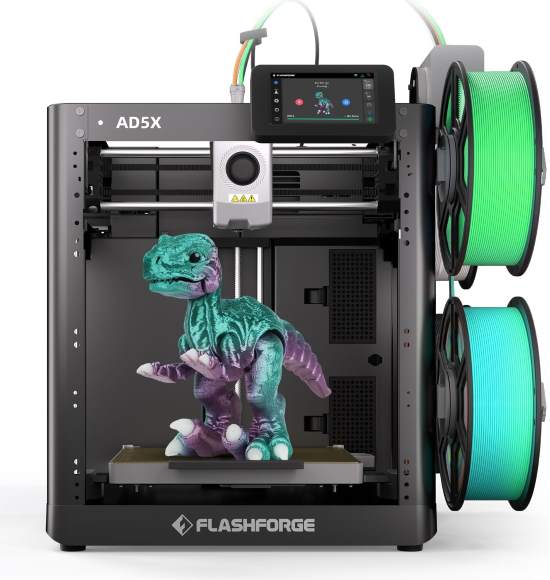
This version of the 5M Pro leans into productivity. Multi filament capability allows batch printing and color variation without manual swaps. The workflow feels efficient for small production runs.
The Core XY motion maintains speed and accuracy, while auto calibration reduces setup interruptions. The added complexity of multi filament management does require occasional troubleshooting, especially during spool transitions.
It suits users running frequent print batches or small business workflows. Casual users may find the extra configuration unnecessary.
User Review: Karim L.
I produce small product samples. Multi filament support saves time. Occasional feed adjustments happen, but overall efficiency improved.
Key Features
• Multi filament management system reduces manual material swaps
• Fast Core XY architecture maintains speed across batch prints
• Automated calibration routines keep print setup consistent
• Stable enclosed chamber design improves reliability for long prints
• Balanced 220 mm cube build volume supports diverse part sizes
Pros and Cons
| Pros | Cons |
| Efficient batch production workflow | Multi filament tuning required |
| Fast consistent motion system | Slightly complex initial setup |
| Reliable long print stability | Learning curve for beginners |
FLASHFORGE Adventurer 5M Pro 3D Printer with Auto Calibration
Maintenance friendly daily printing solution
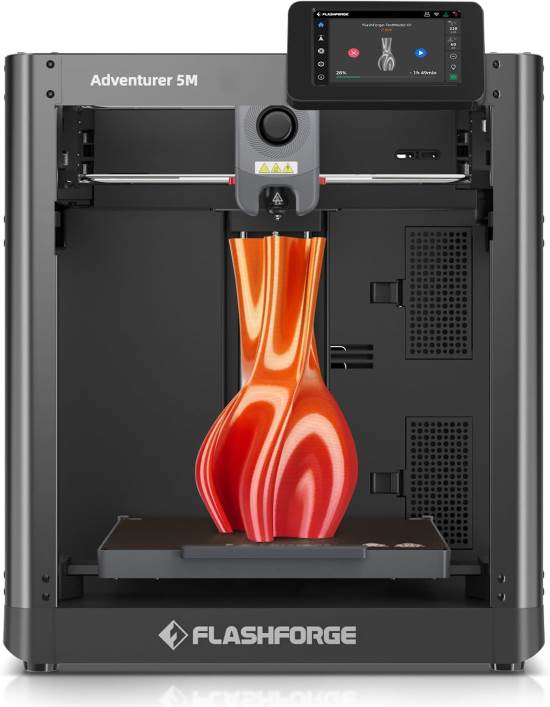
This variant emphasizes simplicity. Auto calibration and quick swap nozzles create a low friction ownership experience. Daily printing feels predictable, and maintenance downtime remains minimal.
It handles routine hobby and prototype tasks effectively. However, feature depth stays modest compared to multi color versions.
User Review: Hasan K.
I print small household fixes. The easy maintenance design keeps me printing without frustration. It feels dependable even after months of use.
Key Features
• Auto calibration system reduces manual bed adjustments
• Quick swap nozzle design simplifies cleaning and replacement
• Compact enclosed footprint fits limited workspaces
• Stable motion platform ensures consistent output quality
• Beginner friendly workflow supports low maintenance ownership
Pros and Cons
| Pros | Cons |
| Very easy daily maintenance | Limited advanced feature depth |
| Consistent reliable performance | Smaller creative flexibility |
| Beginner friendly setup process | Basic interface experience |
FLASHFORGE Adventurer 5M Pro Multi Color 3D Printer with Multi Color Extruder
Creative focused multi color workflow
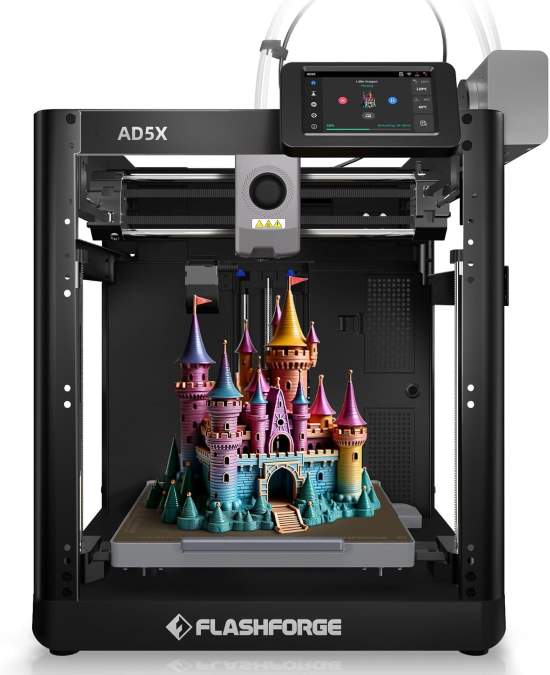
The dedicated multi color extruder offers smoother transitions compared to add on systems. Prints maintain color clarity, which benefits design models and presentation pieces.
It suits creative users but may introduce longer print durations due to color transitions.
User Review: Nabila J.
I design concept models. The color transitions look clean. Larger multi color prints require patience, but results remain visually impressive.
Key Features
• Integrated multi color extruder improves transition accuracy
• Auto leveling support ensures stable first layers
• Compact build chamber balances creative and practical use
• Reliable speed performance maintains workflow efficiency
• User focused interface simplifies color management
Pros and Cons
| Pros | Cons |
| Clean multi color transitions | Extended multi color print times |
| Easy calibration workflow | Limited heavy duty applications |
| Compact creative workstation | Extra filament management needed |
Creality Multicolor 3D Printer Combo
Balanced high speed multi color system
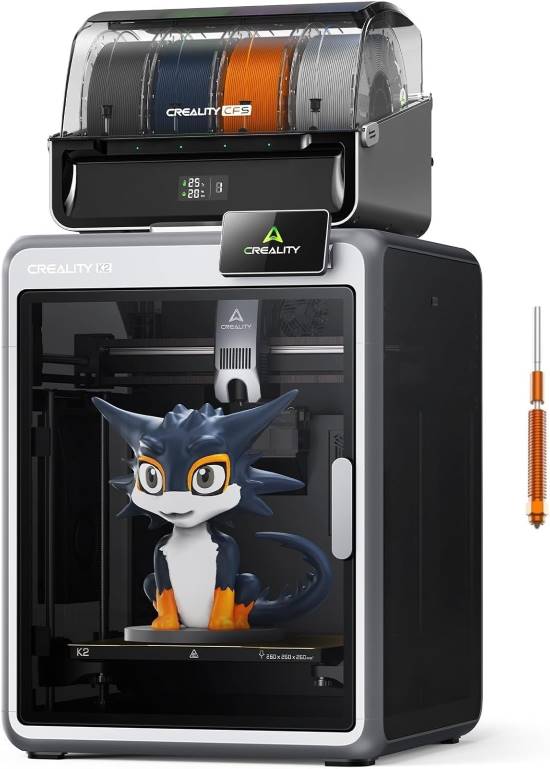
Creality positions this combo as a versatile all rounder. Auto leveling works smoothly, and high speed printing reduces idle time between projects. The multi color functionality expands creative possibilities without overwhelming controls.
It performs well for hobby and educational environments. Some users may need time to master slicer optimization for complex color prints.
User Review: Imran D.
I use it in a school lab. Students enjoy experimenting with colors. Setup remains manageable. Complex models need careful slicing.
Key Features
• Next generation auto leveling system reduces calibration effort
• High speed printing capability improves project turnaround
• Multi color functionality expands creative design potential
• Stable frame construction minimizes vibration artifacts
• Flexible material support accommodates common filaments
Pros and Cons
| Pros | Cons |
| Balanced speed and creativity | Complex slicing requires practice |
| Reliable auto leveling workflow | Occasional filament management challenges |
| Suitable for shared environments | Noise slightly noticeable |
ELEGOO Saturn Resin 3D Printer
High resolution resin detail specialist
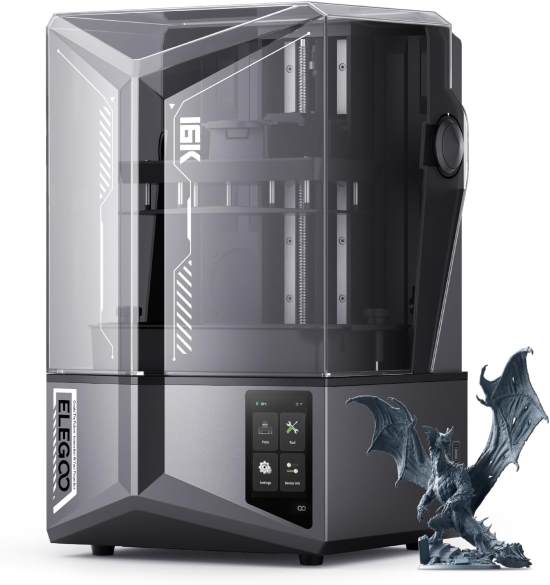
The Saturn shifts focus to resin printing. Detail quality stands out immediately, making it ideal for miniatures, jewelry prototypes, and intricate design work. The printing process feels different from filament machines and requires careful resin handling.
Maintenance includes cleaning and curing steps, which adds workflow complexity. However, the visual fidelity compensates for that effort.
User Review: Shuvo P.
I print tabletop miniatures. Detail clarity amazed me. Resin cleanup takes time, but results look professional.
Key Features
• High resolution resin printing engine delivers fine surface detail
• Stable build platform design supports intricate models
• Large resin print area expands miniature batch capacity
• Consistent exposure system improves layer accuracy
• Specialized workflow compatibility supports artistic projects
Pros and Cons
| Pros | Cons |
| Exceptional detail reproduction quality | Resin handling requires care |
| Ideal for miniature production | Post processing steps needed |
| Stable intricate model support | Not suited for functional parts |
FLASHFORGE AD5X 3D Printer
Modular detachable structure experimentation platform
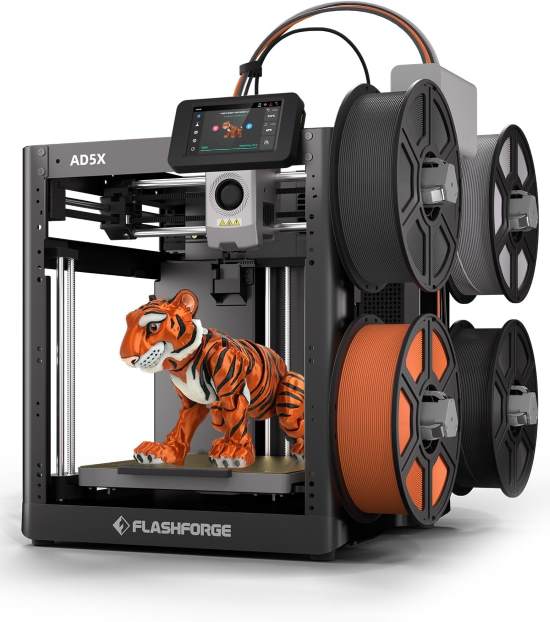
The AD5X introduces a detachable structure that simplifies transport and maintenance. It feels adaptable, especially for users who frequently rearrange workspace setups.
Performance stays consistent for everyday filament printing. The modular design may introduce minor alignment checks after reassembly.
User Review: Mahmud S.
I move my printer between home and workshop. The detachable design helps a lot. Reassembly takes a few minutes, but printing remains reliable.
Key Features
• Detachable modular structure supports flexible workspace setups
• 220×220×220 mm build volume balances versatility and compactness
• Accessible maintenance layout simplifies troubleshooting
• Stable print performance supports everyday functional prints
• Beginner approachable workflow reduces setup stress
Pros and Cons
| Pros | Cons |
| Flexible portable printer design | Reassembly requires alignment checks |
| Easy maintenance access layout | Basic advanced feature set |
| Reliable everyday print results | Not focused on speed |
Buying Guide
What Actually Matters Before Choosing
Core performance factors influence daily experience more than advertised speed numbers. Motion stability, consistent extrusion, and reliable first layers determine whether prints succeed. Buyers often assume speed defines performance, yet unstable fast printing leads to repeated failures and wasted material.
Material quality and durability shape ownership satisfaction. Metal frames, quality belts, and temperature resistant components maintain calibration longer. Many buyers overlook structural rigidity, which affects print accuracy over time.
Usability considerations matter for routine workflows. Touchscreen clarity, intuitive slicer integration, and accessible filament loading reduce friction. Beginners frequently underestimate how small interface frustrations accumulate during frequent use.
Maintenance demands vary widely. Quick swap nozzles, auto leveling, and accessible cleaning paths reduce downtime. Some buyers focus only on printing capability and ignore cleaning, lubrication, and part replacement effort.
Environmental compatibility becomes critical in shared spaces. Enclosed printers reduce noise and odor while open designs allow easier access. Temperature fluctuations in rooms can also affect print quality, especially with advanced filaments.
Safety considerations include ventilation for resin printers and enclosure benefits for high temperature materials. Users often underestimate exposure risks associated with fumes or resin handling.
Common Buyer Mistakes
Many buyers assume faster printers always produce better results. In practice, speed without stability introduces vibration artifacts and layer inconsistencies.
Another mistake involves ignoring build volume needs. Users either overestimate required size or underestimate future project expansion, leading to workspace inefficiency or project limitations.
Some buyers expect multi color systems to remain effortless across all prints. While automation helps, complex color transitions still demand thoughtful slicing and material management.
A frequent oversight involves maintenance planning. New users assume printers operate like appliances, yet periodic cleaning and calibration remain essential for consistent performance.
Budget focused buyers sometimes choose purely on cost rather than long term reliability. Lower durability components may increase replacement expenses and frustration.
Resin printer buyers often underestimate post processing effort. Washing, curing, and safe disposal steps require space and discipline.
Finally, many users ignore workspace preparation. Stable surfaces, proper ventilation, and organized filament storage contribute significantly to consistent print quality.
Related:
Top 8 Must Have Tools for 3D Printing in 2026
How to Match Products to Specific Needs
Casual users benefit from auto calibration and maintenance friendly printers. These reduce learning curve barriers and keep printing enjoyable rather than technical.
Heavy daily users should prioritize durability, enclosed builds, and reliable motion systems. Consistency across repeated prints matters more than experimental features.
Small space environments favor compact printers with quiet operation and controlled enclosures. Resin printers may require dedicated ventilation areas despite compact size.
Budget conscious buyers seeking longevity should evaluate frame quality, maintenance accessibility, and brand ecosystem support rather than chasing feature lists.
Advanced users often appreciate multi filament systems, open customization options, and larger build volumes. These expand experimentation potential but require deeper technical understanding.
Educational and shared environments benefit from easy calibration, intuitive interfaces, and reliable safety features. These reduce supervision demands and improve student experience.
Conclusion
Budget 3D printers no longer mean compromise. Modern machines offer dependable speed, automated calibration, and creative flexibility across price tiers. The right choice depends less on feature lists and more on workflow priorities.
Some users value speed and efficiency. Others focus on creative expression or precision detail. Understanding maintenance expectations, workspace constraints, and material goals helps narrow options effectively.
Treat a printer as a tool that should integrate into your routine rather than disrupt it. Evaluating real use scenarios will lead to a more satisfying ownership experience.
FAQs
Which 3D printer type suits beginners best
Auto calibration filament printers usually provide the smoothest entry experience.
Are multi color printers harder to maintain
They require more filament management but remain manageable with practice.
Is resin printing safer indoors
It can be safe with proper ventilation and protective handling procedures.
How often should I maintain a 3D printer
Light cleaning and inspection after several prints keeps performance stable.
Do enclosed printers improve print quality
They help maintain temperature stability which benefits many materials.