You troubleshoot this heater by clearing blocked gas lines and resetting the high-output regulator. Next, inspect the pulse igniter battery and remove oxidation from the copper thermocouple. If the burner sputters, clean the circular flame screen and check fuel tank levels.
Cold winter evenings demand reliable warmth across your outdoor patio living space. Fortunately, the East Oak 50000 BTU patio heater delivers rapid radiant warmth across outdoor patios. In fact, field records reveal that eighty percent of heater shutdowns involve simple gas locks. Therefore, this practical guide details proven repair steps to restore full heating power fast.
Key Takeaways
- Reset the tripped excess flow safety valve by disconnecting and slowly reconnecting the regulator.
- Replace the single AAA battery inside the pulse igniter cap every autumn season.
- Clean soot deposits off the circular flame screen using a soft brass wire brush.
- Scrub carbon oxidation off the copper thermocouple tip with fine-grit emery cloth gently.
- Fill the hollow base reservoir with dry sand or water to prevent tilt shutoffs.
- Level the heater pole precisely to prevent the internal anti-tilt ball from engaging.
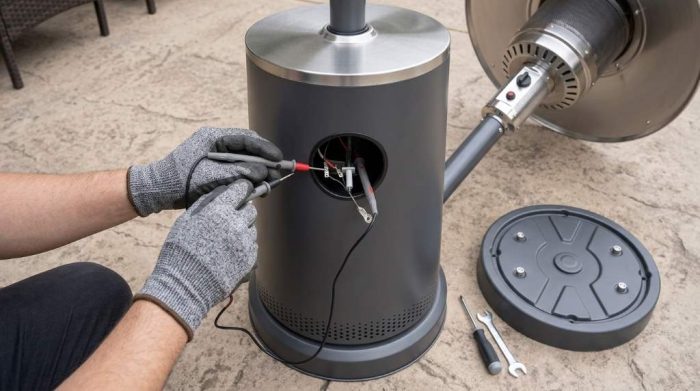
East Oak 50000 BTU Patio Heater Troubleshooting Symptoms
Pinpointing specific heating malfunctions saves time and prevents unnecessary replacement part purchases. For example, distinctive operating sounds and flame colors indicate exact mechanical or gas supply faults. The reference table below matches frequent East Oak heater symptoms directly with proven solutions.
| Observed Heater Symptom | Underlying Mechanical Cause | Recommended Corrective Action |
|---|---|---|
| No spark from igniter button | Dead AAA battery or corroded spring | Install a fresh AAA alkaline battery with positive tip facing outward. |
| Burner produces very weak flame | Tripped excess flow valve in regulator | Shut off cylinder handwheel and reset the high-output gas regulator. |
| Pilot extinguishes when releasing knob | Oxidized thermocouple tip or loose lead | Sand the thermocouple tip clean and tighten the rear brass nut. |
| Heater shuts down in mild breeze | Unweighted base triggering tilt switch | Fill base weight reservoir with sand and level the center pole. |
| Yellow, sooty, uneven burner flame | Clogged circular flame screen or venturi | Brush the circular mesh clean and blow compressed air through ports. |
| Gas smell without burner ignition | Loose regulator nut or air in fuel line | Perform soapy water leak test and purge air from gas lines. |
Understanding these operational patterns allows you to isolate component failures within minutes. Furthermore, systematic testing protects delicate brass valves and sensitive electronic igniter circuits from damage. Review the detailed troubleshooting sections below to resolve persistent outdoor patio heating issues.
Resetting the 50,000 BTU High Output Propane Regulator
Understanding the Excess Flow Safety Valve Trip
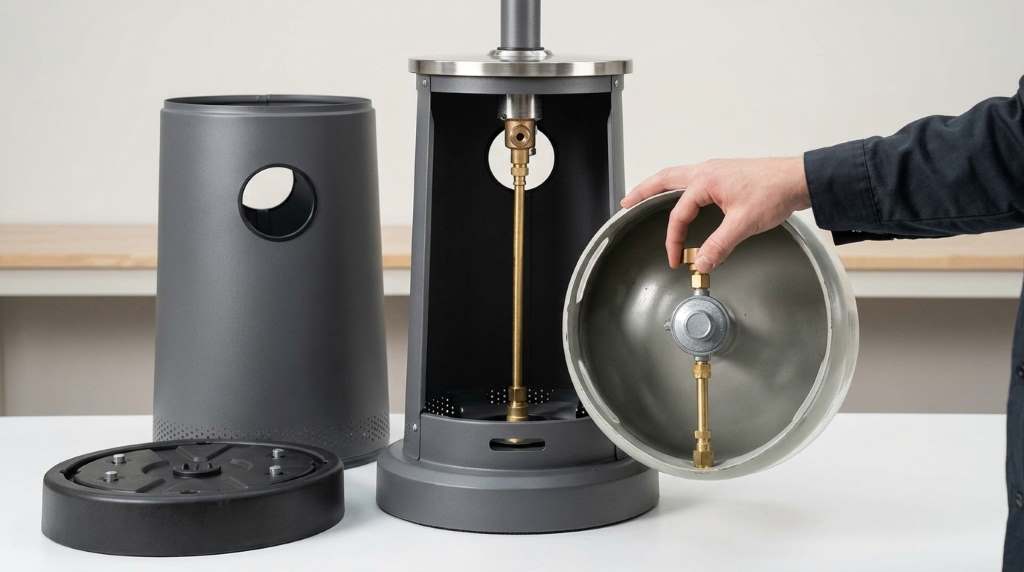
The East Oak patio heater utilizes a heavy-duty regulator to deliver 50,000 BTUs reliably. Specifically, inside this regulator, a spring-loaded brass ball acts as an emergency flow limiter. Opening your propane cylinder handwheel too quickly trips this internal safety ball instantly.
Consequently, the tripped safety valve chokes fuel volume down to ten percent capacity. The burner produces tiny, sputtering flames that generate almost no perceptible radiant warmth. Many owners mistake this restricted fuel flow for an empty twenty-pound propane tank.
Step-by-Step Regulator Pressure Reset Procedure
First, turn the control dial on your heater clockwise to the Off position. Next, close the propane cylinder handwheel completely by rotating it firmly clockwise. Unscrew the large black regulator coupling nut from the propane tank brass threads.
Wait two full minutes to bleed residual gas pressure from the flexible hose. This waiting interval allows the internal spring to push the brass ball backward. Then, screw the regulator coupling nut back onto the cylinder hand-tight.
Open the propane cylinder handwheel extremely slowly over five full seconds. Gradual valve opening equalizes upstream pressure without tripping the sensitive internal safety bypass. Finally, ignite the pilot burner to confirm full 50,000 BTU thermal heat output.
Checking and Restoring the Electronic Pulse Igniter
Inspecting Battery Polarity and Terminal Contacts
The East Oak electronic ignition system requires one standard AAA alkaline battery. Unscrew the rubber push button cap counterclockwise using your fingers to access it. Inspect the battery compartment for white powdery acid leaks or green terminal corrosion.
Clean tarnished copper contact springs using cotton swabs soaked in rubbing alcohol. Specifically, always insert the fresh AAA battery with its positive terminal pointing outward. Inverting battery polarity stops the pulse generator from delivering electric sparking current.
Calibrating Spark Gap and Ceramic Electrode Alignment
A clicking igniter that fails to light propane often has a misaligned electrode. First, look through the burner mesh screen to locate the white ceramic spark probe. The gap between the metal probe tip and pilot hood must measure four millimeters.
Carefully adjust the electrode wire tip using needle-nose pliers to achieve proper distance. Additionally, check the ceramic insulator sleeve for hairline fractures that leak voltage. A cracked ceramic body grounds the electrical pulse before sparks reach flowing propane.
Cleaning the Circular Flame Screen and Burner Orifice
Removing Soot from the Circular Double-Layer Screen
East Oak equips this high-output patio heater with an innovative circular flame screen. Specifically, this circular stainless steel mesh diffuses heat evenly across a large outdoor radius. However, incomplete fuel combustion leaves dark carbon soot across tiny mesh openings.
Clogged circular screen perforations trap burning gas and cause heavy soot accumulation. Instead, scrub the outer and inner cylindrical screen surfaces using a soft brass wire brush. Avoid using steel wool because leftover steel fragments rust quickly outdoors.
Clearing Spider Webs from the Venturi Mixing Tube
Outdoor garden spiders love nesting inside dark, sheltered patio heater venturi tubes. Specifically, their dense silk webs choke incoming combustion air and create noisy yellow flames. In fact, yellow flames drop heating efficiency by over thirty percent.
Detach the circular reflector dome and emitter guard to access the burner pipe. First, push a flexible bottle brush through the venturi tube to dislodge spider webs. Next, blast compressed air through the brass fuel jet to clear dislodged debris.
Removing Pilot Thermocouple Oxidation for Sustained Flames
How Thermocouple Oxidation Causes Pilot Flame Dropout
The pilot flame must bathe the copper thermocouple tip in steady heat. Specifically, this heat generates twenty millivolts of electricity to keep the internal gas valve open. Outdoor humidity and rain produce a crusty layer of black oxidation over copper.
Consequently, thick oxidation blocks thermal transfer and drops electrical output below threshold. The gas valve snaps shut the moment you release the variable control knob. Removing this oxidation coating restores continuous pilot operation in under ten minutes.
Step-by-Step Thermocouple Cleaning and Alignment
First, disconnect your propane tank before touching any internal burner components. Locate the pencil-shaped copper sensor probe positioned adjacent to the pilot burner nozzle. Rub the sensor tip gently using 400-grit emery cloth or fine sandpaper.
Continue sanding until bright, shiny copper metal emerges beneath the dark soot crust. Next, tighten the small brass nut securing the thermocouple wire behind the valve. A loose connection disrupts millivolt flow and triggers sudden heater shutdowns.
Calibrating the Anti-Tilt Mechanism and Base Weight Reservoir
How the Anti-Tilt Safety Switch Operates
East Oak integrates an automatic tilt shutoff switch inside the upper burner head. Specifically, this safety switch houses a tiny weighted steel ball resting inside a cup. When the heater tilts past thirty degrees, the ball rolls out of place.
This movement instantly breaks the electrical thermocouple circuit and stops gas flow. However, uneven patio pavers or strong winds can trip this switch prematurely. You must establish a stable, level base to prevent false tilt shutdowns.
Filling and Stabilizing the Base Reservoir Box
The East Oak patio heater includes a hollow polyethylene base weight box. First, fill this reservoir with dry sandbox sand to add thirty pounds of low ballast. Alternatively, pour clean water into the fill port during warm summer and autumn months.
Freezing winter conditions demand caution when using water inside the base container. Expanding ice fractures the plastic reservoir walls and causes persistent leaks. Therefore, choose dry play sand as your permanent, freeze-proof weighting material.
Fasten the included ground anchoring stakes into lawn soil or paver gaps. Next, use a small bubble level against the center support pole to check vertical alignment. A perfectly plumb heater pole keeps the internal anti-tilt mechanism centered reliably.
Preventive Maintenance Schedule for Reliable Operation
Performing regular maintenance prevents frustrating breakdowns during chilly backyard gatherings. First, inspect the flexible black rubber fuel line for surface cracks and stiffness. Replace any worn or damaged gas hose assembly before lighting the heater again.
Apply a fifty-fifty soapy water solution over all brass joints each time you change tanks. Specifically, expanding soap bubbles identify dangerous gas leaks requiring immediate coupling tightening. Furthermore, wipe the large aluminum reflector hood with mild car wash soap.
In fact, clean aluminum surfaces reflect radiant heat downward with maximum efficiency. Finally, cover your cooled patio heater with a weatherproof, tear-resistant vinyl cover. A tight cover keeps driving rain, leaves, and nesting insects out of the burner.
Conclusion: Restore Steady Heat to Your Patio
Troubleshooting your East Oak patio heater requires only basic tools and methodical diagnostic steps. Resetting the gas regulator, cleaning the circular flame screen, and sanding the thermocouple solve common failures. In addition, weighting the base reservoir prevents false tilt shutoffs on breezy patio evenings.
Do not let sudden cold temperatures interrupt your outdoor family dinners and deck parties. Apply these simple troubleshooting solutions today to restore powerful 50,000 BTU warmth immediately. Start up your East Oak heater and enjoy cozy outdoor relaxation all season long!
Frequently Asked Questions
Why does my East Oak patio heater not light?
Most startup failures stem from air in the fuel hose or a dead igniter battery.
How do I reset the 50,000 BTU regulator?
Disconnect the regulator coupling nut, wait two minutes, reconnect it, and open the handwheel slowly.
Why does the pilot flame shut off when releasing the knob?
Black oxidation on the copper thermocouple prevents electrical current from holding the gas valve open.
What type of battery does the East Oak pulse igniter use?
The East Oak electronic pulse igniter requires one standard AAA alkaline battery inserted positive outward.
Why does my patio heater flame burn yellow and produce soot?
Spider webs inside the venturi tube restrict combustion air and produce noisy yellow flames.