You can fix your outdoor patio heater by clearing the pilot orifice and resetting the regulator. Next, adjust the pulse igniter electrode gap to restore a strong electric spark. Hold the control knob down firmly to warm the thermocouple sensor tip.
Cold weather often disrupts outdoor gatherings when your heating equipment refuses to ignite. Fortunately, a dependable Pamapic 48000 BTU patio heater delivers rapid warmth across broad outdoor areas. In fact, industry surveys show that dirty gas lines cause seventy percent of ignition problems. Furthermore, improper valve handling triggers safety lockouts in sixty percent of unlit burners.
Key Takeaways
- Reset the propane regulator valve to eliminate restrictive low gas pressure lockouts.
- Replace the AAA igniter battery and set the electrode gap to four millimeters.
- Depress the control knob for forty seconds to energize the pilot thermocouple safely.
- Clear cobwebs and carbon soot from the pilot burner nozzle using compressed air.
- Fill the weighted base with thirty pounds of dry sand to ensure stability.
- Scrub the stainless steel emitter screen to maintain broad radiant warmth.
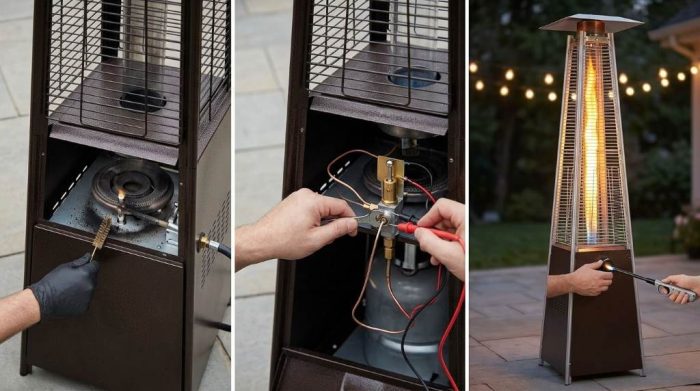
Understanding Common Pamapic Patio Heater Problems
Outdoor patio heaters endure harsh wind, moisture, and temperature fluctuations throughout the winter season. Consequently, dirt and debris accumulate inside critical fuel lines and electrical ignition terminals. You can easily diagnose most operating failures by observing flame behavior and spark patterns.
Pamapic builds these powerful heaters with multiple built-in mechanical and thermal safety devices. However, an unlevel patio or sudden wind gust quickly triggers safety shutoff mechanisms. Understanding these protective systems saves you valuable time during outdoor troubleshooting sessions.
Resetting the Propane Tank Excess Flow Safety Valve
Why the Regulator Safety Mechanism Trips
Modern propane tanks feature an internal safety check valve inside the brass connector. Opening the cylinder handwheel too rapidly triggers this restrictive excess flow safety feature. Therefore, the tripped valve limits propane flow to a tiny bypass trickle.
This gas starvation causes weak flames, burner popping sounds, and sudden flame extinguishment. Specifically, your heater burner starves for fuel despite having a completely full tank. Homeowners often mistake this simple safety lockout for a broken main control valve.
Step-by-Step Regulator Reset Procedure
First, turn the heater control knob clockwise to the complete OFF position. Next, close the main propane cylinder valve tightly by turning the handwheel clockwise. Disconnect the regulator hose coupling from the propane cylinder tank collar completely.
Wait two full minutes so internal line pressure equalizes within the rubber hose. Then, reconnect the brass QCC-1 regulator coupling securely onto the propane tank threads. Slowly open the propane tank valve one quarter turn to prevent pressure spikes.
Fixing Pulse Igniter and Spark Gap Malfunctions
Inspecting the Pulse Igniter Battery
The electronic pulse igniter requires reliable direct current to produce repetitive ignition sparks. In fact, outdoor winter humidity rapidly corrodes the internal spring contacts over time. Unscrew the black igniter push button counterclockwise to inspect the battery compartment.
Remove the old battery and clean white powdery corrosion with a dry cloth. Next, insert a fresh AAA alkaline battery with the positive terminal facing outward. Tighten the knurled cap securely and press the button to verify rapid clicking.
Adjusting the Ignition Electrode Spark Gap
A weak or misplaced electrical spark prevents the pilot gas stream from catching fire. Specifically, inspect the ceramic electrode tip located directly beside the pilot burner hood. The metal spark pin must sit three to five millimeters from the nozzle.
Road transport and windy weather frequently bend this delicate metal spark wire out. Use needle-nose pliers to bend the electrode gently toward the pilot gas port. Furthermore, wipe black carbon residue from the white ceramic insulator using rubbing alcohol.
Solving Pilot Light and Thermocouple Warmup Failures
Warming the Thermocouple Sensor Tip
The copper thermocouple generates millivolts of electricity under direct pilot flame heat. Consequently, this electrical signal holds the internal electromagnetic gas safety valve open. Releasing the control knob too early shuts off the gas supply instantly.
Hold the control knob down continuously for forty seconds after lighting the pilot. In fact, this prolonged hold allows the sensor tip to absorb sufficient heat. Release the knob slowly after the metal thermocouple glows dull red under flame.
Cleaning the Pilot Orifice and Gas Jet
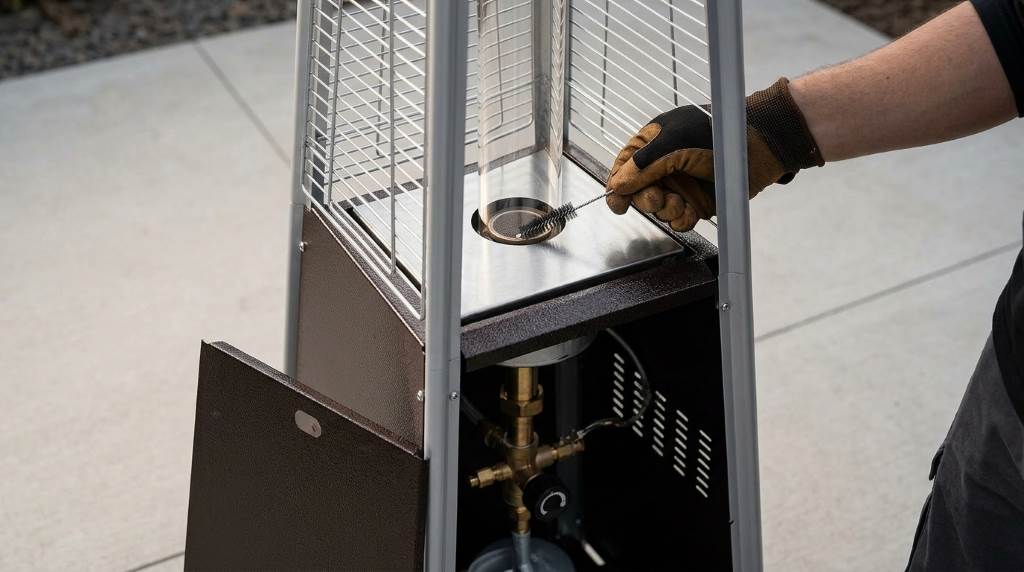
Spiders and solitary bees love building fibrous nests inside dark outdoor burner tubes. Consequently, these tiny obstructions restrict gas flow and produce faint, sputtering pilot flames. A healthy patio heater pilot always produces a strong, sharp blue flame cone.
Insert a thin sewing needle or guitar string into the tiny pilot orifice. Rotate the wire gently to dislodge baked carbon deposits and compacted spider webbing. Then, blast the burner assembly with compressed canned air to clear loose debris.
Testing the Anti-Tilt Safety Switch
Pamapic installs a mechanical anti-tilt switch inside the upper burner control housing box. This internal pendulum switch interrupts the thermocouple circuit whenever the unit tilts past forty-five degrees. However, rough patio paving or loose mounting screws can trigger false tilt shutdowns.
Position your patio heater on a flat, level concrete slab or deck surface. Tighten the mounting bracket screws that anchor the switch inside the control head. Additionally, check both wire spade connectors to ensure tight electrical contact without corrosion.
Cleaning the 48,000 BTU Burner Screen and Emitter
The cylindrical stainless steel emitter screen radiates intense heat across your patio space. Over time, burning propane creates soot deposits across thousands of tiny screen perforations. Consequently, blocked perforations restrict oxygen intake and create uneven, sooty orange flame patterns.
First, remove the top reflector hood by unscrewing the three mounting wing nuts. Lift off the cylindrical mesh emitter carefully to expose the main burner head. Scrub both sides of the perforated screen using a stiff brass wire brush.
Blow compressed air through the main burner ports to remove accumulated metal scale. Inspect the burner collar for rust holes or cracks that alter fuel mixtures. Finally, reassemble the emitter screen securely and tighten all stainless steel hardware fasteners.
Maintaining the Flame Reflector and Quartz Glass Tube
The aluminum reflector dome directs infrared heat downwards toward your outdoor seating area. In fact, surface oxidation and soot film reduce thermal efficiency by twenty-five percent. Wipe the aluminum reflector shield with mild soapy water and a soft rag.
Pyramid style Pamapic models feature a transparent quartz glass tube enclosing the flame. Never spray cold water onto hot glass because thermal shock causes instant shattering. Instead, allow the tube to cool before cleaning carbon stains with white vinegar.
Inspect the top and bottom silicone rubber gaskets supporting the fragile glass cylinder. Furthermore, cracked gaskets allow mechanical vibration to fracture the glass during high winds. Replace damaged silicone dampening rings promptly to protect the quartz combustion tube assembly.
Stabilizing the Weighted Base Sand Ballast
A tall patio heater creates significant wind resistance during sudden autumn and winter gusts. Consequently, tipping accidents damage burner controls and create hazardous outdoor propane leaks. Pamapic provides a hollow molded weight bladder inside the lower cylinder base cabinet.
Fill this reservoir box with thirty pounds of clean, dry playground sand. However, avoid filling the weight chamber with water during freezing winter weather. Freezing water expands rapidly and cracks the plastic reservoir casing beyond repair.
Secure the base plate bolts tightly to eliminate wobbling on uneven patio pavers. Additionally, lock the transport wheel bracket into position to prevent unintended heater rolling. Proper ballast weight keeps the internal anti-tilt safety switch upright and operational.
Pamapic 48000 BTU Patio Heater Specifications and Troubleshooting Matrix
Understanding technical operational specifications streamlines your troubleshooting process during unexpected heating failures. For example, verifying proper propane delivery pressure ensures maximum heat output without flame lift. The following diagnosis matrix connects common operational symptoms with rapid corrective repair actions.
| Component System | Technical Specification | Troubleshooting Solution |
|---|---|---|
| Thermal Heat Output | 48,000 BTUs per hour | Clean burner mesh and clear injector orifices. |
| Propane Gas Regulator | 11 Inches Water Column | Reset internal excess flow valve slowly. |
| Pulse Spark Igniter | 1.5-Volt AAA alkaline battery | Install fresh battery and polish terminal contacts. |
| Ignition Electrode Gap | 3 to 5 millimeters | Bend metal electrode pin closer to nozzle. |
| Safety Thermocouple | 20 to 30 millivolts output | Hold control knob depressed for forty seconds. |
| Anti-Tilt Safety Sensor | 45-degree mercury tilt switch | Level patio base and tighten mounting bracket. |
| Base Ballast Reservoir | 25 to 30 pounds dry weight | Fill reservoir chamber with dry play sand. |
| Radiant Emitter Screen | 304 Grade Stainless Steel | Scrub away carbon soot with wire brush. |
Routine maintenance prevents unexpected shutdown issues during frosty outdoor family gatherings. Specifically, annual gas leak inspections protect your family and patio furniture from hazards. Apply soapy water solution across all hose fittings to identify escaping gas bubbles.
Preventive Maintenance for Year-Round Outdoor Performance
Consistent seasonal maintenance extends the service life of your outdoor patio heater significantly. First, inspect the flexible rubber propane hose for cracks, dry rot, and pet damage. Replace any compromised gas lines immediately using an authentic factory-approved high-pressure hose.
Furthermore, wipe down the exterior stainless steel pole using marine-grade metal polish. This protective coating repels acidic rainwater and prevents unsightly surface pitting over time. Store the propane cylinder in an upright outdoor position away from direct sunlight.
Install a heavy-duty waterproof vinyl cover over the heater during wet winter months. In fact, tight protective covers prevent spiders from spinning sticky webs inside burner ports. Remove the alkaline AAA igniter battery before storing your heater for the summer.
Conclusion: Enjoy Reliable Outdoor Warmth
Fixing your outdoor patio heater requires only basic hand tools and simple diagnostic procedures. Resetting the regulator valve, replacing the igniter battery, and clearing burner ports solves most problems. In addition, stabilizing the weighted base keeps internal safety switches engaged and operational.
Therefore, do not let cold evening weather force your family indoors this weekend. Apply these proven repair techniques today and restore comfortable warmth to your patio!
Frequently Asked Questions
Why does my Pamapic heater pilot go out when I release the knob?
The thermocouple requires forty seconds of flame heat to open the internal safety valve.
How do I reset a tripped propane excess flow safety valve?
Close the propane tank valve, wait two minutes, and reopen the cylinder handwheel slowly.
What battery type powers the Pamapic pulse igniter button?
The electronic pulse igniter button uses a single standard 1.5-volt AAA alkaline battery.
Why does my patio heater produce a weak yellow flame?
A tripped regulator check valve or clogged burner mesh restricts necessary combustion fuel flow.
How much sand should I add to the heater base?
Add thirty pounds of dry play sand into the base reservoir to prevent tipping.