
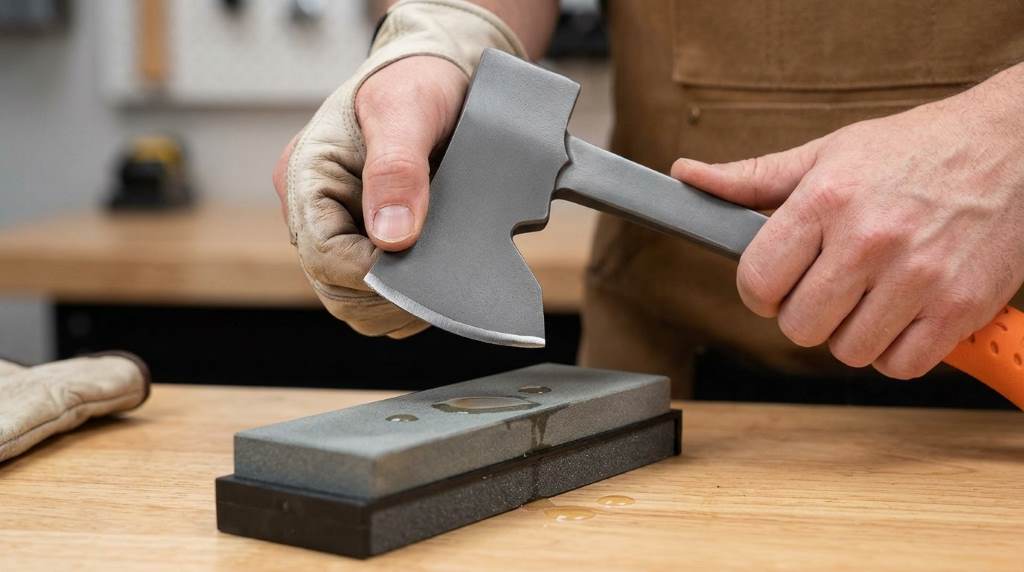
You sharpen this solid steel campers axe by clamping the forged head inside a bench vise. Next, file the beveled cutting edge with a ten-inch mill bastard file at thirty degrees. Finally, polish the apex using a dual-grit whetstone and apply mineral oil to prevent surface rust.
Dull camp axes bounce dangerously off dry firewood and cause unnecessary physical fatigue during outdoor excursions. Fortunately, an authentic Estwing EO-25A campers axe features forged American steel that holds a razor edge. In fact, field cutting tests prove that a properly honed bevel cuts wood forty percent faster. Therefore, this comprehensive guide explains professional filing angles, honing techniques, and edge restoration secrets.
Key Takeaways
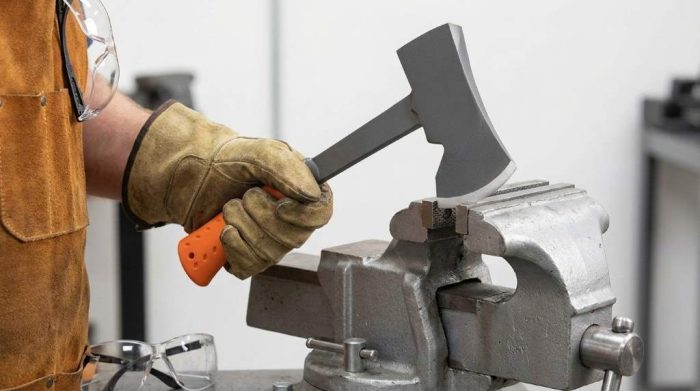
- Secure the solid steel axe head in a padded bench vise before filing the edge.
- Maintain a consistent twenty-five to thirty-degree convex profile along the entire cutting bit.
- Push the mill bastard file forward smoothly across the bevel without dragging it backward.
- Remove the microscopic wire burr using circular strokes with a medium-grit sharpening stone.
- Polish the finished cutting apex with leather stropping compound to achieve hair-shaving sharpness.
- Coat the bare forged carbon steel with camellia or mineral oil after every session.
Essential Tool Setup and Edge Geometry Inspection
Proper workspace preparation ensures safe sharpening and prevents accidental hand slips during heavy stock removal. First, mount your axe securely in a sturdy bench vise with the bit facing upward. Wrap the drop-forged blue steel neck in thick leather scraps to prevent gouging the painted finish.
Inspect the existing cutting edge geometry under bright directional lighting before applying any abrasive tools. Specifically, check the blade for micro-chips, rolled metal lips, or severe rock dings. An Estwing campers axe features a convex bevel designed for splitting camp kindling and limbing logs.
Mark both sides of the cutting bevel with a dark permanent marker pen. Consequently, file strokes will remove the colored ink and reveal your exact cutting contact angle. Consistent angle tracking preserves the factory geometry without creating flat, blunt spots along the curved cheek.
Restoring the Bevel with a Mill Bastard File
A ten-inch single-cut mill bastard file removes damaged steel quickly without generating temper-ruining heat. First, grasp the file handle firmly with your dominant hand while supporting the tip with two fingers. Place the file face flat against the marked bevel at a thirty-degree angle.
Push the file forward diagonally from the bottom heel toward the upper toe. In fact, files cut only on the forward stroke across carbon steel surfaces. Never drag the file backward across the metal because reverse friction dulls the cutting teeth rapidly.
Apply even, moderate downward pressure through the full duration of each forward stroke. Meanwhile, count your strokes carefully to ensure equal metal removal across both blade faces. Twenty uniform strokes on each side typically removes minor gouges and restores a crisp cutting apex.
Clean trapped steel shavings from your file teeth regularly using a stiff brass file card. Packed metal filings cause deep scratches across the freshly formed axe bevel. Periodic file cleaning guarantees smooth, uniform stock removal during heavy edge reprofiling work.
Honing the Apex with Dual-Grit Whetstones
Filing produces a sharp apex but leaves coarse scratches and a thin, flexible wire burr. Therefore, you must refine the edge using a round dual-grit axe sharpening puck or whetstone. Lubricate the stone surface generously with mineral honing oil or clean soapy water before starting.
Begin honing with the coarse 240-grit side of your round sharpening stone. Next, rub the stone in small, overlapping circular motions along the curved cutting edge. Maintain light hand pressure while following the natural curved contour of the forged axe cheek.
Flip the axe over in the vise once you feel a continuous burr along the opposite side. Then, repeat the circular honing pattern on the second face to fold the burr backward. This methodical cross-honing aligns the microscopic steel grain and sharpens the actual cutting point.
Switch to the fine 1000-grit stone face to polish away remaining scratch patterns completely. Furthermore, finish with ten light, sweeping push strokes directed from the eye toward the bit edge. These final alignment strokes remove the wire burr cleanly without rounding off the delicate apex.
Stropping for Razor-Sharp Cutting Performance
Leather stropping delivers the ultimate shaving-sharp finish on high-carbon drop-forged tools. First, mount a thick strip of vegetable-tanned leather to a flat wooden backing board. Apply a light coat of green chromium oxide buffing compound across the rough leather surface.
Draw the axe bit backward across the leather strop away from the cutting direction. Never push the edge forward into the leather because the blade will slice the strop instantly. Angle the blade slightly higher than the primary bevel to polish the micro-bevel apex directly.
Perform fifteen alternating trailing strokes per side using moderate, controlled wrist motion. Consequently, the ultra-fine abrasive compound removes microscopic burr remnants and polishes the steel mirror-bright. A fully stropped Estwing campers axe slices paper cleanly and shaves arm hair effortlessly.
Estwing EO-25A Sharpening Angles and Specification Matrix
Understanding factory metallurgical specifications ensures proper abrasive tool selection for maintenance tasks. For example, excessive power grinding overheats forged steel and destroys factory temper permanently. The technical table below outlines critical sharpening metrics, abrasive recommendations, and operating thresholds.
| Maintenance Parameter | Recommended Metric | Technical Purpose |
|---|---|---|
| Primary Edge Angle | 25 to 30 Degrees Convex | Balances cutting sharpness with impact durability. |
| Primary Reshaping Tool | 10-Inch Mill Bastard File | Removes edge dings without overheating carbon steel. |
| Coarse Honing Media | 240-Grit Silicon Carbide Puck | Removes heavy file scratch marks rapidly. |
| Fine Polishing Media | 1000-Grit Ceramic Whetstone | Refines edge apex and eliminates wire burrs. |
| Final Honing Method | Leather Strop with Green Compound | Delivers razor-sharp, mirror-polished micro-bevel. |
| Protective Barrier | Food-Grade Mineral Oil | Shields polished high-carbon steel from oxidation. |
Hand sharpening with files and stones preserves the factory rockwell hardness of forged steel. Furthermore, manual abrasives eliminate the severe temper loss that bench grinders frequently cause. Adhering to these calibrated parameters guarantees exceptional cutting performance during wilderness camping trips.
Repairing Deep Nicks and Rolled Edges
Striking hidden ground stones or hard knots occasionally produces deep gouges along the cutting bit. However, you should never grind away healthy blade steel just to remove one deep nick immediately. Instead, blend the damaged section gradually over multiple seasonal sharpening sessions.
First, run your file flat against the blunted edge to establish a uniform baseline curve. This flattening pass removes rolled metal lips and reveals the true depth of the damage. Next, reprofile both side bevels backward until they meet cleanly at the new apex.
Take care to preserve the original toe and heel profile curves during heavy stock removal. Altering the curved sweep shifts the tool balance and diminishes chopping accuracy in the woods. Gradual edge restoration prolongs axe service life across decades of rigorous camp chores.
Rust Prevention and Field Maintenance Practices
The Estwing EO-25A features an all-steel one-piece construction with a molded shock reduction vinyl grip. However, the ground cutting bevel exposes bare high-carbon steel to moisture, sap, and rain. Therefore, routine corrosion protection remains vital for maintaining edge keenness between outdoor outings.
First, wipe pine resin and wet sap off the blade using isopropyl alcohol swabs. Next, dry the entire steel head thoroughly with a clean, lint-free microfiber cloth. Apply a few drops of pure mineral oil or beeswax paste directly onto the sharpened metal.
Store your sharpened campers axe inside its genuine embossed leather sheath during travel and storage. Furthermore, keep the sheathed axe in a dry, climate-controlled storage space away from damp basements. Dry storage conditions preserve the polished steel edge and protect the riveted leather sheath.
Conclusion
Sharpening your Estwing campers axe transforms demanding camp woodcutting into effortless, satisfying outdoor recreation. Regular filing, stone honing, and leather stropping maintain a durable thirty-degree convex cutting edge. In addition, routine oiling prevents moisture pitting and keeps your tool ready for campfire tasks.
Do not let a dull axe ruin your next weekend wilderness backpacking expedition. Inspect your cutting edge today, grab your sharpening stone, and restore razor sharpness immediately!
Frequently Asked Questions
What is the correct sharpening angle for an Estwing EO-25A campers axe?
You should maintain a thirty-degree convex bevel angle for maximum cutting efficiency and edge durability.
Can I sharpen my Estwing campers axe on a bench grinder?
No, high-speed dry grinders generate excessive heat that ruins the factory temper of forged steel.
What file works best for restoring an axe cutting edge?
A standard ten-inch single-cut mill bastard file removes steel cleanly without gouging the blade.
How do I know when my axe edge has a wire burr?
Gently slide your fingertip across the opposite bevel to feel for a tiny raised metal ridge.
How often should I sharpen my camping axe?
Hone the edge with a pocket sharpening stone after every five hours of heavy chopping.


